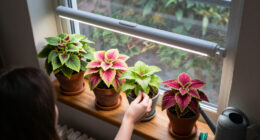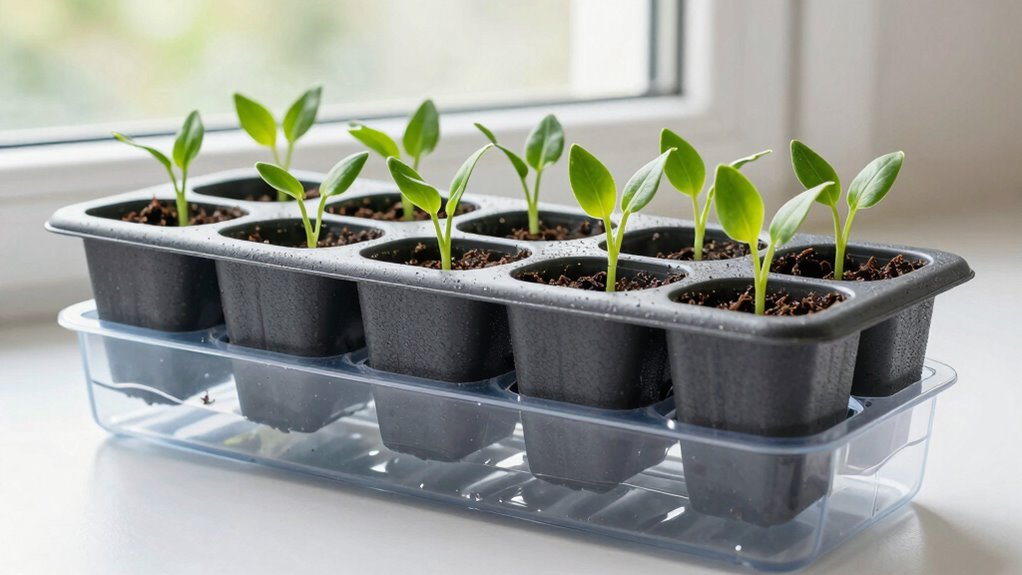

To use self-watering pots for indoor seed starting, fill the water reservoir beneath the soil with water and plant your seeds in well-draining soil. Make sure to monitor the water level regularly to prevent drying out or overwatering. Use pots with proper drainage features to avoid waterlogged roots. Keep an eye on moisture levels and adjust as seedlings grow. If you want to master keeping seedlings healthy, you’ll find helpful tips below.

Get the little things that make your day delivered free — and shop member deals
- Fast, free delivery on millions of items
- Access to Prime Big Deal Days deals on October 6–7
- Prime Video, Amazon Music and more included
Key Takeaways
- Fill the water reservoir and ensure it’s filled to the recommended level before planting seeds.
- Use well-draining soil and incorporate drainage layers to prevent waterlogging.
- Plant seeds at the appropriate depth, then water lightly to keep soil moist.
- Regularly check the water reservoir and refill to maintain consistent moisture levels.
- Ensure the pots have proper drainage holes to avoid root rot and promote healthy growth.
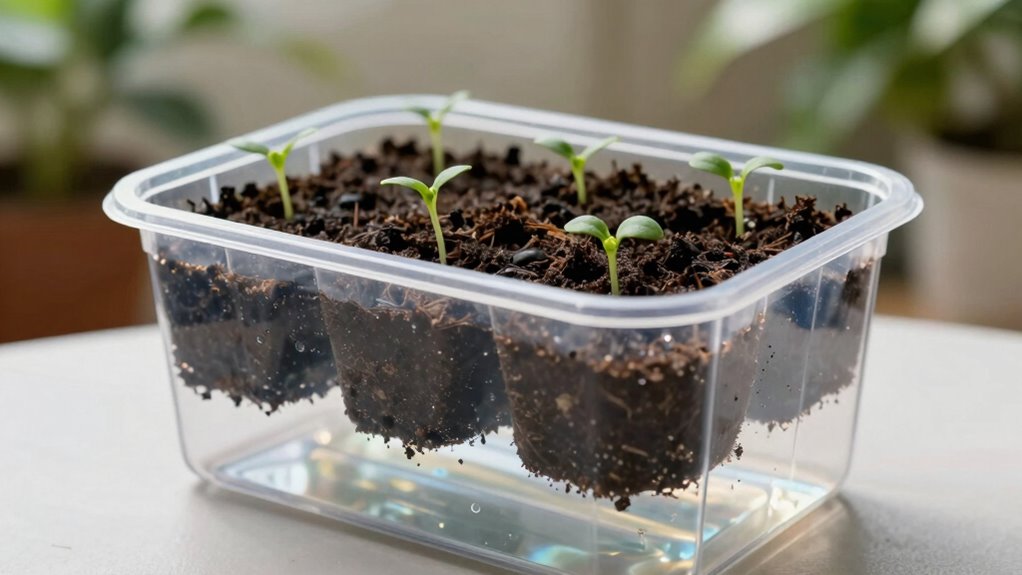
Starting seeds can be a rewarding experience, but it often requires careful watering to guarantee healthy growth. Self-watering pots make this task easier by maintaining consistent moisture levels, which is crucial for seed germination and early development. When using these pots indoors, you benefit from controlled watering schedules that prevent overwatering or underwatering, two common pitfalls in seed starting. The key to success lies in understanding how these pots work and paying attention to plant drainage, ensuring your seedlings have the right environment to thrive.
Self-watering pots typically consist of a water reservoir beneath the planting area, connected through a wick or capillary system that supplies moisture to the soil as needed. This design helps you automate watering, reducing the frequency and guesswork involved. You don’t have to worry about watering on a strict schedule; instead, the soil draws moisture from the reservoir when it begins to dry out, providing a steady supply of water that encourages healthy root growth. Additionally, understanding the importance of soil moisture regulation can further optimize seedling health and growth. However, you still need to monitor the water level in the reservoir to make sure your plants never run dry.
Self-watering pots automate watering, encouraging healthy roots while requiring minimal monitoring of water levels.
Plant drainage plays a vital role in seed starting with self-watering pots. Good drainage prevents excess water from stagnating at the bottom of the container, which can lead to root rot and other diseases. To promote proper drainage, ensure your self-watering pot has drainage holes, or consider using a layer of small stones or gravel at the bottom if it’s an open container. Proper drainage also prevents soil from becoming overly saturated, which can suffocate young roots. Maintaining a balance between moisture supply and drainage is essential for seedlings to develop strong, healthy roots.
self-watering seed starting pots
As an affiliate, we earn on qualifying purchases.
As an affiliate, we earn on qualifying purchases.
Frequently Asked Questions
How Often Should I Refill the Water Reservoir?
You should check the water level daily and refill the reservoir when it drops below the recommended level. Refilling frequency depends on the size of your self-watering pot and the number of seedlings you’re growing, but generally, expect to refill every few days. Keep an eye on the water level indicator if your pot has one, and top it up to guarantee your seedlings stay consistently moist without overwatering.
Can Self-Watering Pots Be Used for All Seed Types?
Think of self-watering pots as versatile tools in your gardening toolkit. While they support seed germination and water management, they aren’t suitable for all seed types. Larger seeds like beans thrive, but tiny seeds such as orchids or delicate herbs might struggle with their moisture levels. Always research your specific seeds to guarantee they’ll flourish in self-watering pots, and adjust watering practices as needed to give each plant the best start.
What Is the Ideal Pot Size for Starting Seeds Indoors?
You should choose self-watering pots around 3 to 4 inches deep for starting seeds indoors. This size provides enough space for healthy root development, ensuring proper soil drainage and preventing waterlogging. Keep seed depth appropriate for each plant type, typically twice as deep as the seed’s diameter. A well-sized pot promotes strong seedlings and reduces transplant shock, making it easier to nurture your plants from seed to maturity.
How Do I Prevent Overwatering in Self-Watering Pots?
To prevent overwatering in self-watering pots, regularly check soil moisture levels by feeling the top layer, and avoid letting the water reservoir run empty. Make sure you don’t overfill the reservoir, which can lead to excessive moisture and root health issues. Adjust watering frequency based on plant needs and indoor conditions, and always use well-draining soil to maintain proper moisture balance, promoting healthy root development.
Are Self-Watering Pots Suitable for Outdoor Seed Starting?
They say, “A stitch in time saves nine,” and that’s true for outdoor seed starting with self-watering pots. These pots can be suitable outdoors if they have good weather considerations and outdoor durability. However, you need to protect them from extreme weather—like heavy rain or frost—that could damage them. Make sure they’re sturdy enough for outdoor conditions, and you’ll enjoy healthy seedlings growing in self-watering pots outside.
indoor seedling starter pots with drainage
As an affiliate, we earn on qualifying purchases.
As an affiliate, we earn on qualifying purchases.
Conclusion
Using self-watering pots for seed starting indoors simplifies your gardening routine and boosts seedling success. They provide a consistent moisture supply, reducing the risk of over- or under-watering. Did you know that plants grown in self-watering containers can grow up to 20% faster than those in traditional pots? By adopting this method, you’re giving your seedlings a reliable environment to thrive, making your indoor gardening experience more enjoyable and productive.
automatic watering plant pots for seedlings
As an affiliate, we earn on qualifying purchases.
As an affiliate, we earn on qualifying purchases.
self-watering planter with water reservoir
As an affiliate, we earn on qualifying purchases.
As an affiliate, we earn on qualifying purchases.
Halloween Picks
halloween
As an affiliate, we earn on qualifying purchases.