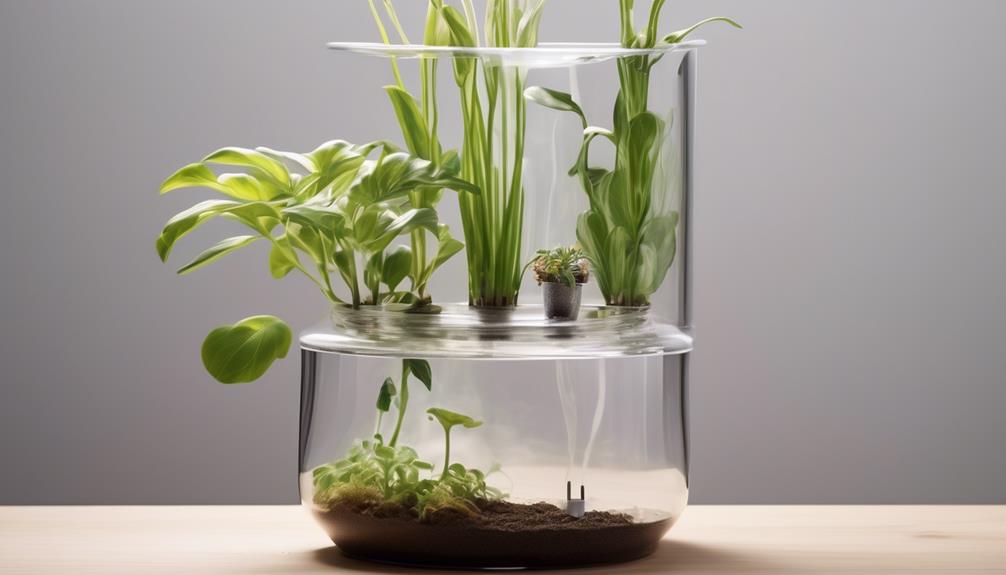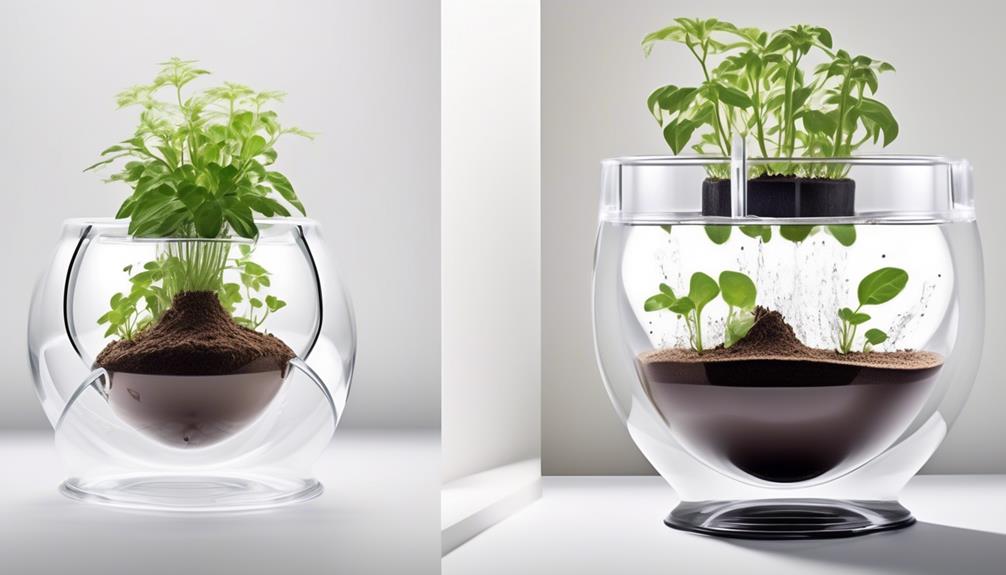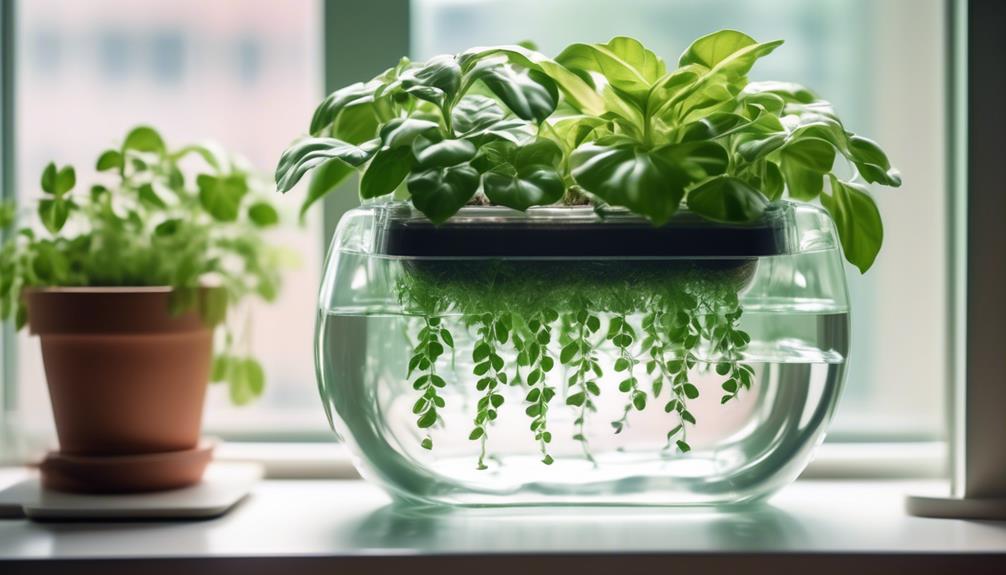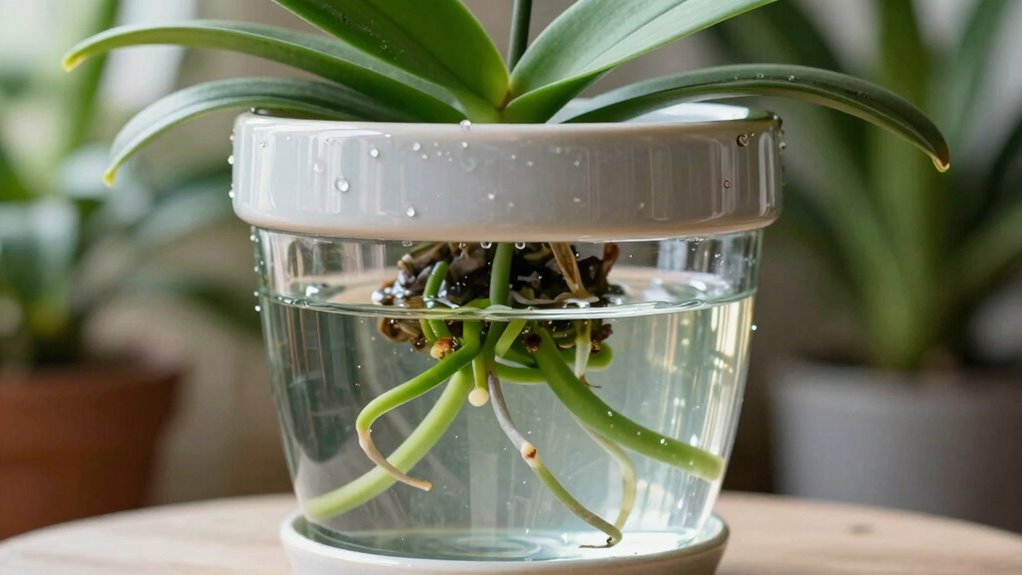
Before using self-watering pots for orchids, understand that they supply a steady moisture source through reservoirs or wicks, so you need to monitor water levels regularly to prevent over- or under-watering. Choose the right pot material—plastic, ceramic, or wood—based on breathability and weight. Correct pot size and design also matter to avoid issues like root rot or dryness. If you keep an eye on plant health and adjust as needed, you’ll help your orchids thrive. Keep going to discover key tips for successful use.
Key Takeaways
- Ensure the pot size and reservoir capacity match your orchid’s water needs to prevent over- or under-watering.
- Regularly monitor water levels and plant health to adjust watering frequency appropriately.
- Choose breathable materials like ceramic or specific plastics to promote airflow around orchid roots.
- Understand the watering mechanics to avoid uneven moisture distribution and root rot risks.
- Observe environmental factors and plant response to fine-tune watering routines for optimal growth.
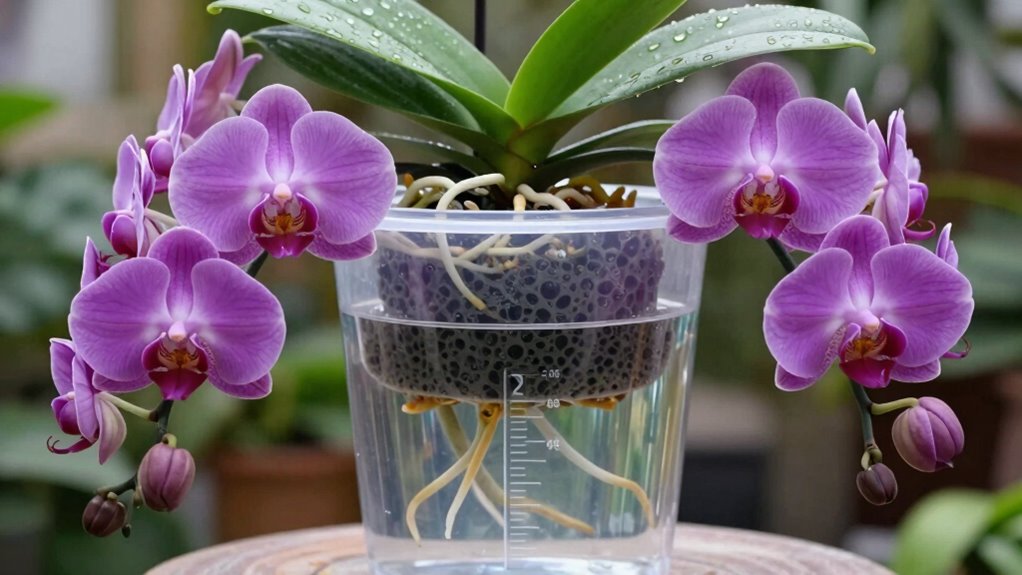
If you want to keep your orchids healthy and thriving with less effort, self-watering pots can be a game-changer. These pots are designed to provide a steady supply of moisture, reducing the need for frequent watering. But before you switch to one, it’s vital to understand how they work and what factors influence their effectiveness. One of the main considerations is watering frequency. Unlike traditional pots, self-watering containers deliver water gradually through a wicking mechanism or reservoir, which means you won’t need to water as often. However, it’s still essential to monitor your orchid’s specific needs. Overwatering can lead to root rot, so you’ll want to check the water level in the reservoir regularly and refill as needed. On the other hand, if the reservoir runs dry too quickly, your orchid might not be getting enough moisture. The key is to observe your plant and adjust the refill schedule accordingly, especially during different seasons when evaporation rates change. Additionally, understanding the watering mechanics of self-watering pots can help you optimize their use and ensure your orchids receive proper hydration. Being aware of the moisture retention properties of different pot materials can also help you select the best container for your orchid’s needs. Knowing how water movement occurs within these pots can further help prevent issues like uneven watering or dry spots.
Another important factor is the pot material. Self-watering pots come in various materials like plastic, ceramic, and even wood. Plastic pots are lightweight and durable, making them easy to move around, but they can sometimes retain heat, which might stress your orchids if placed in direct sunlight. Ceramic pots, especially glazed ones, tend to have better insulation properties, helping maintain consistent moisture levels. They are also often more aesthetically pleasing but can be heavier and more fragile. Wooden self-watering containers are less common but can add a natural look; however, they may require more maintenance to prevent rot and ensure proper water flow. The material affects not just the durability and appearance but also the moisture retention and breathability of the pot. The breathability of the pot is particularly important for orchids, which prefer pots that allow some airflow around their roots. Before you start using a self-watering pot, make sure it’s the right size for your orchid. Too large a reservoir might lead to excess moisture, while too small might not supply enough water between refills. Also, consider the design—some pots have a wick system, while others rely on a reservoir base. Whichever style you choose, observe your orchid’s response closely during the first few weeks. Adjust your watering schedule as needed, and keep an eye on the pot’s material and how it influences moisture levels. Proper plant care and regular monitoring are essential to ensure your orchids thrive with self-watering pots while preventing common issues like overwatering or dehydration. With the right setup and regular monitoring, self-watering pots can simplify orchid care while keeping your plants healthy and beautiful.
orchid self-watering pots
As an affiliate, we earn on qualifying purchases.
As an affiliate, we earn on qualifying purchases.
Frequently Asked Questions
Can All Orchid Varieties Thrive in Self-Watering Pots?
Not all orchid species thrive in self-watering pots. While some, like Phalaenopsis, adapt well due to their moderate watering needs, others like Dendrobiums prefer specific watering frequencies and may struggle with constant moisture. You should consider each orchid’s species and watering frequency requirements prior to using a self-watering pot. Proper understanding guarantees your orchids stay healthy, preventing overwatering or dehydration, which can harm their growth.
How Often Should I Refill the Water Reservoir?
On average, you’ll need to refill the reservoir every 7 to 10 days, depending on your orchid’s size and environment. The watering frequency varies, so check the water level regularly. To keep your orchids healthy, make certain you don’t let the reservoir run dry. Refill it promptly when the water drops below the designated level. This routine helps prevent overwatering and keeps your orchids consistently hydrated.
Do Self-Watering Pots Prevent Overwatering or Root Rot?
Self-watering pots help prevent overwatering and root rot by improving water regulation, ensuring your orchid’s roots receive consistent moisture without becoming waterlogged. They allow excess water to drain away and keep roots moist but not soggy, promoting healthy root growth. However, you still need to monitor water levels regularly, as overfilling can harm root health. Proper use maximizes benefits and maintains an ideal environment for your orchid’s essentiality.
Are Self-Watering Pots Suitable for Outdoor Orchids?
Did you know orchids thrive outdoors with proper care? Self-watering pots can be suitable for outdoor orchids, but you need to take into account outdoor durability and sun exposure. These pots help maintain consistent moisture, which is essential for orchids, but they may not withstand harsh weather or intense sun. Choose sturdy, weather-resistant materials and place your orchids in semi-shaded areas to prevent overheating and ensure healthy growth.
How Do I Clean and Maintain Self-Watering Orchid Pots?
To clean and maintain your self-watering orchid pots, start by removing the orchid and emptying any remaining water. Use a soft brush or cloth to clean the pot material, avoiding harsh chemicals that could harm your plant. Check soil aeration by gently loosening the soil if needed. Regularly inspect the water reservoir for algae or buildup, and guarantee the wick system remains functional for proper watering.
ceramic self-watering orchid pot
As an affiliate, we earn on qualifying purchases.
As an affiliate, we earn on qualifying purchases.
Conclusion
Before you plunge into using self-watering pots for your orchids, remember that they’re like a dance partner—requiring balance and understanding. With the right care, these pots can make your orchid thriving and vibrant, almost as if they’re whispering secrets of growth and beauty. So, embrace the rhythm of watering and patience, and let your orchids flourish in harmony. After all, a little knowledge can turn a simple pot into a masterpiece of nature’s artistry.
plastic orchid watering container
As an affiliate, we earn on qualifying purchases.
As an affiliate, we earn on qualifying purchases.
orchid watering reservoir
As an affiliate, we earn on qualifying purchases.
As an affiliate, we earn on qualifying purchases.