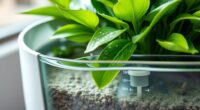
Common problems with self-watering pots include overwatering, uneven water distribution, and root rot caused by malfunctioning systems or improper watering. To fix these issues, regularly check soil moisture and reservoir levels, ensure your wicking system works properly, and use well-draining soil to prevent water buildup. Keep an eye out for signs of rot like black roots or foul smell. Pay attention now—there’s more to keep your plants healthy and thriving long-term.
Key Takeaways
- Overwatering can occur if reservoir levels are too high or system malfunctions, risking root rot and soggy soil.
- Uneven water distribution from wicking system issues leads to dry spots or overwatering, requiring system adjustments.
- Regularly check soil moisture and reservoir levels to prevent both drought stress and waterlogged conditions.
- Signs of root rot include foul smell, blackened roots, or wilting; promptly remove affected plants and fix drainage issues.
- Maintain proper drainage, use well-draining soil, and inspect components regularly to prevent clogs, leaks, and system failures.

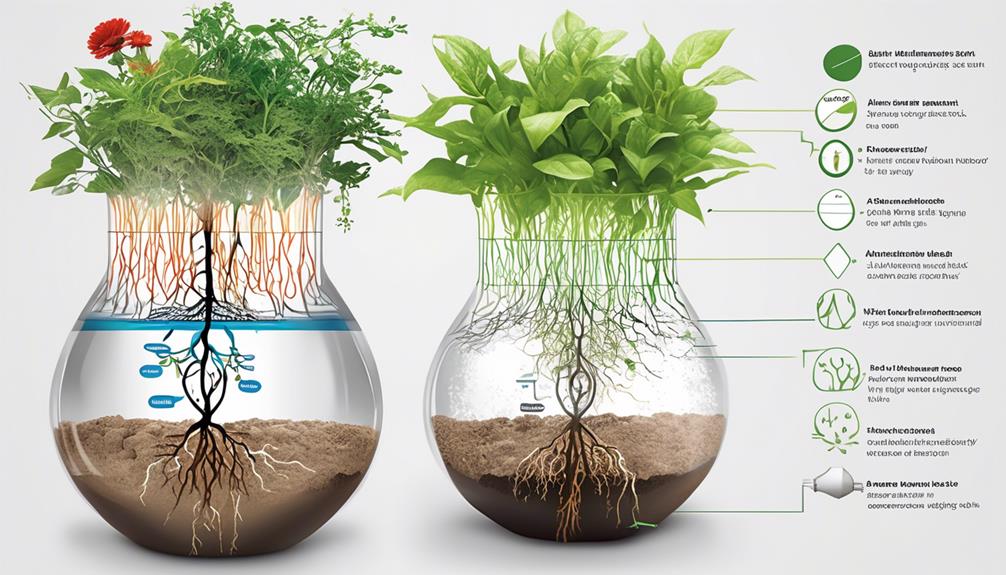
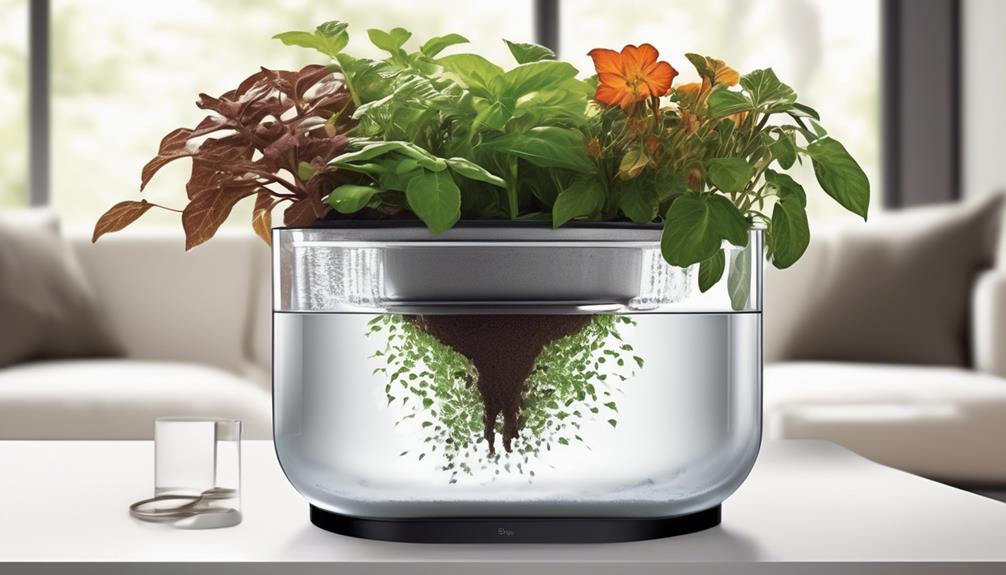
Self-watering pots are popular for their convenience, but they can also present several problems that may affect your plants’ health. One common issue is watering problems, which can lead to either overwatering or underwatering. Because these pots are designed to provide a steady supply of moisture, it’s easy to forget that plants still need a balance. If the reservoir overflows or if the watering system isn’t functioning correctly, your plants may receive too much water, causing the soil to stay constantly wet. This excess moisture can suffocate roots, making them unable to access oxygen, and ultimately lead to root rot. Conversely, if the wicking system isn’t working well, your plant might not get enough water, leading to dehydration and stress.
To prevent watering issues, it’s important to monitor the moisture levels regularly. Check the soil’s top layer and the reservoir’s water level to ensure your plant is neither sitting in soggy soil nor dry soil. Adjust the wicking mechanism if necessary, and make sure the reservoir isn’t clogging or leaking. Remember, different plants have different water needs, so understanding your specific plant’s requirements can help you fine-tune the watering process. For example, succulents need less water than tropical plants, so you might need to modify how often you refill or how the system distributes moisture. Recognizing the importance of nutritional insights can also guide you in providing appropriate care.
Another common problem associated with self-watering pots is root rot, a condition that results from prolonged exposure to excess moisture. When roots sit in waterlogged soil, they can begin to decay, which ultimately weakens the plant and can cause it to die if not addressed. Root rot is often a silent threat, as the plant may initially show signs of wilting or yellowing before the damage is visible. To avoid it, make sure your pot has adequate drainage and that the system isn’t constantly saturating the soil. Using well-draining soil and avoiding overfilling the reservoir can help keep roots healthy.
If you notice signs of root rot, such as foul smell or blackened roots, you should act quickly. Remove the plant from the pot, trim away any rotted roots with sterilized tools, and repot it into fresh, well-draining soil. Check the reservoir and wicking mechanism for clogs or malfunctions, and clean or replace parts as needed. Regularly inspecting your plants and their watering system helps catch problems early, preventing long-term damage caused by watering issues or root rot. With attentive care, you can enjoy the benefits of self-watering pots without letting these common problems compromise your plants’ health.
Frequently Asked Questions
Can Self-Watering Pots Be Used Outdoors Year-Round?
Yes, you can use self-watering pots outdoors year-round, but you need to make seasonal adjustments and consider weather conditions. During winter, bring them indoors or protect them from freezing temperatures, as water can freeze and damage the pot. In hot weather, guarantee proper watering and drainage. Regularly check for signs of wear or damage, and adjust watering schedules based on seasonal weather variations for ideal plant health.
Are Self-Watering Pots Suitable for All Plant Types?
Imagine trying to grow delicate orchids in a self-watering pot—you’ll find they may not thrive due to plant compatibility and container limitations. Self-watering pots are great for many plants like herbs and succulents, but not all. You need to examine each plant’s water needs and root structure. Before using one, check if it suits your plant’s specific requirements, ensuring healthy growth and avoiding overwatering or root problems.
How Do I Prevent Algae Growth in the Water Reservoir?
To prevent algae growth in your self-watering pot’s reservoir, focus on algae control through regular reservoir maintenance. Clean the reservoir weekly with a brush and dilute vinegar or mild soap to remove algae buildup. Keep sunlight out of the water to slow algae growth, and consider adding a small amount of beneficial algae control agents. Consistent maintenance and preventing light exposure are key to keeping your reservoir algae-free.
What’s the Best Way to Clean a Clogged Wick?
To clean a clogged wick, start by removing it from your self-watering pot. Use warm water and a gentle brush to scrub away any debris or buildup. For stubborn clogs, soak the wick in a mixture of water and vinegar for about 30 minutes, then rinse thoroughly. Regular wick cleaning helps prevent clog removal issues and guarantees consistent water flow, keeping your plants healthy and well-hydrated.
How Often Should I Refill the Water in My Self-Watering Pot?
Coincidentally, your watering schedule depends on your plant’s needs and the reservoir capacity. You should refill the water in your self-watering pot when the reservoir runs low, typically every 1-2 weeks. Check the water level regularly, especially during hot weather or active growth periods, to prevent the plant from drying out. Keeping an eye on the reservoir guarantees your plant stays healthy and hydrated without overwatering.
Conclusion
Just like a well-tuned garden, your self-watering pot needs attention to thrive. I once forgot to check the water level, and my plants showed signs of stress—reminding me that even the best tools need care. By understanding common problems and fixing them, you’re nurturing a healthier, happier plant. Think of your pot as a partner in growth; with a little effort, you’ll keep it flourishing season after season.