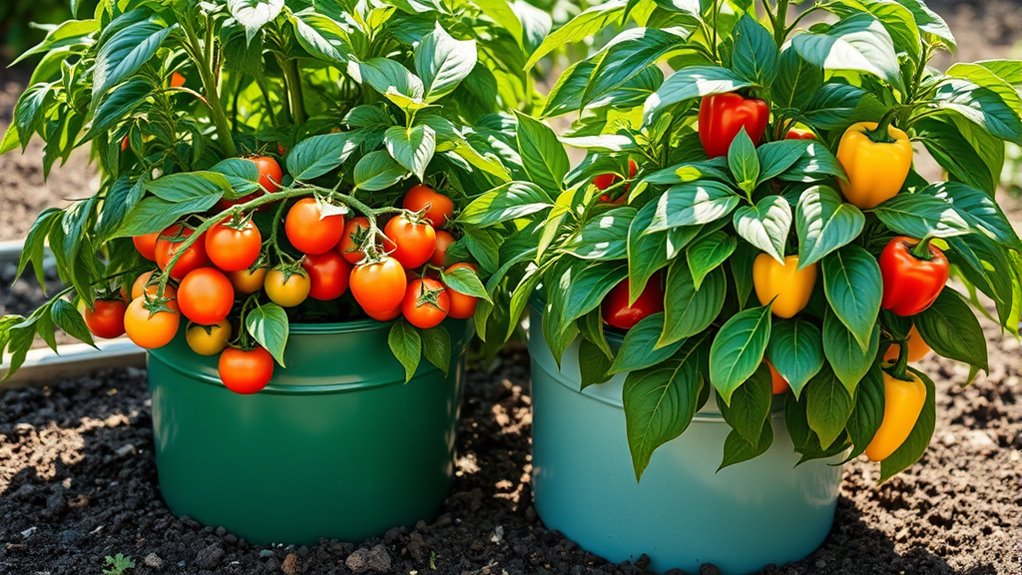
To grow tomatoes and peppers in self-watering buckets, start by choosing high-quality containers with reliable reservoirs and wicking systems. Fill the reservoir with water before planting, and use nutrient-rich soil suited for vegetables. Plant directly into the soil and set a watering schedule that ensures consistent moisture. Regularly check soil moisture levels and refill the reservoir as needed, adjusting for weather changes. Keep exploring to learn more tips for thriving self-watering garden success.
Key Takeaways
- Use high-quality, durable buckets with reliable reservoirs and wicking systems for optimal growth.
- Fill the reservoir with water before planting and ensure proper soil moisture for seedlings and mature plants.
- Plant tomatoes and peppers directly into nutrient-rich soil inside the bucket, leaving room for growth.
- Regularly check soil moisture levels with a touch or moisture meter, refilling the reservoir every few days as needed.
- Adjust watering frequency based on weather and growth stage to maintain steady soil moisture and promote healthy development.

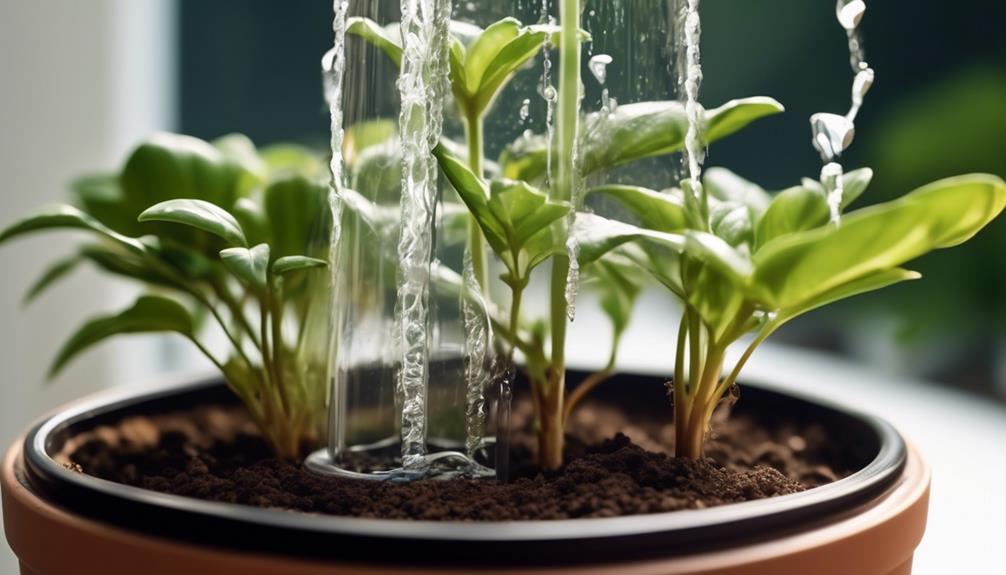
Growing tomatoes and peppers in self-watering buckets is an excellent way to guarantee healthy plants with less effort. These containers help maintain consistent soil moisture, which is vital for the steady growth of your vegetables. When you use self-watering buckets, you don’t have to worry about forgetting to water or overdoing it, because the built-in system automatically supplies the right amount of water. This approach simplifies gardening and reduces the risk of issues caused by inconsistent watering.
Growing tomatoes and peppers in self-watering buckets ensures healthy, consistently moist plants with less effort.
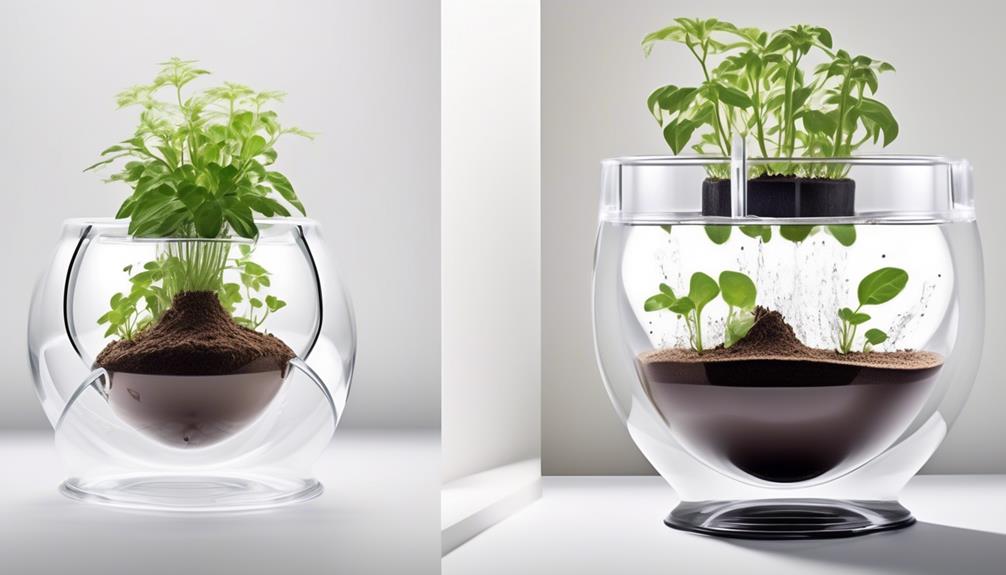
To get started, choose a high-quality self-watering bucket that has a reliable reservoir and a wicking system. Fill the reservoir with water and plant your tomatoes or peppers in nutrient-rich soil designed for vegetables. Once your plants are in the bucket, it’s important to set a watering schedule that complements the self-watering system. While these buckets do a good job of maintaining soil moisture, you still need to check them regularly, especially during hot, dry weather. Too much water can lead to root rot, while too little can cause stress and stunted growth. Aim to refill the reservoir when it gets low, typically every few days, but always monitor the soil moisture to prevent problems.
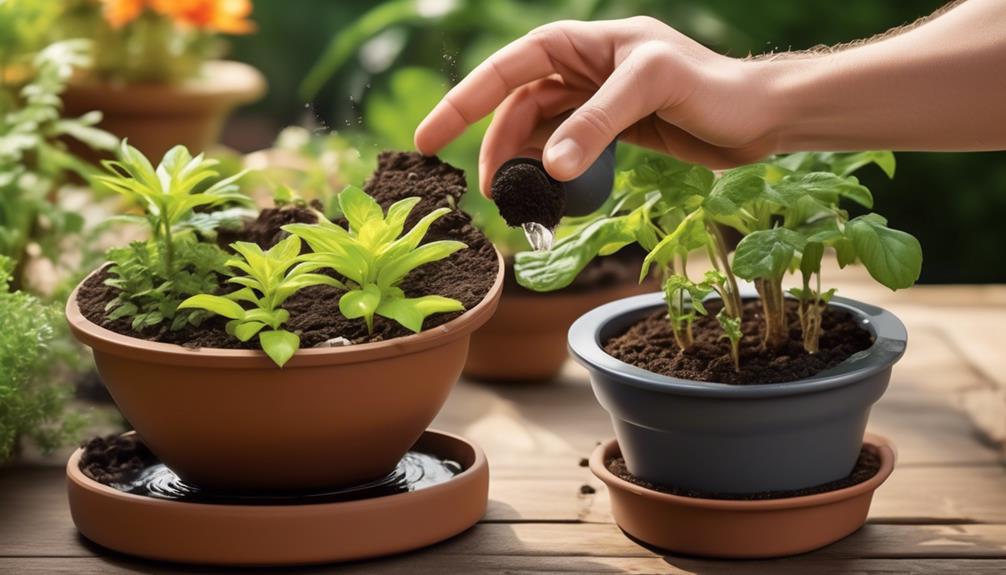
The key to thriving plants in self-watering buckets is understanding how soil moisture affects growth. When soil moisture is consistent, your plants develop strong roots and healthier foliage. Conversely, irregular watering can cause stress, making plants more vulnerable to pests and diseases. To guarantee your plants get the right amount of water, check the soil moisture level by touching the soil surface or using a moisture meter. If it feels dry, it’s time to add water to the reservoir. If it’s too wet, allow the soil to dry out slightly before watering again. This balance helps your plants grow vigorously and produce better yields. Additionally, incorporating vertical storage solutions can help optimize space and improve accessibility for maintenance.
You should also keep an eye on the watering schedule, especially during different growth stages. Seedlings and young plants need consistent moisture, so check their water level more frequently. As plants mature, they might require less frequent watering, but never let the soil completely dry out. Adjust your watering routine based on weather conditions; hotter days may require more frequent watering, while cooler, humid days may need less. Remember, the goal is to keep the soil evenly moist—not soggy or bone dry.

Self Watering Bucket Garden (Set of 2) 5 gal Bucket Water Wicking Plates
Fits most 4.5-6 gallon buckets (bucket not included)
As an affiliate, we earn on qualifying purchases.
As an affiliate, we earn on qualifying purchases.
Frequently Asked Questions
Can I Grow Multiple Plants in One Self-Watering Bucket?
Yes, you can grow multiple plants in one self-watering bucket, but it depends on the container size and plant spacing. Make certain the bucket is large enough to accommodate the root systems without overcrowding. Space your plants appropriately to prevent competition for nutrients and water. Keep in mind that overcrowding can lead to poor growth and disease, so choose smaller plants or fewer peppers and tomatoes for ideal results.
What Are Common Pests Affecting Tomatoes and Peppers in Buckets?
You’ll often face pests like aphids, whiteflies, and spider mites on your tomatoes and peppers in buckets. To prevent these pests, practice pest prevention by keeping your plants healthy and inspecting them regularly. Use organic treatments such as neem oil or insecticidal soap to control infestations without chemicals. Regularly check for early signs of pests and act quickly to keep your plants thriving and free of damage.
How Do I Prevent Overwatering in Self-Watering Containers?
To prevent overwatering in your self-watering containers, set a consistent watering schedule based on your plants’ needs and the weather. Use moisture monitoring tools like a soil moisture meter to check the soil regularly. If the soil stays too wet or the water level in the reservoir remains high, adjust your watering frequency. This helps avoid root rot and keeps your tomatoes and peppers healthy.
Are There Specific Soil Mixes Best for Self-Watering Buckets?
For self-watering buckets, choose a soil mix with good soil composition that retains moisture but drains well. Use a blend of high-quality potting soil, peat moss, and perlite or coarse vermiculite to improve aeration and drainage. Adding organic amendments like compost or worm castings boosts nutrients and promotes healthy growth. Avoid heavy garden soil, as it can clog the system and cause overwatering issues, ensuring your plants stay hydrated and healthy.
How Often Should I Refill the Water Reservoir?
Oh, the thrill of perfect reservoir maintenance! You should refill your self-watering bucket’s reservoir every 2-3 days, depending on your plant’s thirst and the weather. Keep a keen eye on your watering schedule; neglect this, and your plants might starve or drown. Regularly check the water level, and don’t forget to top it up to ensure your tomatoes and peppers stay happily hydrated and thriving.

yarlung 6 Pack Self Watering Planter with Water Level Indicator, 5 Inch Plastic Plant Flower Pots Nested Container for Indoor Plants, Herbs, Aloe, Outdoor Gardening
Yarlung 6 pack self watering planters, measure 5''L x 5''W x 4.3''H, white external pot, black internal 4.7''L…
As an affiliate, we earn on qualifying purchases.
As an affiliate, we earn on qualifying purchases.
Conclusion
Growing tomatoes and peppers in self-watering buckets is like tending a delicate garden within a glass jar—nurturing growth with steady, consistent care. With patience and attention, you’ll see your plants flourish, feeding your soul as much as your table. Embrace the process, and watch your garden become a vibrant, living masterpiece. Remember, just like a well-tended garden, your efforts will blossom into delicious rewards that make all the care worthwhile.
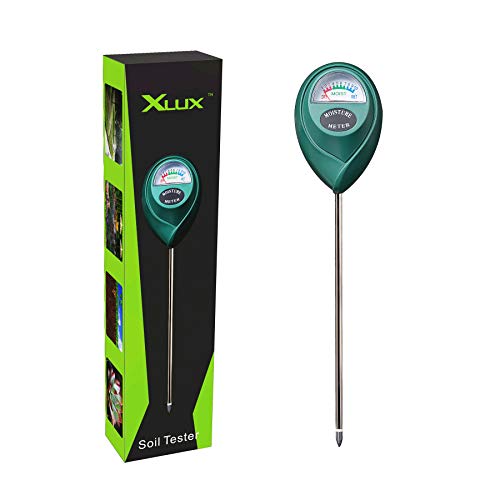
XLUX Soil Moisture Meter, Plant Water Monitor, Hygrometer Sensor for Gardening, Farming, Indoor and Outdoor Plants, No Batteries Required
Accurate Soil Moisture Detection:The XLUX Soil Moisture Meter can tell you if the soil deep inside your pot…
As an affiliate, we earn on qualifying purchases.
As an affiliate, we earn on qualifying purchases.

Miracle-Gro Organic Outdoor Potting Mix – Plant Soil for Outdoor Container Plants, Contains Quick-Release Natural Fertilizer, OMRI Listed, 16 qt.
OUTDOOR POTTING SOIL: Miracle-Gro Organic Outdoor Potting Mix contains a quick-release natural plant fertilizer and also feeds plants…
As an affiliate, we earn on qualifying purchases.
As an affiliate, we earn on qualifying purchases.