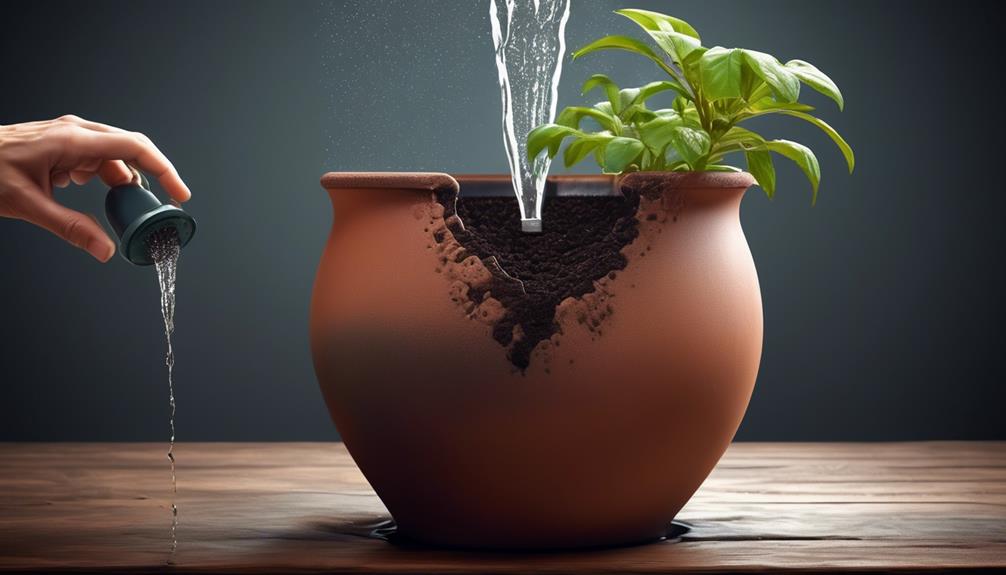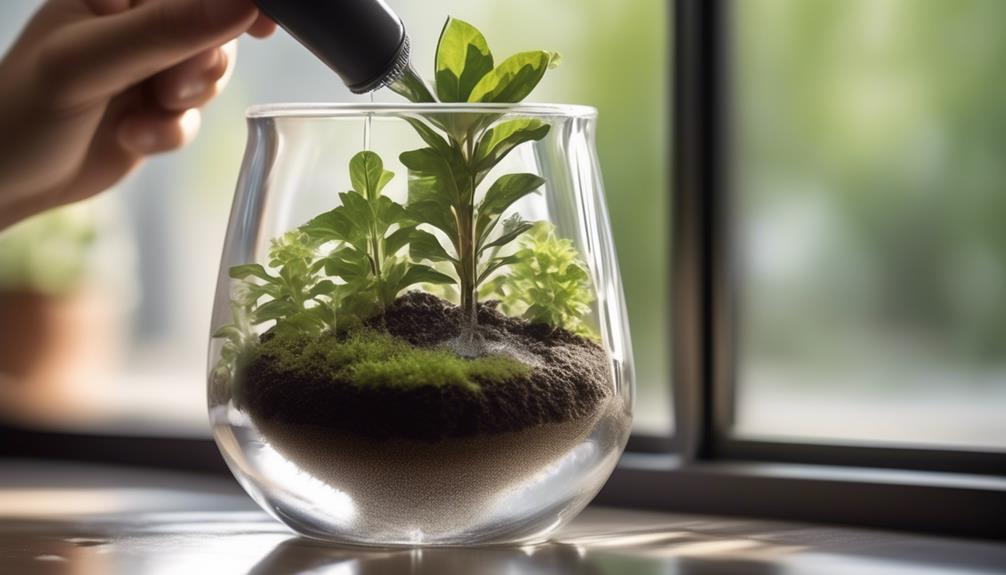
Self-watering pots help busy plant owners by providing a consistent water supply, so you don’t have to worry about daily watering routines. They promote healthier roots, reduce the risk of overwatering or underwatering, and keep your plants vibrant and strong. Plus, they make plant care easier and less time-consuming, especially when you’re away or pressed for time. If you want to discover more ways these pots simplify your plant care, keep exploring.
Key Takeaways
- Ensures a consistent water supply, reducing daily watering needs for busy plant owners.
- Promotes healthy root growth by maintaining balanced moisture levels automatically.
- Enhances plant appearance and vigor through reliable hydration and improved growth.
- Simplifies plant care, ideal for those with hectic schedules or frequent absences.
- Helps prevent overwatering and root rot, decreasing maintenance time and promoting plant health.
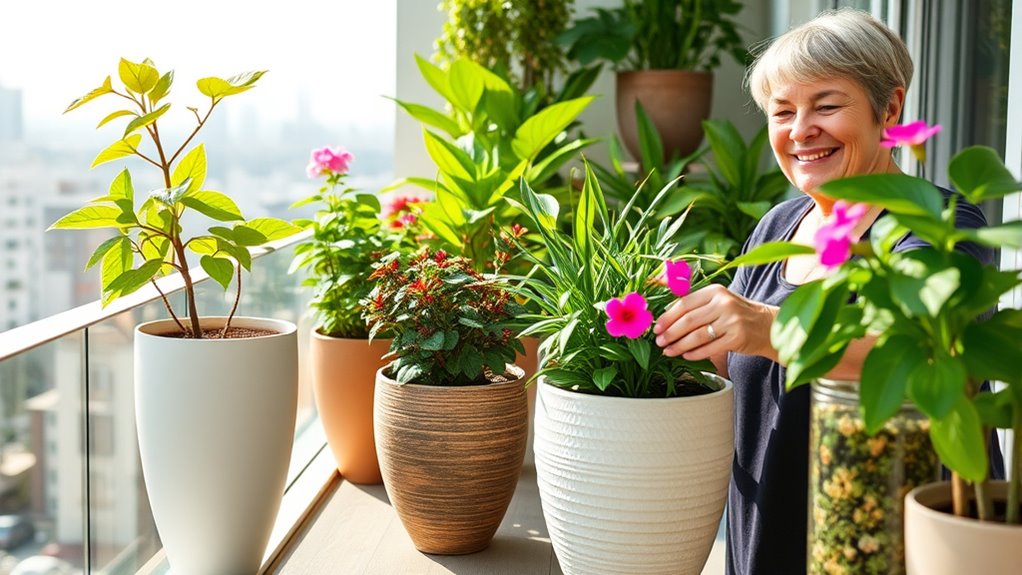
Self-watering pots offer an innovative solution for maintaining healthy plants with less effort. If you’re someone with a busy schedule or simply want to guarantee your plants thrive without daily attention, these containers are a game-changer. They are designed to provide a consistent supply of water, which means you don’t have to worry about forgetting to water or overwatering. This consistency is vital for establishing a proper watering schedule, allowing you to keep your plants healthy and happy without the guesswork. When your watering schedule is reliable, it reduces stress and minimizes the risk of plants suffering from drought stress or root rot caused by overwatering.
One of the key benefits of self-watering pots is their impact on root health. Roots need a balanced environment—enough moisture to absorb nutrients and sufficient oxygen to prevent decay. Traditional watering methods can sometimes lead to over-saturation or uneven watering, which harms roots over time. Self-watering pots, however, create a steady moisture level that encourages healthy root development. When roots are consistently moist but not waterlogged, they grow stronger and more resilient. This balance helps prevent common issues like root rot, which often results from poorly managed watering routines. With these pots, your plants’ roots receive just the right amount of water, promoting robust growth and reducing the likelihood of disease.
Using a self-watering pot also means that you can better synchronize watering with your plant’s needs, rather than sticking to a fixed timetable. You’ll notice that your plants stay consistently hydrated, which leads to more vibrant foliage and better overall growth. This is especially advantageous if you’re frequently away or have a hectic schedule, as the pots automatically regulate water levels based on the plant’s demands. Additionally, because these pots reduce the chances of underwatering or overwatering, you’re less likely to see wilting or yellowing leaves that signal stress or improper moisture levels. This not only keeps your plants healthier but also lessens the time and effort you spend on maintenance, freeing you up to enjoy your garden or indoor space.

SiliFine 6 Set Window Herb Planter Box Self Watering Plant Pots 10.6 Inch Rectangular Herb Pots Decorative Garden Flower Box for Indoor, Succulent,Vegetables, Flowers
Comprehensive Pack for Various Plant Needs: each package includes 6 self window herb planter box, in 3 different...
As an affiliate, we earn on qualifying purchases.
Frequently Asked Questions
Can Self-Watering Pots Be Used Outdoors in All Weather Conditions?
Yes, you can use self-watering pots outdoors in many weather conditions, but their weather resistance and outdoor durability vary. Look for models made from sturdy, weatherproof materials like resin or ceramic designed to withstand rain, sun, and temperature changes. However, extreme weather like freezing temperatures or intense storms might still harm some pots. Regularly check and maintain your pots to guarantee they stay functional and durable through changing weather conditions.
How Often Do Self-Watering Pots Need Refilling?
Think of your self-watering pot as a silent partner that keeps your plants happy. Usually, you’ll need to refill it every 1 to 2 weeks, depending on the plant’s size and environmental conditions. Monitoring the water level regularly guarantees ideal watering frequency and prevents dry spells. By sticking to these refill intervals, you keep your plants thriving effortlessly, making plant care a breeze even on your busiest days.
Are Self-Watering Pots Suitable for All Plant Types?
Self-watering pots aren’t suitable for all plant types. You should consider plant compatibility, especially for species that prefer dry soil or have specific watering needs. These pots automatically regulate watering, so they diminish watering frequency, but some plants may suffer from overwatering if not compatible. Always check your plant’s requirements first, and adjust the pot or watering routine accordingly to ensure healthy growth.
Do Self-Watering Pots Prevent Overwatering and Root Rot?
Think of self-watering pots as a steady heartbeat for your plants. They prevent overwatering and root rot by maintaining consistent watering and soil moisture levels, acting as a vigilant guardian. You don’t need to worry about forgetting to water or overdoing it, as these pots regulate watering automatically. With this balance, your plants thrive, and you enjoy lush growth without stress or guilt.
What Is the Average Lifespan of a Self-Watering Pot?
A self-watering pot typically lasts 1 to 3 years, depending on its watering system and material durability. If you choose a high-quality, durable material like ceramic or heavy-duty plastic, your pot can last longer. Regularly check the water reservoir and clean the system to prevent clogging or wear. Proper maintenance and selecting sturdy materials help maximize your pot’s lifespan, ensuring your plants stay healthy over time.
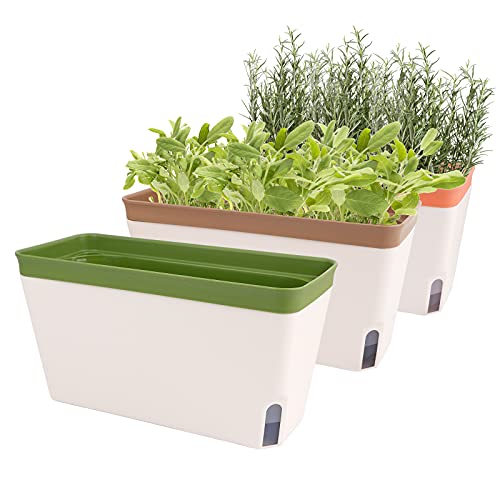
OurWarm Windowsill Herb Planter Box Indoor Set of 3, 10.5 Inch Self Watering Planter Pots with Visual Water Level Window, Modern Plastic Plant Pots for Herbs, Vegetables, Succulents Plants
SELF-WATERING PRINCIPLE: Through two absorbent cotton ropes, the self watering pots provide water to the soil and keep...
As an affiliate, we earn on qualifying purchases.
Conclusion
Self-watering pots are like your plant’s best friend, always there to keep them healthy and hydrated. They save you time, prevent overwatering, and make plant care simpler—perfect for busy days. With these pots, you can enjoy lush, thriving plants without the constant worry. Think of them as a gentle rhythm in your busy life, helping your plants flourish effortlessly. Embrace self-watering pots and turn plant care into a stress-free, enjoyable routine.

YNNICO Indoor Self Watering Planters with Drainage Holes and Saucers, 8, 7, 6.5, 6, 5.5, 5 Inches, Black, 6 Pots
【Practical Size Combo】-These plastic planters indoor combines with 6 different sizes, 8 inch 7inch 6.5 inch 6 inch...
As an affiliate, we earn on qualifying purchases.

Fielda 8/10/12 Inch Self Watering Pots for Indoor/Outdoor Plants - Large Plastic Planter with Drainage Holes, Water Level Indicator & Deep Reservoir, Modern Decorative Flower Pots (White)
🌿 【Self-Watering Pots with Water Level Indicator】 Designed for busy plant lovers, our 8/10/12 self-watering pots feature a...
As an affiliate, we earn on qualifying purchases.