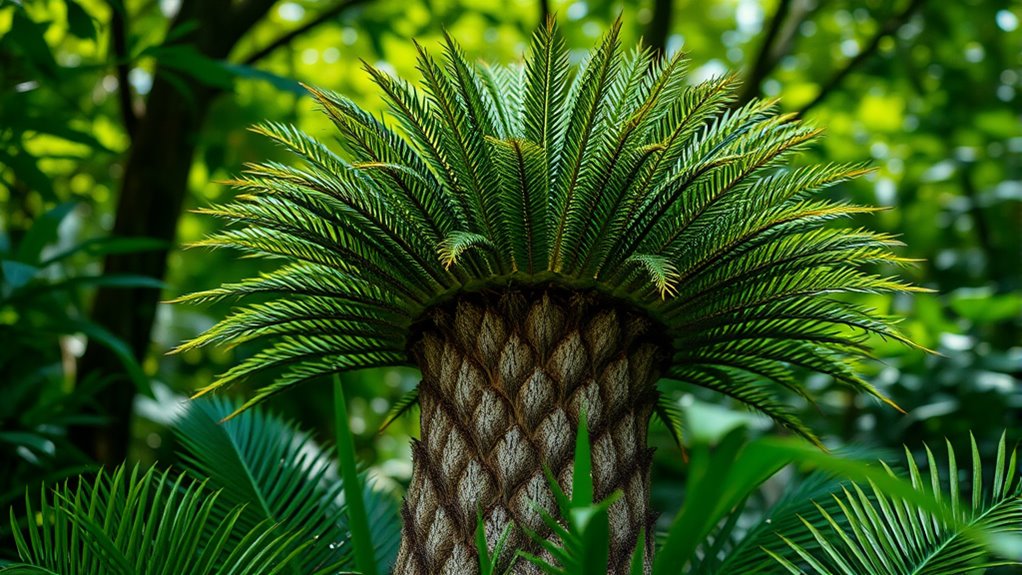

Finding a female Wood’s Cycad remains a vital challenge in conservation. Since this rare plant is dioecious, with males being easier to locate, the absence of a confirmed female hampers understanding of its reproductive biology and natural regeneration. Researchers are actively searching and exploring methods like hand pollination to boost survival chances. If you keep exploring, you’ll discover more about why this elusive female holds the key to saving the species.
Key Takeaways
- A mature female Wood’s Cycad has yet to be confirmed despite extensive surveys and genetic testing.
- Finding a female plant is critical for understanding reproductive biology and enabling natural seed production.
- Conservation efforts focus on protecting existing male plants and habitat, given the absence of a confirmed female.
- The species relies on specialized beetle pollinators, making the discovery of a female essential for full reproductive understanding.
- The search for a female emphasizes urgency in conservation strategies amid habitat loss and ecosystem threats.

Wood’s Cycad has long fascinated botanists and plant enthusiasts alike, especially because finding a female specimen remains a rare and challenging quest. This plant’s elusive nature fuels ongoing efforts to understand its reproductive mechanisms and guarantee its survival. As a dioecious species, Wood’s Cycad relies on specific pollination strategies to reproduce. Unlike many plants that depend on wind or general insect activity, this cycad depends heavily on specialized insect pollinators, often beetles, to carry pollen from male to female plants. Since male specimens are easier to locate, researchers focus on these to study pollination patterns, but the absence of a confirmed female makes it difficult to fully grasp its reproductive cycle. This scarcity hampers conservation efforts, creating significant challenges in protecting the species. Without a known female, natural seed production is nearly impossible, leaving the population vulnerable to extinction. The rarity of female plants also complicates efforts to propagate Wood’s Cycad in cultivation or through conservation programs, which are critical for its survival.
Finding a female specimen isn’t just about fulfilling curiosity; it’s essential for understanding the plant’s reproductive biology and developing effective conservation strategies. Scientists have tried various methods to locate a female, including extensive field surveys and genetic testing of existing specimens. Despite these efforts, a mature female has yet to be confirmed, adding urgency to the search. This difficulty underscores the importance of preserving known male plants and their habitats, as they are the only apparent sources of pollen. However, the plant’s reliance on specialized insect pollinators makes it especially vulnerable to ecosystem disruptions. Yet, without a female, even successful pollination attempts are limited, and natural regeneration remains a distant goal.
Conservation challenges are compounded by habitat loss, invasive species, and climate change, all of which threaten the remaining populations of Wood’s Cycad. The plant’s limited distribution means that habitat degradation could wipe out the species before scientists even identify a female. Additionally, the plant’s specialized pollination strategy makes it vulnerable to disruptions in its ecosystem, such as the decline of its insect pollinators. To prevent extinction, conservationists emphasize protecting existing male plants and their habitats, while also exploring techniques like hand pollination and tissue culture to increase genetic diversity. Yet, until a female plant is discovered, efforts remain incomplete. The quest for a female Wood’s Cycad is more than botanical curiosity; it’s a critical step toward securing the future of this remarkable species amidst mounting conservation challenges.
Frequently Asked Questions
How Long Does It Typically Take to Find a Female Wood’s Cycad?
Finding a female Wood’s cycad can take several years, as pollination timing is essential for success. Once pollinated, seed development usually takes about 6 to 12 months. You should monitor for signs of seed maturity, which indicates the plant has successfully produced female cones. Patience is key, since these cycads grow slowly, and the process from pollination to seed can span multiple years.
Can Wood’s Cycad Reproduce Without a Female Plant?
Can Wood’s cycad reproduce without a female plant? Yes, through asexual propagation, you can produce new plants without fertilization. However, this method limits genetic diversity, making the population more vulnerable to diseases. Like a lone star shining in the night, cloning preserves traits but doesn’t bring the richness of genetic variation. For a resilient future, cultivating both male and female plants is essential, ensuring the species thrives and evolves.
Are There Any Conservation Efforts for Wood’s Cycad?
Yes, conservation efforts for Wood’s cycad focus on protecting its habitat and maintaining genetic diversity. You can support these efforts by advocating for habitat preservation, participating in local conservation programs, or donating to organizations working to safeguard rare plant species. These actions help guarantee the species survives, prevents further genetic bottlenecking, and promotes healthy reproduction, securing the future of Wood’s cycad for generations to come.
What Are the Ideal Growing Conditions for Wood’s Cycad?
You should plant Wood’s cycad in well-draining soil to prevent root rot. It thrives in bright, direct sunlight, so choose a sunny spot that gets plenty of light throughout the day. Avoid areas with heavy, waterlogged soil or limited sunlight, as these conditions hinder growth. Providing ideal soil drainage and ample sunlight guarantees your cycad remains healthy and vibrant, mimicking its natural habitat.
Has a Female Wood’s Cycad Ever Been Successfully Cultivated?
You might think finding a female plant is impossible, but surprisingly, a female Wood’s cycad has been successfully cultivated. This breakthrough shows that with patience and proper care, cultivating a female plant is achievable, challenging the notion of rarity. It highlights how perseverance in botanical efforts can unseal nature’s secrets, proving that even the most elusive plants can be brought to life through dedicated cultivation success.
Conclusion
Now, with hope still flickering like a fragile flame, you stand at the edge of a botanical mystery. Wood’s Cycad, once a towering symbol of resilience, whispers secrets only nature can tell. As you search for that elusive female plant, remember you’re nurturing a fragile dream amid a jungle of uncertainty. Keep your heart steady and your spirit curious—because in this quest, every tiny leaf holds the promise of new life blooming against all odds.