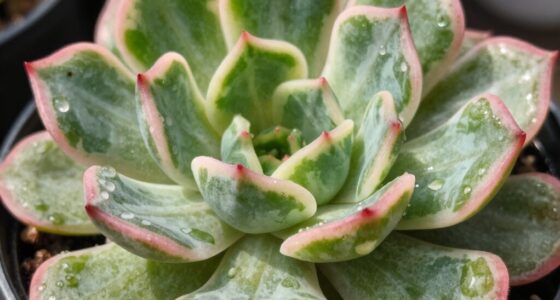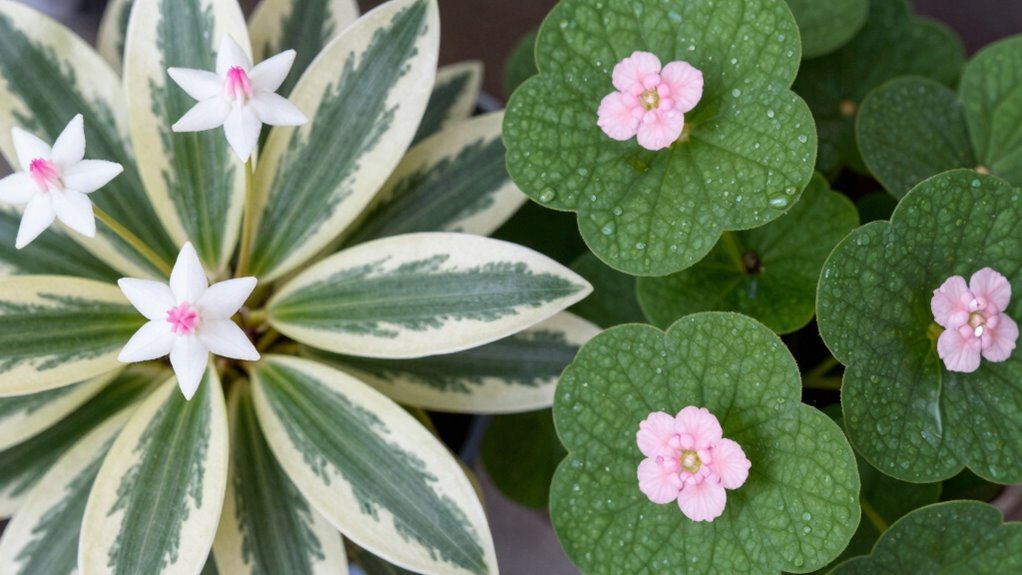

Rare Hoyas stand out from common houseplant Hoyas with their unique foliage, often featuring intricate variegation or distinct leaf shapes. They produce fragrant, more elaborate blooms and have more complex growth habits that make them highly sought after by collectors. These plants may take longer to root and require specific care. If you’re curious about the subtle differences and how to care for these special varieties, you’ll find plenty more to explore.

Get the little things that make your day delivered free with Prime
- Fast, free delivery on millions of items
- Prime Video, Amazon Music and more included
- Member-only deals all year
Key Takeaways
- Rare Hoyas often have distinctive, intricate foliage or unique leaf shapes not found in common varieties.
- They produce more fragrant and elaborate blooms, making them highly desirable among collectors.
- Growth habits and flowering patterns are more complex and visually striking in rare Hoyas.
- Propagation may require specialized techniques, and they often take longer to root.
- They demand more attentive care, including specific light, watering, and potting conditions, to thrive.
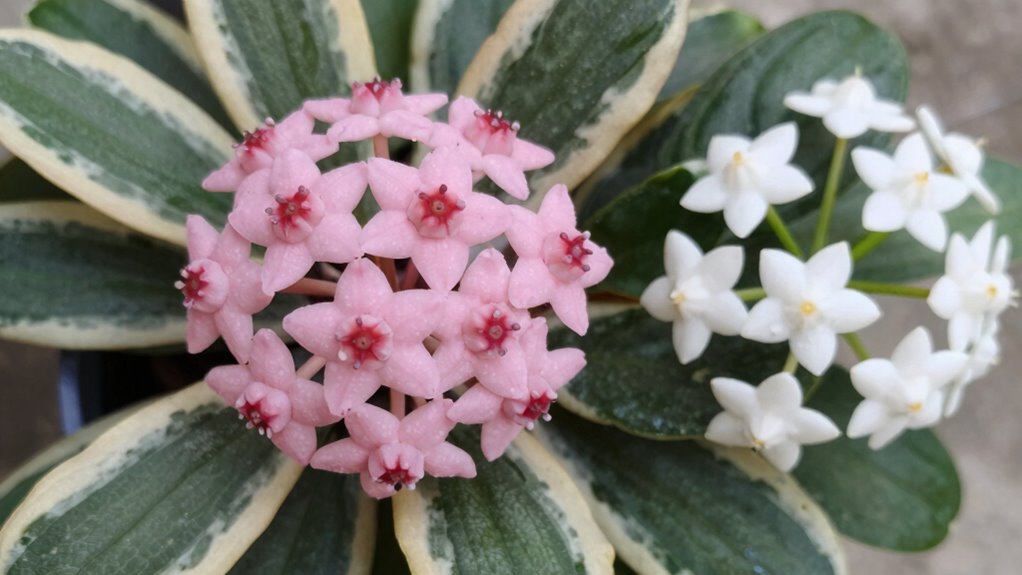
Have you ever wondered what sets rare Hoya varieties apart from the more common houseplant types? The differences often lie in their unique growth habits, leaf shapes, and flowering patterns. Rare Hoyas tend to have more intricate, variegated foliage or exceptionally fragrant blooms, making them highly sought after by collectors. These plants often demand more specialized care, especially when it comes to propagation techniques and potted plant care, to guarantee they thrive and reveal their full beauty.
Rare Hoya varieties feature unique foliage and fragrant blooms, requiring specialized care and propagation for optimal beauty.
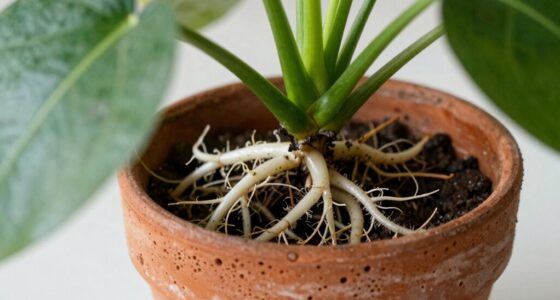
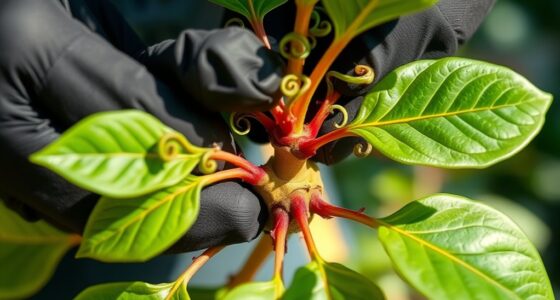
When propagating rare Hoyas, you’ll find that attention to detail matters more than with typical houseplants. Propagation techniques usually involve stem cuttings, which should be taken from healthy, mature plants. You’ll want to use sharp, sterile tools to prevent infection, and allow the cuttings to callus over before planting them in well-draining media. Rooting hormone can speed up the process, but patience is key. Keep the cuttings in warm, bright conditions, avoiding direct sunlight, and maintain consistent moisture levels. Unlike common Hoyas, some rare varieties might take longer to root or may require more specific humidity levels, so monitor their progress closely. Once roots develop, shift the new plants gradually to brighter light and ensure they’re in pots with proper drainage to prevent rot. Additionally, understanding the growth requirements of each variety can significantly improve your success rate.
Caring for rare Hoyas in pots involves more than just watering and feeding. You need to pay close attention to their specific needs, especially since many rare types have delicate foliage or unique growth requirements. Use a high-quality, well-draining potting mix designed for epiphytic plants. Water only when the top inch of soil feels dry, and avoid overwatering, as rare Hoyas are often more sensitive to moisture levels than their common counterparts. Bright, indirect light is ideal, but some rare varieties can tolerate or even prefer more filtered sunlight to bring out their vibrant colors or variegation. Fertilize during the growing season with a balanced, diluted fertilizer, but don’t overdo it—these plants are sensitive to excess nutrients. Adjusting watering schedules based on the specific plant type can further improve their health and flowering potential.
Ultimately, caring for rare Hoyas requires patience and a gentle touch. They might be more finicky than typical houseplants, but their stunning, distinctive flowers and foliage reward your effort. Propagation techniques tailored to their specific needs help you expand your collection successfully, while attentive potted plant care ensures they stay healthy and vibrant. If you appreciate the uniqueness and beauty of these plants, investing extra time and care will be well worth it as you enjoy their extraordinary blooms and foliage that set them apart from common Hoyas.
As an affiliate, we earn on qualifying purchases.
Frequently Asked Questions
Are Rare Hoyas More Difficult to Care for Than Common Varieties?
Rare Hoyas can be more challenging to care for than common varieties, but it depends on your experience. They often require specific propagation techniques, like stem cuttings or air layering, to thrive. You also need to be diligent with pest management strategies, as rare plants may be more susceptible to pests. With proper attention and care, you can successfully nurture these unique plants, but they do demand more precision and patience.
Do Rare Hoyas Require Special Soil or Fertilization?
You might find it interesting that rare Hoyas often need slightly different soil composition and fertilization needs than common varieties. Since they’re less common, they sometimes thrive with well-draining soil that mimics their natural habitat, like a mix of orchid bark, perlite, and potting soil. Fertilize sparingly with a balanced, diluted liquid fertilizer during active growth, ensuring you don’t overdo it—less is often more with these unique plants.
How Can I Identify a Rare Hoya From a Common One?
To identify a rare Hoya from a common one, examine the leaf patterns and overall shape. Rare Hoyas often have distinctive markings, variegation, or unusual leaf textures. Look into their origins—rare Hoya origins typically trace back to specific regions, giving them unique features. Comparing these traits to common Hoyas helps you spot the differences. Pay close attention to the leaf patterns and verify their origins for accurate identification.
Are Rare Hoyas More Expensive Than Common Houseplant Hoyas?
Rare Hoyas are often more expensive than common ones, like treasures buried in a garden of ordinary stones. You’ll find that market demand and collector value drive up their prices, making them sought-after gems for enthusiasts. Their rarity, unique foliage, and stunning flowers appeal to collectors, which bumps up their price tag. So, if you’re hunting for a rare Hoya, expect to pay a premium for its exclusivity and desirability.
Do Rare Hoyas Have Unique Flowering Patterns or Fragrances?
Yes, rare hoyas often have unique flowering patterns and fragrances. You’ll notice fragrance variations that set them apart from common varieties, offering more intense or distinct scents. Their blooming uniqueness also shines through with unusual shapes, colors, and arrangements of flowers. These special features make caring for rare hoyas especially rewarding, as you get to enjoy not just their visual appeal but also the aromatic and structural diversity that comes with rarity.
As an affiliate, we earn on qualifying purchases.
Conclusion
Now that you see how rare hoyas stand apart from their common cousins, imagine what secrets they might hold. With their elusive blooms and unique foliage, these plants could transform your space into a living treasure chest. But beware—those hidden mysteries come with a twist. Are you ready to uncover the rare hoya’s true potential? The next step might just change the way you see these mesmerizing plants forever.
As an affiliate, we earn on qualifying purchases.
As an affiliate, we earn on qualifying purchases.
Fall Picks
fall essentials
As an affiliate, we earn on qualifying purchases.