Acer griseum faces a critical future as environmental pressures like climate change, habitat loss, and invasive pests threaten its survival. Its slow growth and specific habitat needs make adaptation difficult, especially outside its native Chinese mountain regions. Conservation efforts are essential, but they’re often hampered by ecological challenges. If these threats persist, wild populations could decline further, risking extinction. To understand the current challenges and what’s being done to protect this iconic maple, keep exploring the situation.
Key Takeaways
- Wild populations of Acer griseum face increasing threats from climate change, habitat loss, and invasive pests.
- Conservation efforts focus on protecting genetic diversity and cultivating the species in botanical gardens.
- Environmental stresses cause health decline, making the species more vulnerable to frost, pests, and disease.
- Future survival depends on reducing ecological threats and stabilizing climate conditions in native habitats.
- Urgent action is needed to address habitat disturbance and environmental instability to prevent species extinction.

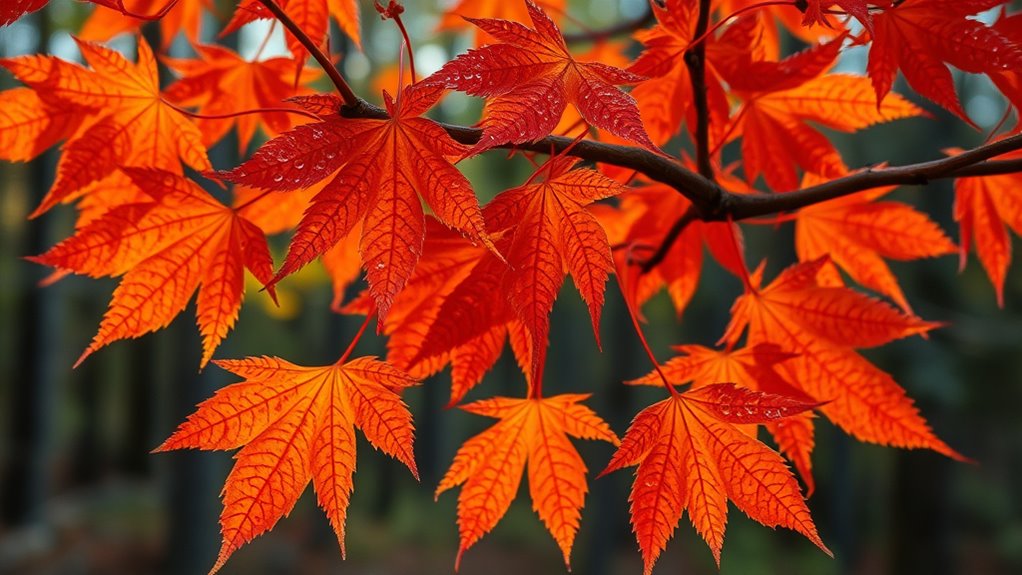
As winter approaches, the once lush maples are showing signs of distress, their vibrant leaves fading and branches weakening. You might notice that the delicate, peeling bark of Acer griseum, the Paperbark Maple, is losing its luster, exposing patches of bark that seem more fragile than ever. This species, cherished for its ornamental appeal and distinctive bark, now faces an uncertain future as environmental pressures intensify. The changing climate has brought unpredictable swings in temperature, droughts, and invasive pests, all of which threaten its survival. You could argue that the very qualities that make this tree so unique might also be its downfall. Its slow growth rate and specific habitat needs mean that it can’t easily adapt to rapid environmental shifts, leaving it vulnerable to decline.
You might wonder why this particular maple, often considered resilient, is now on the brink. Despite its hardy reputation, Acer griseum’s native range is limited to certain mountainous regions in China, where it has evolved in a relatively stable climate. Now that its habitat is disturbed by deforestation and urban development, the tree’s prospects dim further. You may also notice that, in cultivation, it struggles more than other maples, showing signs of stress when conditions aren’t ideal. Its thin, papery bark, which once served as a beautiful feature, becomes more susceptible to damage from frost and pests, accelerating its decline. You might feel a sense of urgency to protect it, knowing that the loss of this distinctive species would be a blow to botanical diversity.
Furthermore, the importance of conservation efforts becomes even more apparent as the species faces these mounting threats. The future of Acer griseum hinges on both conservation efforts and environmental stability. If you’re involved in preservation, you could focus on cultivating it in protected areas or botanical gardens, ensuring genetic diversity and raising awareness about its plight. Yet, even as these efforts grow, the broader impacts of climate change cast a shadow over all such initiatives. You may realize that without addressing larger ecological issues—such as reducing greenhouse gases and conserving natural habitats—the wild populations of this maple will continue to dwindle. The clock is ticking, and the question remains whether human intervention can turn the tide for this delicate species. As you observe its decline, it becomes clear that the fate of Acer griseum is intertwined with the health of our environment, a reminder of the fragile balance that sustains even the most resilient species.
Frequently Asked Questions
What Specific Regions Are Most at Risk for Acer Griseum Decline?
You should watch regions like central China and parts of Taiwan, where Acer griseum faces the highest risks. Deforestation, urbanization, and climate change threaten its habitat there, causing declines. You might also notice increased vulnerability in areas with unpredictable weather patterns or pollution. Protecting these zones is key, so stay aware of conservation efforts and support policies that preserve its natural environment.
How Does Climate Change Directly Affect the Maple’s Survival?
Climate change hits the Acer griseum like a freight train, directly threatening its survival. Rising temperatures can cause heat stress, disrupt flowering, and weaken the tree’s resilience. Altered rainfall patterns lead to droughts or floods, which damage roots and reduce growth. You might not see it immediately, but these changes gradually turn this beautiful maple into a shadow of its former self. Staying alert is essential to protect this species.
Are There Any Conservation Efforts Currently in Place for Acer Griseum?
Yes, conservation efforts for Acer griseum are underway. You can support organizations that protect endangered species and their habitats, participate in local tree planting initiatives, or advocate for policies that safeguard these trees. Researchers are also working on cultivating resilient varieties and restoring native habitats. By staying informed and involved, you play a crucial role in ensuring the survival of this beautiful, rare maple for future generations.
Can Acer Griseum Be Cultivated Successfully Outside Its Native Habitat?
Yes, you can cultivate Acer griseum successfully outside its native habitat if you provide the right conditions. Make certain it gets well-drained, acidic soil, and place it in a location with partial shade. Regular watering is essential, especially during dry spells, and protection from harsh winter winds helps. With proper care, this beautiful paperbark maple can thrive in various climates, making it a lovely addition to your garden.
What Are the Potential Ecological Impacts if the Species Declines?
If Acer griseum declines, you might see a gentle shift in local ecosystems. This species, like a quiet storyteller, supports various insects and birds. Its absence could subtly disrupt these connections, leading to less biodiversity and weakened resilience. While the changes may seem minor, they ripple through the environment, reminding you how delicate balance is. Protecting this maple helps preserve the vibrant web of life around it.
Conclusion
As you stand before the Acer griseum, it’s clear this delicate maple is a fragile gem in our natural crown. Its future hangs like a candle’s flame in the wind—beautiful yet vulnerable. By protecting its environment and understanding its needs, you can help guarantee this treasured tree continues to shine. Remember, every small action is a drop in the ocean of conservation, keeping this wild wonder alive for generations to come.