
Encephalartos woodii is often called the loneliest plant because it’s a rare, sterile cycad with no known female specimens, so it can’t produce seeds naturally. All existing plants are clones of a single individual, making it effectively genetically stuck and unable to reproduce on its own. This unique situation highlights the challenges of extinction and species survival, and if you look further, you’ll discover more about its fascinating conservation story.
Key Takeaways
- Encephalartos woodii is a rare, iconic cycad native to South Africa, known for its striking appearance.
- It reproduces only as a male plant; no female specimens have ever been found.
- All existing plants are clones of a single original, making it effectively sterile and unable to produce seeds.
- Its status as a species with no female plants makes it the “loneliest plant” and a symbol of conservation challenges.
- Conservation efforts focus on cloning and tissue culture to preserve its genetic lineage.
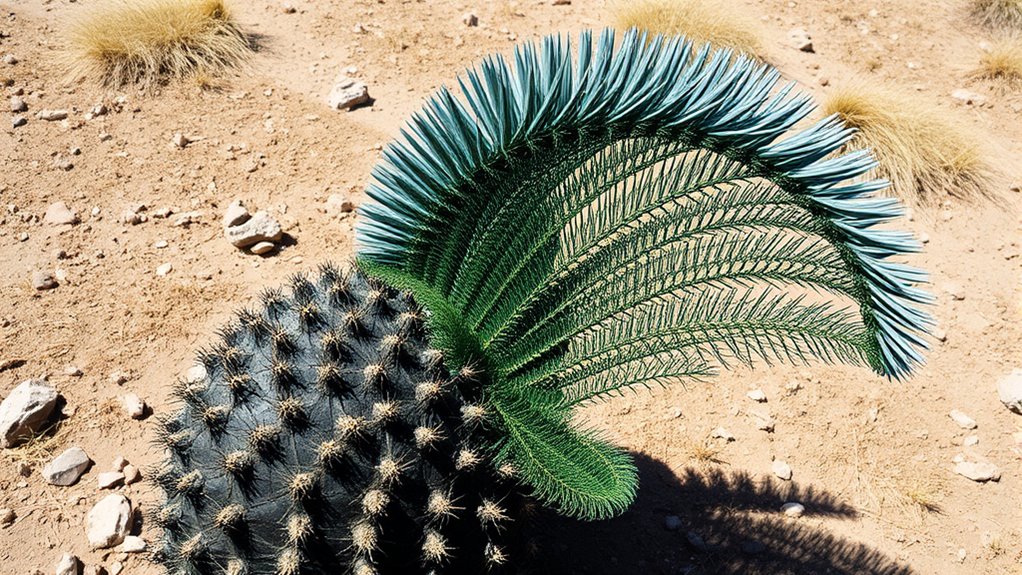
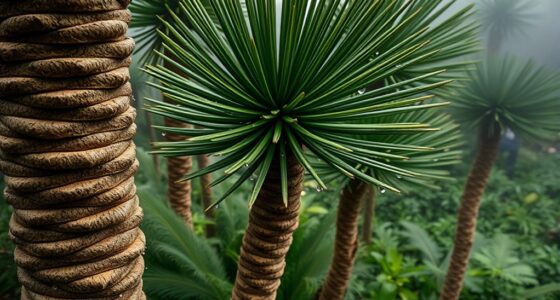
Encephalartos woodii is a rare and iconic cycad native to South Africa, renowned for its striking appearance and conservation status. If you’ve ever seen a picture of this plant, you know its bold, fern-like fronds and robust trunk make it stand out among other cycads. What makes E. woodii especially fascinating is its reputation as the “loneliest plant,” because it’s known to exist only as a male specimen. This unique characteristic shapes its story and adds to its mystique among botanists and plant enthusiasts alike.
Encephalartos woodii is the legendary male-only cycad, known as the loneliest plant with striking fern-like fronds.
You might wonder how a plant can be considered incomplete or “lonely.” Well, Encephalartos woodii reproduces through cones, and since only male plants have ever been identified, there’s no natural way for it to produce seeds or offspring. This means that, despite its impressive size and striking form, it’s effectively sterile. Scientists believe that the original plant was part of a now-extinct population, and all existing specimens are clones of that single individual. Because it produces no seeds, the species is considered functionally extinct in the wild, though cultivated specimens still exist in botanical gardens and private collections.
You’ll find that this plant’s rarity has driven its value and mystique sky-high. Since no female plants have ever been discovered, conservation efforts focus on maintaining existing specimens and propagating through cloning techniques. You might notice that many of the plants in cultivation are propagated via tissue culture or cuttings, attempting to preserve its genetic lineage. Despite these efforts, the species remains a symbol of conservation challenges, illustrating how fragile and vulnerable certain plants can be when natural reproduction is impossible. Advances in biotechnology continue to offer new hope for preserving and potentially restoring such unique species.
It’s interesting to see how the story of Encephalartos woodii reflects broader themes about human impact and genetic diversity. You may be inspired to learn more about plant conservation, especially how a single individual’s fate can influence an entire species’ survival. Its existence as only a male plant also raises questions about natural selection and genetic bottlenecks. Despite its “loneliness,” E. woodii continues to captivate botanists and collectors worldwide, serving as a reminder of nature’s fragility and resilience.
If you get the chance to see one, whether in a botanical garden or a private collection, you’ll notice that it’s more than just a plant. It’s a living symbol of conservation struggles, a reminder of what can happen when natural processes are disrupted. Its striking form and poignant story make Encephalartos woodii a true botanical marvel—an enduring testimonial to nature’s complexity and fragility, and a symbol of hope for future preservation efforts.
Top picks for "encephalarto woodii loneliest"
Open Amazon search results for this keyword.
As an affiliate, we earn on qualifying purchases.
Frequently Asked Questions
Can Encephalartos Woodii Ever Produce Seeds Naturally?
No, Encephalartos woodii cannot produce seeds naturally because it’s a male plant and has no female counterparts. Without a female, it can’t complete the reproductive process. You might wonder if it can reproduce through other means like cloning or tissue culture, but natural seed production isn’t possible. To see new plants, you’d need to find a compatible female or use horticultural techniques to propagate it artificially.
Are There Any Successful Methods to Reproduce Encephalartos Woodii Artificially?
You can definitely give Encephalartos woodii a new lease on life through artificial reproduction. Propagation methods like cloning via tissue culture or grafting are successful, allowing you to produce genetically identical plants even without natural seeds. It’s a bit of a tall order, but with patience and the right techniques, you can help this lonely plant thrive and expand its presence in botanical collections worldwide.
How Long Does Encephalartos Woodii Typically Live in the Wild?
You’ll find that Encephalartos woodii in the wild typically lives around 50 to 100 years, though some may live longer under ideal conditions. You should know that its longevity depends on environmental factors like climate, soil quality, and protection from pests. Since it’s a rare and endangered species, observing it in its natural habitat can be rare, making every encounter a special chance to appreciate its unique history.
What Efforts Are Being Made to Find a Female Counterpart?
Scientists actively search for female Encephalartos woodii in remote regions, hoping to find a match. They conduct field expeditions, analyze genetic data, and collaborate with local communities to locate any hidden females. While the chances are slim, these efforts aim to find a living female, which could enable propagation. Your interest helps support conservation, encouraging more research and exploration to save this rare, iconic plant.
Is Encephalartos Woodii Considered Critically Endangered or Extinct?
You should know that Encephalartos woodii is considered extinct in the wild because no living female has been found. While some cultivated specimens exist, they’re all clones from a single male plant. Conservation efforts focus on protecting these clones and exploring advanced cloning techniques. However, without a female, this species cannot reproduce naturally, making it critically endangered and fundamentally unable to recover in its natural habitat.
Conclusion
As you walk through the quiet, ghostly forest of Encephalartos woodii, it’s like witnessing a lone knight in an ancient, deserted castle—majestic yet incomplete. Its story reminds us of nature’s fragile beauty and the hope that someday, new life might break through the silence. Though it stands alone now, its legacy whispers of resilience, inspiring you to cherish every moment of life’s fleeting, precious existence—like a solitary star shining in a vast, dark sky.