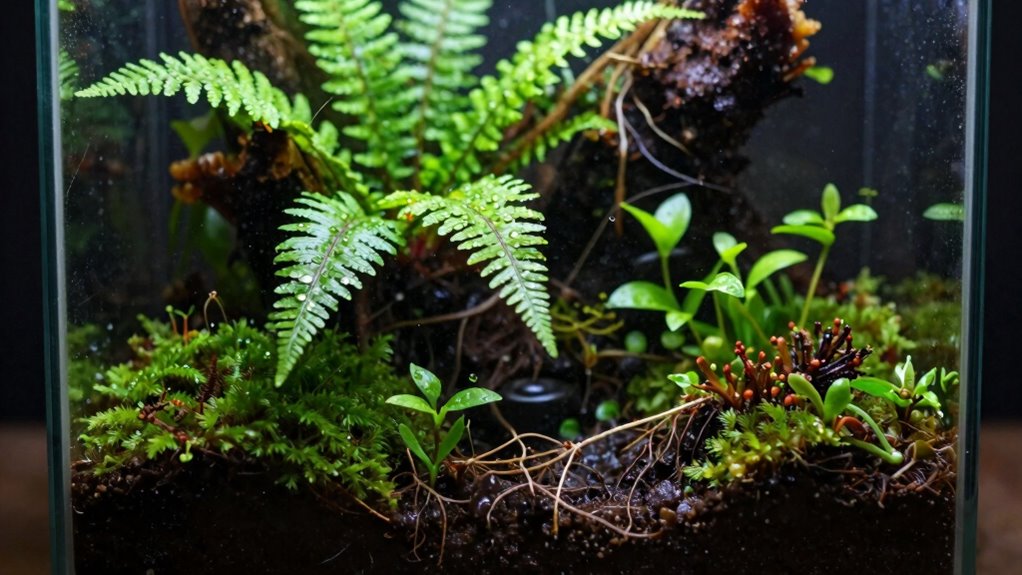
Closed terrariums support humidity-loving species by creating a self-sustaining environment that traps moisture inside. You’ll find that the limited airflow and small vents help retain high humidity levels, perfect for plants like ferns, mosses, and tropical species. Proper air circulation prevents mold and keeps the ecosystem balanced. If you want to learn how to optimize this setup for your plants, there’s more to discover about creating the ideal miniature habitat.

Get the little things that make your day delivered free with Prime
- Fast, free delivery on millions of items
- Prime Video, Amazon Music and more included
- Member-only deals all year
Key Takeaways
- Closed terrariums trap moisture, creating a high-humidity environment ideal for humidity-loving plants.
- Limited airflow inside maintains consistent moisture levels, supporting plants that thrive in humid conditions.
- Proper ventilation prevents mold and rot, ensuring a healthy, stable microclimate for sensitive species.
- Selecting plants adapted to high humidity ensures their growth and survival within the self-sustaining ecosystem.
- Regular monitoring and adjustments sustain optimal humidity, promoting healthy development of moisture-loving plants.
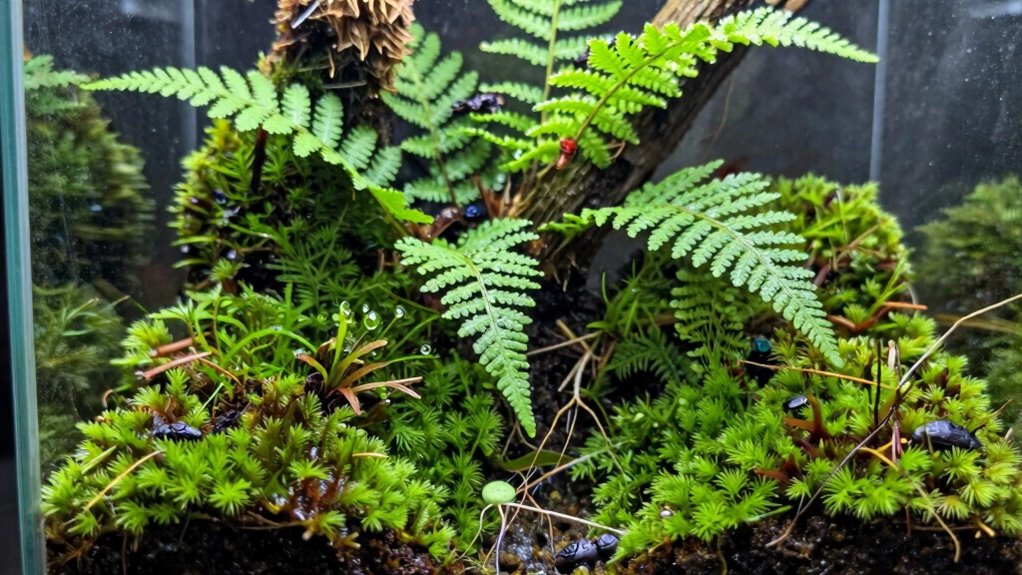
Have you ever wondered why some plants thrive better in enclosed environments? The answer lies in how sealed terrariums create a unique microclimate that mimics their natural habitats. These mini ecosystems trap humidity and maintain a stable environment, making them ideal for moisture-loving species. When you set up a closed terrarium, you’re fundamentally creating a self-sustaining world where humidity levels stay high without constant intervention. This controlled environment supports plants that require consistently moist conditions, such as ferns, mosses, and certain tropical species.
One of the key factors in maintaining a healthy closed terrarium is understanding air circulation. Unlike open planters, sealed terrariums limit airflow, which can seem counterintuitive at first. However, this limited air movement helps retain moisture inside the container. To prevent excessive humidity that could lead to mold or rot, you should guarantee there’s just enough air exchange. Small, intentional openings or tiny vents can help regulate this airflow without allowing too much humidity to escape. Proper air circulation keeps the environment fresh, reducing the risk of fungal issues while still maintaining the moist conditions these plants love. Additionally, incorporating natural filtration can aid in maintaining water quality within the terrarium, supporting a healthier ecosystem. Understanding microclimates can help you better tailor your terrarium setup to meet the needs of your plants. Recognizing how humidity levels fluctuate within the environment can further help you fine-tune your setup for optimal plant health. Creating a balanced air exchange enhances plant growth and prevents issues related to overly stagnant air.
Plant selection plays an essential role in the success of your closed terrarium. Not all plants are suited for enclosed environments; some need more air movement or drier conditions. Choose species adapted to high humidity and low airflow, such as fittonia, peperomia, or small bromeliads. These plants naturally thrive in humid forests and will flourish in your terrarium. When selecting plants, consider their size and growth habits, opting for varieties that won’t outgrow the container rapidly. Mixing different textures and colors can create a vibrant, balanced ecosystem, but be cautious not to overcrowd, as this can hinder air circulation and lead to issues like mold or pests. Additionally, understanding indoor air quality and how humidity impacts it can help you optimize your terrarium’s environment for both plant health and overall home comfort.
In reality, a closed terrarium offers an ideal environment for humidity-loving plants because it combines controlled humidity with carefully managed air circulation. Your role is to select the right plants and provide just enough ventilation to keep them healthy. Regular monitoring and occasional adjustments guarantee the environment remains stable and suitable for your chosen species. This delicate balance allows your plants to thrive, creating a lush, miniature paradise that’s easy to care for and visually fascinating. With proper plant selection and thoughtful air circulation, your closed terrarium can become a thriving, sustainable ecosystem full of vibrant life.
closed terrarium kit for humidity-loving plants
As an affiliate, we earn on qualifying purchases.
As an affiliate, we earn on qualifying purchases.
Frequently Asked Questions
How Often Should I Water a Closed Terrarium?
You should water your closed terrarium only when you notice the soil is dry or the moisture levels drop considerably, usually once every few months. Make sure the plant placement and light requirements are appropriate; too much direct sunlight can cause excess evaporation, so monitor humidity levels. When watering, do so sparingly to maintain the ideal humidity, and avoid overwatering, which can lead to mold or root rot.
Can I Keep Dry-Loving Plants in a Closed Terrarium?
Yes, you can keep dry-loving plants in a closed terrarium, but you’ll need to manage humidity carefully. Dry plants prefer lower humidity levels, so you should open the terrarium occasionally to allow moisture to escape or choose plants that tolerate drier conditions. Proper humidity control is key to preventing excess moisture, which can harm dry plants. Monitoring your terrarium regularly helps make certain your dry-loving plants thrive comfortably.
What Is the Ideal Size for a Closed Terrarium?
The ideal size for a closed terrarium is surprisingly compact—think small enough to fit comfortably on your shelf but large enough to mimic a lush rainforest. You need to take into account terrarium ventilation to prevent mold and guarantee airflow, while selecting plants that thrive in confined spaces. A 12-inch by 12-inch by 12-inch cube hits the sweet spot, giving your humidity-loving species room to flourish without becoming overwhelmed.
How Do I Prevent Mold Growth Inside the Terrarium?
To prevent mold growth inside your terrarium, guarantee good air circulation by opening it periodically or adding ventilation. Mold prevention also involves removing excess moisture, so avoid overwatering and wipe away any visible mold immediately. Keep the terrarium in a well-ventilated area, and use a layer of charcoal at the bottom to absorb excess humidity. These steps help maintain a healthy environment and reduce mold risks effectively.
Are Closed Terrariums Suitable for Animals?
Think of a closed terrarium as a delicate glass garden serving as a cozy home for some animals. While it’s perfect for humidity-loving plants, it’s generally not suitable for most animals, especially those needing more space or specific conditions. Wildlife compatibility depends on the species, and terrarium maintenance is vital to prevent issues like mold or overcrowding. Always research your chosen species to guarantee a safe, healthy environment.
miniature ecosystem terrarium supplies
As an affiliate, we earn on qualifying purchases.
As an affiliate, we earn on qualifying purchases.
Conclusion
By now, you can see how closed terrariums create the perfect paradise for humidity-loving species, turning your space into a lush, thriving jungle. With proper care, they’ll flourish better than you ever imagined—almost like a rainforest bursting with life right in your home. So, embrace the magic of closed terrariums, and watch your plants and creatures thrive in their own miniature world. Get ready for a jungle adventure that’s truly nothing short of extraordinary!
As an affiliate, we earn on qualifying purchases.
As an affiliate, we earn on qualifying purchases.
Fall Picks
fall essentials
As an affiliate, we earn on qualifying purchases.