Pollen plays a crucial role in plant reproduction by carrying genetic material from one flower to another. It travels through various methods, such as wind dispersal or animal pollination, to reach compatible plants. Wind-pollinated species produce lightweight pollen for long-distance travel, while animal-pollinated plants rely on insects, birds, or bats to transfer pollen. Understanding these mechanisms reveals how plants guarantee their survival and diversity—discover more about these fascinating processes below.

Get the little things that make your day delivered free with Prime
- Fast, free delivery on millions of items
- Prime Video, Amazon Music and more included
- Member-only deals all year
Key Takeaways
- Pollen carries the male genetic material essential for plant reproduction and diversity.
- Pollen travels through wind or animals, depending on the plant’s dispersal strategy.
- Wind-pollinated plants produce lightweight pollen suited for long-distance air travel.
- Animal pollination involves insects, birds, or bats transferring pollen between flowers.
- Modern studies of pollen dispersal enhance conservation efforts and agricultural productivity.
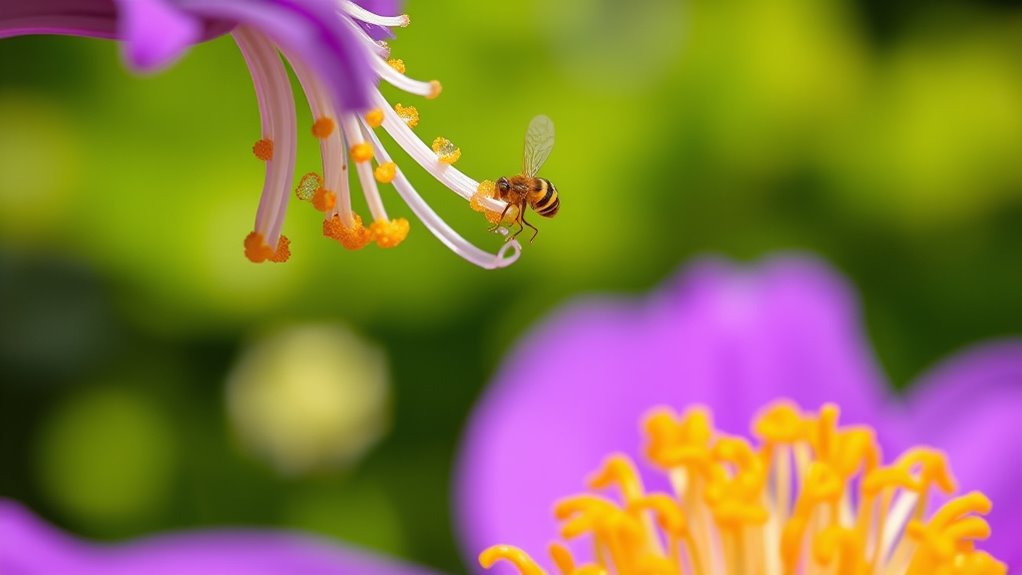
Pollen plays an essential role in plant reproduction, serving as the male reproductive unit that carries genetic material from one flower to another. When you look closely at flowers, you’re witnessing a complex dance driven by pollination ecology, which explores how plants and their pollinators interact. This field helps explain the strategies plants use to guarantee their pollen reaches the right destination. The success of this process depends heavily on pollen dispersal mechanisms, the methods by which pollen moves through the environment. Understanding these mechanisms reveals how plants adapt to their surroundings and optimize reproduction. For example, some plants produce lightweight pollen designed for wind dispersal, allowing the tiny grains to drift through the air over long distances. These plants often have flowers that are less conspicuous but produce massive amounts of pollen to increase the chances of reaching a compatible flower. In contrast, animal pollination involves insects, birds, or even bats. When a pollinator visits a flower, pollen sticks to their bodies, and as they move to the next flower, some of this pollen is transferred, enabling cross-pollination. This process is highly efficient for plants that attract specific pollinators, increasing the likelihood of successful reproduction. The diverse pollination ecology of plants influences their pollen dispersal mechanisms. For instance, plants pollinated by bees tend to have bright, fragrant flowers that attract these insects, which then carry pollen from flower to flower. Birds like hummingbirds prefer tubular, nectar-rich flowers, and their movements help disperse pollen across greater distances. Wind-pollinated plants often have flowers that lack bright colors or scent because they don’t need to attract pollinators; instead, they produce large quantities of lightweight pollen that can be easily carried by breezes. Some plants even employ specialized adaptations such as sticky pollen or structures that facilitate attachment to animal visitors, guaranteeing effective transfer. Additionally, the advent of modern technology in studying pollen dispersal has allowed scientists to better understand these mechanisms, leading to improved conservation strategies. Understanding pollen dispersal mechanisms isn’t just about appreciating nature’s complexity—it’s essential for conservation and agriculture. By knowing how pollen moves, you can better grasp the importance of maintaining healthy ecosystems and pollinator populations. Disruptions to these mechanisms, whether from habitat loss, pollution, or climate change, threaten plant diversity and food security. Whether wind carries pollen across vast distances or animals play a pivotal role in pollination, each mechanism highlights the intricate relationships that sustain plant populations. Recognizing these connections helps you appreciate how fundamental pollen dispersal is for the health of ecosystems and the survival of countless plant species.
pollination study kits for plants
As an affiliate, we earn on qualifying purchases.
As an affiliate, we earn on qualifying purchases.
Frequently Asked Questions
How Do Plants Attract Specific Pollinators?
You can attract specific pollinators through pollination mechanisms and floral adaptations. Plants use bright colors, unique shapes, and appealing scents to target particular pollinators like bees, butterflies, or birds. By offering nectar or pollen as rewards, they encourage these animals to visit. These floral adaptations guarantee that pollinators are drawn to the right plants, increasing the chances of successful pollination while also benefiting the pollinators.
What Role Do Insects Play in Pollen Transfer?
Insects act as diligent messengers, transferring pollen from flower to flower, much like couriers in a bustling city. Their behavior, guided by pollination syndromes, guarantees that plants reproduce efficiently. As insects visit flowers searching for nectar, they inadvertently collect pollen on their bodies and deposit it on other blossoms. This crucial role sustains plant diversity and ecosystem health, making insects indispensable partners in the dance of pollination.
Can Pollen Travel Long Distances Naturally?
Yes, pollen can travel long distances naturally through wind dispersal. When the wind picks up, it carries lightweight pollen grains far from the parent plant, aiding in seed dispersal and increasing genetic diversity. You might notice this in grasses and trees like pines, which rely heavily on wind to spread their pollen across vast areas, helping plants reproduce successfully even in remote locations.
How Does Pollen Influence Plant Genetic Diversity?
Think of pollen as tiny messengers that carry stories of genetic variation across the landscape. When you understand how they spread, you see how they spark plant evolution by mixing genes from different plants. This exchange increases genetic diversity, helping plants adapt to changing environments. So, pollen’s journey influences plant evolution, ensuring species remain resilient and diverse, much like a community growing stronger through shared stories and experiences.
Are There Plants That Do Not Require Pollination?
Yes, some plants don’t require pollination. These plants often reproduce asexually through mechanisms like budding, runners, or fragmentation, bypassing pollen dispersal altogether. Others, like certain ferns and some gymnosperms, rely on wind or water for pollination but can also reproduce without it through spores. By using diverse pollination mechanisms or avoiding pollination entirely, these plants ensure survival even when pollinators are scarce.
As an affiliate, we earn on qualifying purchases.
Conclusion
Think of pollen as tiny messengers carrying life’s future from flower to flower. Without them, plants couldn’t reproduce, and our world would lose its lush green color. Just like a relay race, pollen jumps from one partner to the next, ensuring new plants grow. So next time you see a blooming garden, remember the incredible journey of pollen—an unsung hero making the beauty around you possible. It’s truly nature’s delicate, essential miracle.
As an affiliate, we earn on qualifying purchases.
As an affiliate, we earn on qualifying purchases.
NFL season / tailgating Picks
team gear
As an affiliate, we earn on qualifying purchases.