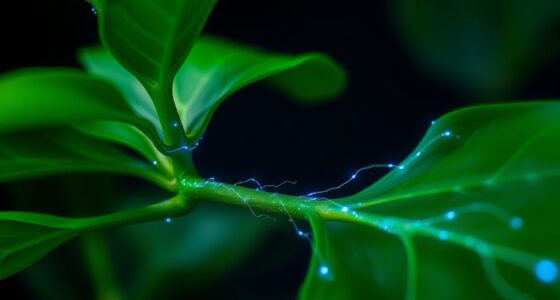
Plants develop different toolkits to survive drought and flood conditions, but their ultimate goal is survival and reproduction. During droughts, they conserve water by closing stomata, developing deep roots, and producing osmolytes. In floods, they create air channels, grow specialized roots, and switch to anaerobic respiration. These contrasting strategies suit each environment but share the common aim of enduring stress. Keep exploring to discover how these adaptations work together to help plants thrive.
Key Takeaways
- Drought and flood tolerance involve distinct structural and physiological adaptations to cope with water scarcity or excess.
- Drought-tolerant plants minimize water loss and develop deep roots, while flood-tolerant plants facilitate oxygen flow and prevent root rot.
- Both strategies aim to ensure plant survival and reproductive success under extreme environmental stresses.
- Adaptations are energy-efficient in drought conditions but focus on oxygen acquisition during flooding.
- Understanding these toolkits helps in selecting and managing plants suited for specific water-related challenges.

Understanding how plants tolerate drought and floods is essential for managing agriculture and ecosystems in changing climates. Both stressors threaten plant survival, but they require very different strategies for resilience. When water is scarce, plants must conserve moisture, expand their root systems, and reduce water loss to survive long dry spells. Conversely, during floods, plants need to cope with excess water, oxygen deprivation, and potential root damage. Recognizing these contrasting needs helps you develop the right approaches to support plant health under variable conditions. Additional research into plant adaptations reveals the remarkable ways species have evolved to withstand these extremes. In drought conditions, plants typically activate mechanisms to minimize water loss. You’ll see them develop deeper roots to access water reserves underground, or they might close stomata—the tiny pores on leaves—to reduce transpiration. Some plants produce osmolytes, which are molecules that help maintain cell turgor and protect cellular functions when water is limited. Others enter a state of dormancy, halting growth until conditions improve. These adaptations are energy-efficient ways to survive prolonged dry periods, allowing plants to wait out the drought until water becomes available again.
Flood tolerance, on the other hand, involves different structural and physiological adaptations. When water levels rise rapidly, plants need to breathe despite saturated soils. You might notice features like aerenchyma—spongy tissue that creates air channels within roots and stems—allowing oxygen to reach submerged tissues. Some plants develop specialized roots, such as pneumatophores, which protrude above water to facilitate gas exchange. Others can switch their metabolic pathways to anaerobic respiration, enabling them to survive temporarily without oxygen. These strategies help plants avoid root rot, maintain metabolic activity, and restore growth once floodwaters recede.
Despite these distinct toolkit differences, the overarching goal remains the same: ensuring survival and reproduction amid environmental stress. The key is understanding that drought-tolerant plants focus on conserving water and reducing their metabolic activity, while flood-tolerant plants prioritize oxygen acquisition and preventing hypoxia. As climate change intensifies, you need to recognize which strategies are appropriate for specific conditions and select plant varieties or management practices accordingly. Enhancing resilience involves not only choosing the right species but also adopting soil management, irrigation, and drainage practices that support these natural adaptations. Both drought and flood tolerance exemplify how plants have evolved diverse tools to meet their needs, but your success depends on applying this knowledge effectively to protect ecosystems and agriculture.

Drought Tolerant Wildflowers Mix – Extra Large Packet – Over 7,500 Open Pollinated Non-GMO Seeds – 21 Different Dryland Species
- Large Seed Packet: Over 7,500 seeds for 100 sq ft
- High Germination Rates: Fresher seeds for successful planting
- Premium Packaging: Reusable zipper with planting instructions
As an affiliate, we earn on qualifying purchases.
As an affiliate, we earn on qualifying purchases.
Frequently Asked Questions
How Do Plants Detect Water Stress Signals?
You can detect water stress signals in plants through specialized sensors that monitor changes in soil moisture and internal water levels. When water is scarce, plants sense this drop via root receptors and alter hormone levels, like increasing abscisic acid. This hormone triggers responses such as closing stomata to reduce water loss, signaling the plant to activate drought tolerance mechanisms and conserve resources effectively.
Can a Plant Develop Both Drought and Flood Tolerance Simultaneously?
Yes, a plant can develop both drought and flood tolerance, but it’s like walking a tightrope—you need a delicate balance. Some plants adapt through genetic changes or by activating specific pathways that help them survive both extremes. While tough, it’s a complex feat, and not all plants can master it. Your best bet is to support these adaptations with proper care and breeding strategies to enhance resilience.
What Role Do Root Systems Play in Water Stress Resilience?
Your root systems are vital for water stress resilience. They anchor the plant and absorb water and nutrients, helping you survive droughts or floods. Deep roots access water stored underground, providing stability during dry periods. Meanwhile, extensive lateral roots can quickly take up excess water during floods, preventing damage. By developing a diverse and adaptive root system, you increase your plant’s ability to withstand varying water conditions effectively.
Are There Genetic Markers Linked to Water Stress Tolerance?
Yes, there are genetic markers linked to water stress tolerance. You can identify specific genes associated with drought and flood resilience using marker-assisted selection. These markers help you select plants with desirable traits, speeding up breeding processes. By targeting these genetic indicators, you improve your chances of developing crops that withstand water scarcity or excess, ultimately enhancing your agricultural productivity and sustainability in varying water conditions.
How Does Climate Change Influence Plant Water Stress Adaptation?
Like a sailor steering shifting seas, climate change tests your plants’ resilience. It intensifies water stress, forcing your plants to adapt rapidly—whether by developing deeper roots or closing stomata more efficiently. You must understand these dynamic responses, as unpredictable weather patterns demand flexible strategies. Embracing this challenge, you can select or engineer plants with traits suited for both drought and flood conditions, ensuring their survival amidst a changing climate.

Bonide Garden Rich Root & Grow Root Stimulator & Plant Starter
- Ideal for Various Plants: Suitable for transplants, houseplants, and more
- Stimulates Root Growth: Encourages early root development and vigor
- Contains IBA Hormone: Features active IBA for root initiation
As an affiliate, we earn on qualifying purchases.
As an affiliate, we earn on qualifying purchases.
Conclusion
By understanding the different toolkits plants use to tolerate drought and floods, you can better appreciate their resilience. For example, imagine a rice variety developed to withstand flooding, just like some desert plants have deep roots to survive drought. Whether facing water scarcity or excess, these adaptations aim for the same goal: survival. So, by studying these strategies, you can help develop crops that thrive in changing climates, ensuring food security for the future.

RooTrimmer 1 Gallon Air Pruning Containers, New Plastic Nursery Pots, Fruit Vegetable Garden Self-Planting Pots, Black (1G-10P)
- Roots Control Design: Prevents root circling for healthier roots
- High Transplant Success: Easily transplant without root disturbance
- Durable Construction: Made from premium thick plastic for longevity
As an affiliate, we earn on qualifying purchases.
As an affiliate, we earn on qualifying purchases.

Bonide Bontone II Rooting Powder, 1.25 oz Ready-to-Use Dust for Houseplants and Transplants Speeds Root Development
- Quick Root Development: Promotes fast rooting from cuttings
- Versatile Application: Suitable for cuttings, seeds, and bulbs
- Plant Growth Hormone: Stimulates root growth in various plants
As an affiliate, we earn on qualifying purchases.
As an affiliate, we earn on qualifying purchases.