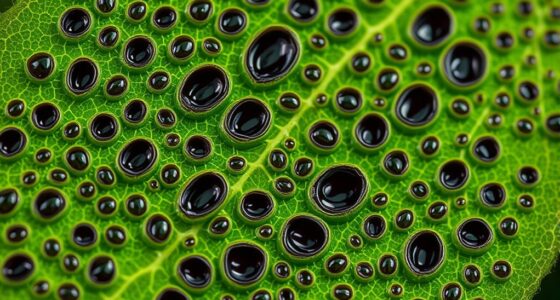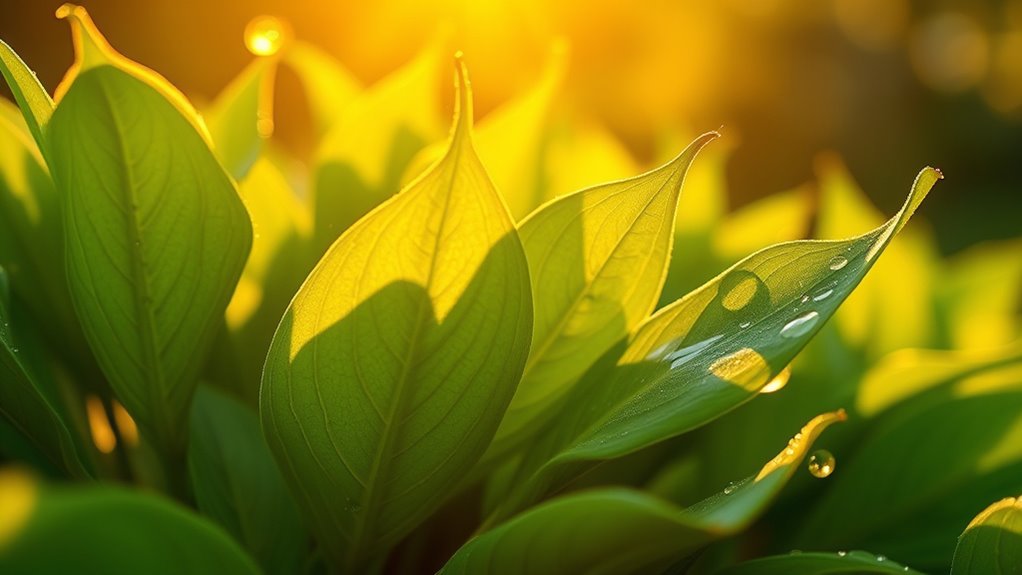

During heat waves, you’ll notice plants struggle as high temperatures slow down photosynthesis by reducing enzyme efficiency and causing stomata to close, which limits carbon dioxide intake. This leads to less energy and glucose production, making plants wilt, curl, or brown at the edges. They activate protective mechanisms like heat-shock proteins and produce stabilizing compounds. Want to discover how these strategies keep plants alive even under extreme heat? Keep exploring to find out more.

Get the little things that make your day delivered free with Prime
- Fast, free delivery on millions of items
- Prime Video, Amazon Music and more included
- Member-only deals all year
Key Takeaways
- Heat stress impairs enzymes crucial for photosynthesis, reducing glucose production and overall plant growth.
- Elevated temperatures cause stomatal closure, limiting CO₂ intake and slowing down photosynthetic processes.
- Plants activate heat-shock proteins and protective compounds to safeguard cellular structures during heat waves.
- Adequate watering, shading, and mulching help mitigate heat damage and support photosynthetic efficiency.
- Prolonged heat exposure can cause cellular damage, leading to wilting, leaf browning, and decreased plant vitality.

Photosynthesis is a critical process that fuels life on Earth, but it doesn’t operate at a constant pace. When a heat wave hits, you might notice your plants struggling more than usual. High temperatures can challenge the delicate balance of photosynthesis, forcing plants to adapt quickly or risk damage. As the heat intensifies, the enzymes responsible for photosynthesis become less efficient, which slows down the conversion of sunlight into energy. This slowdown means your plants produce less glucose, impacting their growth and overall health.
During extreme heat, your plants may start to close their stomata—the tiny pores on their leaves—to prevent water loss. While this helps conserve moisture, it also restricts the intake of carbon dioxide, a essential ingredient in photosynthesis. With less carbon dioxide available, the process stalls further, leading to a decrease in energy production. You might observe your plants wilting or showing signs of stress, like leaf curling or browning edges. This is a direct response to the disrupted balance between water retention and gas exchange.
Closing stomata during heat reduces water loss but hampers photosynthesis, causing wilting and stress signs.
Some plants have developed clever ways to cope with heat stress. You might notice they activate heat-shock proteins that protect their cellular machinery, including the photosynthetic apparatus. These proteins act like molecular shields, helping to repair damaged parts of the chloroplasts—the structures where photosynthesis occurs. Others might adjust their internal chemistry by producing protective compounds that stabilize their cell membranes and enzymes. These adaptations can make a difference, but they often come at a cost: your plants may grow more slowly or divert energy into survival mechanisms rather than growth.
If you’re caring for plants during a heat wave, understanding their responses can help you support them better. Providing adequate water is essential because it helps keep their stomata open longer, allowing carbon dioxide intake to continue. Mulching around your plants can also help keep roots cool and retain soil moisture, reducing stress. Additionally, moving potted plants to shadier areas or providing temporary shade can protect them from direct, intense sunlight, preventing further overheating of their tissues. Recognizing the importance of air quality and reducing pollutants around your plants can also enhance their resilience during stressful conditions.
plant heat stress protection products
As an affiliate, we earn on qualifying purchases.
As an affiliate, we earn on qualifying purchases.
Frequently Asked Questions
How Do Extreme Heat Events Affect Plant Reproductive Success?
Extreme heat events can markedly reduce your plant’s reproductive success by causing stress during flowering and seed development. High temperatures may lead to flower drop, poor pollination, and reduced seed viability. You might notice fewer flowers or less fruit. To help your plants, make sure they’re well-watered, provide shade during the hottest parts of the day, and select heat-tolerant varieties. These steps can improve their chances of successful reproduction despite the heat.
What Role Do Plant Hormones Play During Heat Stress?
Plant hormones play a vital role during heat stress by regulating your plant’s responses to maintain balance. You’ll see hormones like abscisic acid increase, helping your plant close stomata to reduce water loss. Auxins and cytokinins adjust growth patterns, protecting tissues. Jasmonic acid and salicylic acid boost defenses against damage. Together, these hormones coordinate your plant’s stress response, ensuring survival and helping it recover once conditions improve.
Can Some Plants Adapt Quickly to Increasing Temperatures?
Yes, some plants can adapt quickly to increasing temperatures. You might notice them activating heat shock proteins, closing stomata to reduce water loss, or altering their metabolism to cope with stress. These rapid responses help them survive in changing conditions. If you observe these adaptations, it’s a sign that certain plants are resilient and capable of adjusting to their environment’s temperature shifts, ensuring their continued growth and survival.
How Does Heat Influence Nutrient Uptake in Plants?
Heat can reduce your plant’s ability to absorb nutrients by damaging root systems and decreasing the efficiency of nutrient transport. As temperatures rise, you might notice slower growth or nutrient deficiencies because the roots struggle to uptake minerals and water. To help, you should provide adequate watering, mulching to regulate soil temperature, and possibly supplement nutrients to support your plants through high-heat periods.
Are There Specific Plant Species More Resilient to Heat-Induced Photosynthesis Decline?
Yes, some plant species are more resilient to heat-induced photosynthesis decline. You’ll find that desert plants like cacti and succulents have adaptations like thick cuticles and water storage tissues that help them maintain photosynthesis during heat stress. Additionally, certain grasses and native plants have evolved mechanisms such as heat-shock proteins and efficient cooling systems, allowing them to survive and continue photosynthesizing despite rising temperatures.
As an affiliate, we earn on qualifying purchases.
Conclusion
As you see, heat waves substantially stress plants, reducing their photosynthesis efficiency. During extreme temperatures, some plants can lose up to 50% of their photosynthetic activity, risking growth and survival. This highlights how vital it is to understand plant responses to climate change. By protecting plant health, you help guarantee food security and ecosystem stability. So, staying aware of these impacts can guide better conservation efforts in our warming world.
As an affiliate, we earn on qualifying purchases.
watering systems for heat-stressed plants
As an affiliate, we earn on qualifying purchases.
As an affiliate, we earn on qualifying purchases.
Fall Picks
fall essentials
As an affiliate, we earn on qualifying purchases.