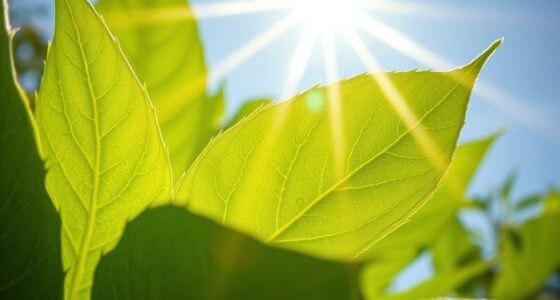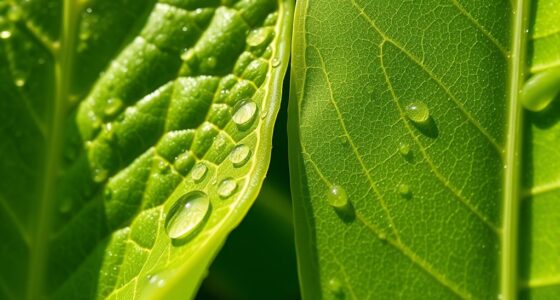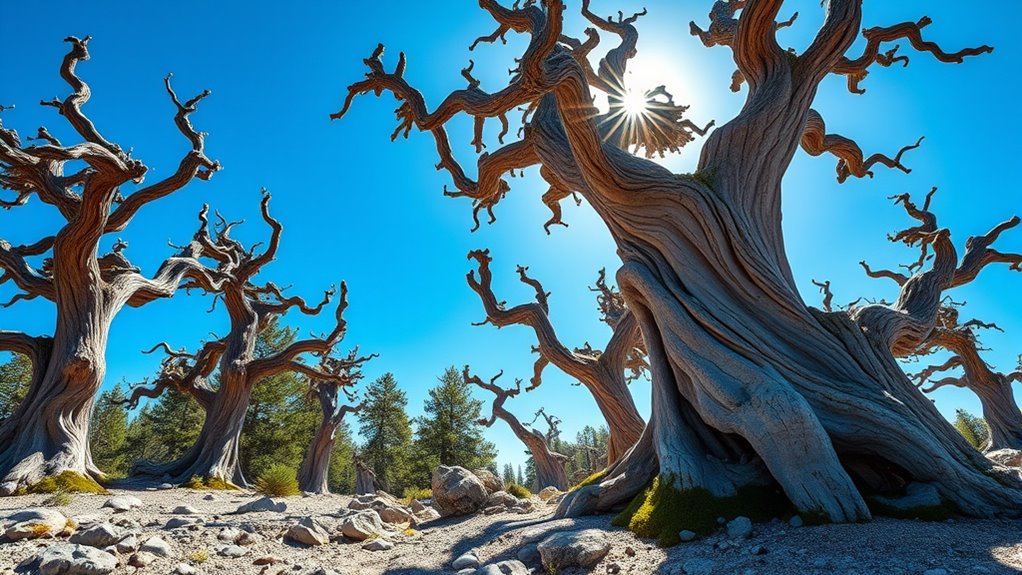

Oldest trees like 5,000-year-old bristlecone pines teach you the power of resilience, adaptation, and genetic diversity. They withstand droughts, extreme temperatures, and natural disasters through their unique genetic traits, showing that longevity isn’t just about age but how well they adapt. Their endurance offers crucial lessons on survival amid climate change, inspiring you to understand nature’s resilience. Keep exploring to discover more about how these ancient giants can guide our future.
Key Takeaways
- 5,000-year-old bristlecone pines demonstrate remarkable genetic resilience, surviving climate change, droughts, and natural disasters over millennia.
- Their longevity is due to adaptive genetic traits that help conserve water and endure extreme environmental conditions.
- The trees teach us the importance of genetic diversity and flexibility for long-term survival and resilience.
- Studying these ancient trees offers valuable lessons on adaptation, resilience, and conservation strategies.
- Their enduring presence inspires sustainable approaches to facing environmental challenges and climate change.
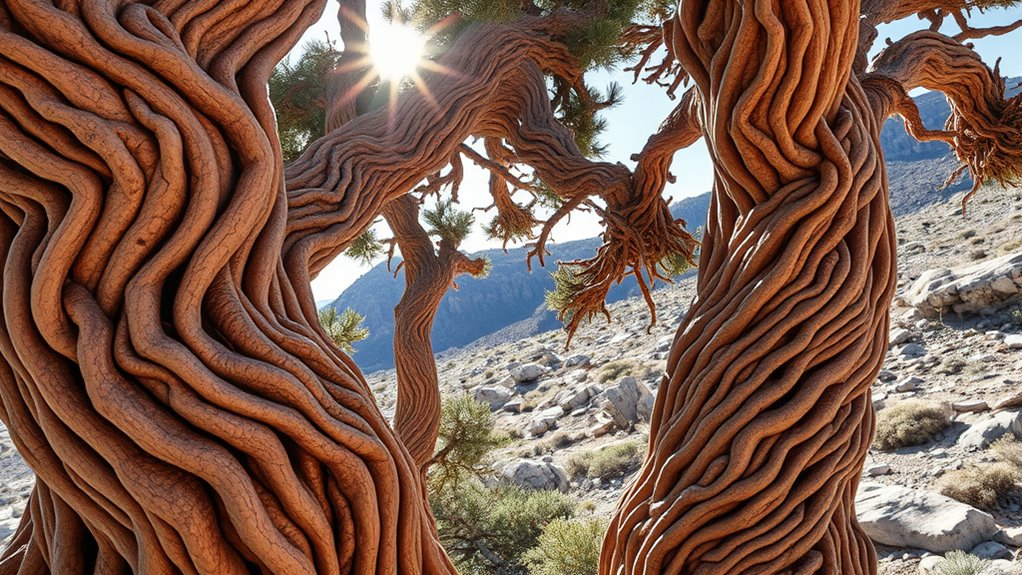
Many of the oldest trees on Earth, like the 5,000-year-old bristlecone pines, have endured centuries of climate change, drought, and natural disasters. Their survival isn’t just a matter of chance; it’s a evidence to their remarkable genetic longevity and climate resilience. As you observe these ancient giants, you begin to realize that their ability to withstand such harsh conditions offers valuable lessons about resilience and adaptation. These trees have survived through millennia of environmental shifts, showing that longevity isn’t solely about age but also about how well a tree can adapt to changing circumstances. Their genetic makeup has enabled them to endure drought, extreme temperatures, and pests, making them living records of natural resilience. Understanding their genetic longevity helps you appreciate the importance of resilience in the face of climate change. These trees have developed unique genetic traits over thousands of years that allow them to conserve water during droughts, slow their growth when conditions are tough, and resist diseases. Their ability to adapt to fluctuating climates isn’t accidental; it’s embedded in their DNA. This resilience is a essential lesson for modern conservation efforts, showing that species with strong genetic adaptability can survive and even thrive amidst environmental upheaval. Genetic diversity plays a crucial role in their survival and resilience. You can see how these trees serve as natural models for resilience, demonstrating that survival often depends on the ability to adapt, not just withstand adversity. Their longevity also underscores the importance of preserving Genetic diversity. The bristlecone pines’ ability to endure for thousands of years hinges on their diverse genetic traits, which have allowed them to respond flexibly to changes. If you want to guarantee future generations’ survival, fostering genetic resilience becomes indispensable. The trees remind you that longevity isn’t just about living a long time but about maintaining the flexibility to adapt throughout that lifespan. Their survival through climate fluctuations teaches you that resilience, built into their very DNA, is a fundamental trait for enduring change. In addition, protecting biodiversity hotspots can help ensure the preservation of species with remarkable resilience traits like those of the bristlecone pines. In the end, these ancient bristlecone pines teach you that resilience is a cornerstone of survival. Their genetic longevity and climate resilience aren’t just fascinating biological traits—they’re inspiring qualities that can guide efforts to adapt to our rapidly changing world. By studying these trees, you gain insight into how resilience and adaptability can be woven into the fabric of life, ensuring survival against all odds. Their enduring presence offers hope and lessons for your own journey through a world in flux.

Raising Resilient Bees: Heritage Techniques to Mitigate Mites, Preserve Locally Adapted Genetics, and Grow Your Apiary
As an affiliate, we earn on qualifying purchases.
As an affiliate, we earn on qualifying purchases.
Frequently Asked Questions
How Do Bristlecone Pines Survive Extreme Weather Conditions?
You can see how bristlecone pines survive extreme weather by their drought resistance and root adaptation. Their tough, resin-rich wood helps conserve water during droughts, while deep, extensive roots anchor them and access underground moisture. These adaptations allow them to endure harsh conditions like freezing temperatures, high winds, and low rainfall, enabling them to thrive in some of the most extreme environments on Earth.
What Do These Ancient Trees Reveal About Climate Change History?
You can learn a lot about climate change history through tree ring analysis of these ancient bristlecone pines. Their rings reveal past climate conditions, helping scientists reconstruct climate patterns over thousands of years. By studying the variations in ring width and density, you gain insights into periods of drought, cold, or warmth, making these trees invaluable for climate reconstruction and understanding how our environment has changed over millennia.
Can Bristlecone Pines Live Even Longer Than 5,000 Years?
Bristlecone pines may live longer than 5,000 years, but their longevity potential is likely limited by genetic factors. While some trees might push past this age, most reach a natural lifespan constrained by their genetic limits and environmental stresses. You can expect these ancient giants to continue surviving for thousands of years, but surpassing their current age probably isn’t common due to inherent biological boundaries.
How Do Scientists Accurately Date These Ancient Trees?
Like explorers uncovering hidden treasure, you rely on dendrochronology techniques to accurately date these ancient trees. You examine tree rings, counting growth patterns that reveal age, while carbon dating methods help verify the timeline by analyzing organic material. Combining these approaches, you piece together a precise history, ensuring these majestic pines stand as timeless witnesses to nature’s endurance, revealing secrets buried deep within their resilient wood.
What Cultural or Spiritual Significance Do These Trees Hold?
You’ll find that these ancient trees hold deep cultural symbolism and spiritual significance for many communities. They’re seen as symbols of resilience, longevity, and wisdom, inspiring respect and reverence. Indigenous peoples and explorers alike view them as sacred, connecting to themes of life’s enduring nature. Their presence reminds you of nature’s strength, fostering a sense of wonder and spiritual reflection that transcends time.
Trees (Nature Observation North America)
Pocket Naturalist Trees by James Kavanagh – 9781583551783
As an affiliate, we earn on qualifying purchases.
As an affiliate, we earn on qualifying purchases.
Conclusion
Like the ancient bristlecone pines standing silent sentinels through the ages, you’re reminded that resilience and patience can span centuries. These trees whisper stories of endurance, echoing the wisdom of those who’ve thrived long before your time. As you face life’s storms, remember the quiet strength of these timeless giants—teaching you that even in the harshest conditions, life endures. Embrace their lesson: longevity begins with resilience.
conservation tools for biodiversity hotspots
As an affiliate, we earn on qualifying purchases.
As an affiliate, we earn on qualifying purchases.

Drought Resistant Wildflower Seeds – 1oz, Open-Pollinated Bulk Flower Seed Mix for Beautiful Perennial, Annual Garden Flowers – No Fillers – 1 oz Packet
High quality seeds and expert guidance: Experience the quality seed difference. We are committed to providing the highest…
As an affiliate, we earn on qualifying purchases.
As an affiliate, we earn on qualifying purchases.