

TL;DR

Get the little things that make your day delivered free with Prime
- Fast, free delivery on millions of items
- Prime Video, Amazon Music and more included
- Member-only deals all year
Top AI researchers from leading tech labs are evaluating how near artificial intelligence is to self-improving recursively. While some believe progress is promising, key technical and safety challenges remain unconfirmed. The discussion underscores the importance of understanding AI’s future capabilities and risks.
Leading artificial intelligence research labs are publicly assessing how close AI systems are to achieving recursive self-improvement, a milestone that could dramatically accelerate AI capabilities. While some experts suggest significant progress is plausible within the next decade, others emphasize that technical and safety challenges remain substantial and unconfirmed. This discussion is gaining attention because of its potential implications for AI development and safety protocols.
Recent statements from top AI labs indicate that the field is actively evaluating whether current architectures could enable AI systems to improve their own algorithms without human intervention. Some researchers point to advances in meta-learning and autonomous optimization as signs of progress, but they caution that true recursive self-improvement—where AI iteratively enhances itself to surpass human intelligence—remains a complex, unresolved goal. Experts agree that several technical hurdles, such as ensuring stability, alignment, and safety, must be addressed before this milestone can be considered close. The discussions are driven by the broader context of rapid AI development, increased public interest, and concerns about the potential risks of highly autonomous systems.While there is no consensus on a timeline, the topic has become a focal point in AI research circles, with some analysts warning that the window for safe development could be narrowing if progress accelerates unexpectedly. However, many acknowledge that current AI systems, including those based on large language models, do not yet demonstrate the capabilities required for true recursive self-improvement, and significant breakthroughs are still needed.
Implications of Achieving Recursive Self-Improvement
The possibility that AI could reach a point where it can improve itself autonomously raises profound questions about technological singularity, safety, and control. If achieved, recursive self-improvement could lead to rapid, unpredictable advances in AI capabilities, potentially surpassing human intelligence in a short period. This could have transformative impacts across industries, economies, and security sectors, making it critical for policymakers, researchers, and the public to understand the current state and future risks. Experts emphasize that understanding how close AI is to this milestone informs safety protocols and regulatory frameworks designed to prevent unintended consequences.
Products Worth Considering

EGO POWER+ 21 Cordless Electric Lawn Mower Kit, Self-Propelled
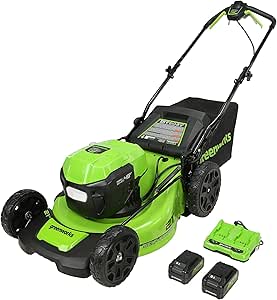
Greenworks 48V (24V x 2) 21-inch Self-Propelled Lawn Mower, Battery Kit

Orbit B-hyve Smart Indoor/Outdoor 12-Zone Sprinkler Controller
As an affiliate, we earn on qualifying purchases.
Current State and Challenges in AI Self-Improvement
The concept of AI achieving recursive self-improvement has been a topic of theoretical discussion for decades, but recent years have seen increased interest due to advances in machine learning, meta-learning, and autonomous systems. Leading labs have developed models capable of optimizing their own training processes or algorithms to some extent, but these are still far from fully autonomous, iterative self-enhancement. Historically, progress has been incremental, and experts caution that many technical barriers—such as ensuring stability, avoiding undesirable feedback loops, and maintaining alignment with human values—must be overcome before true recursive improvement is feasible.
Notably, the recent surge in public and academic interest is partly driven by broader concerns about AI safety, the potential for rapid capability escalation, and the possibility of a technological singularity. While some researchers believe that the trajectory of current AI research makes recursive self-improvement plausible within the next few decades, most agree that it remains an open question with many unknowns.
Unconfirmed Timelines and Technical Barriers
It is not yet clear when or if AI will achieve true recursive self-improvement. While some experts suggest it could happen within the next 10 to 30 years, others warn that fundamental technical, safety, and alignment challenges could delay or prevent this milestone altogether. The current state of research does not definitively indicate imminent progress, and many believe that significant breakthroughs are still needed before recursive self-improvement becomes feasible.
Monitoring AI Development and Safety Protocols
Researchers and policymakers are expected to continue evaluating progress toward recursive self-improvement, emphasizing safety and alignment measures. Key next steps include developing robust evaluation frameworks, increasing transparency in AI development, and fostering international cooperation to manage potential risks. Public discussions and regulatory debates are likely to intensify as AI capabilities evolve, with the goal of preparing for possible future scenarios.
Key Questions
What is recursive self-improvement in AI?
Recursive self-improvement refers to an AI system’s ability to autonomously improve its own algorithms and architecture, leading to rapid, iterative enhancements in capability without human intervention.
Are current AI systems capable of recursive self-improvement?
No, current AI models, including advanced language models, do not demonstrate true recursive self-improvement. They can optimize certain processes to some extent but lack the autonomous, iterative capability needed for full self-enhancement.
Why does the timeline for recursive self-improvement matter?
If achieved, it could lead to rapid, unpredictable advances in AI capabilities, raising safety, control, and ethical concerns. Understanding the timeline helps in preparing appropriate safeguards and regulations.
What are the main technical challenges to recursive self-improvement?
Major challenges include ensuring system stability, avoiding undesirable feedback loops, maintaining alignment with human values, and developing architectures capable of autonomous, iterative enhancement.
What should we expect in the near future regarding this development?
Research will likely focus on safety, transparency, and incremental improvements. Public and regulatory discussions are expected to intensify as AI capabilities continue to grow, though significant breakthroughs are uncertain.
Source: rss