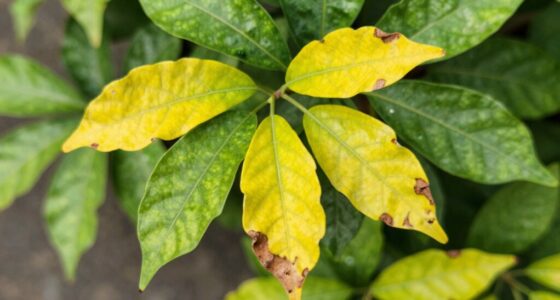

If your indoor plant’s leaves are turning yellow, it’s likely due to overwatering or poor soil drainage. Check the soil moisture before watering—allow the top inch to dry out completely if needed. Confirm your pot has drainage holes and use well-draining soil to prevent water from sitting around the roots. Adjust your watering schedule based on your plant’s needs, and keep an eye on other factors like light. Continue exploring for more helpful tips to keep your plant healthy.

Get the little things that make your day delivered free with Prime
- Fast, free delivery on millions of items
- Prime Video, Amazon Music and more included
- Member-only deals all year
Key Takeaways
- Check soil moisture regularly and water only when the top inch is dry to prevent overwatering.
- Ensure proper soil drainage with high-quality potting mixes and drainage holes to avoid root waterlogging.
- Adjust watering frequency based on each plant’s specific needs and environmental conditions.
- Remove yellow leaves to prevent disease and assess if overwatering or poor drainage is causing root issues.
- Use indirect sunlight and avoid overwatering to maintain healthy, vibrant foliage.

Yellow leaves on indoor plants can be be a sign that something isn’t quite right with their care. One common culprit is overwatering, which often results from an improper watering schedule or poor soil drainage. If you’re watering your plants too frequently or not allowing the soil to dry out between waterings, the roots can become waterlogged. This leads to oxygen deprivation, causing leaves to yellow and eventually rot. To prevent this, you need to establish a consistent watering schedule tailored to each plant’s needs. Some plants prefer to dry out completely between waterings, while others like consistently moist soil. Pay attention to the specific requirements of your indoor plants and adjust your routine accordingly.
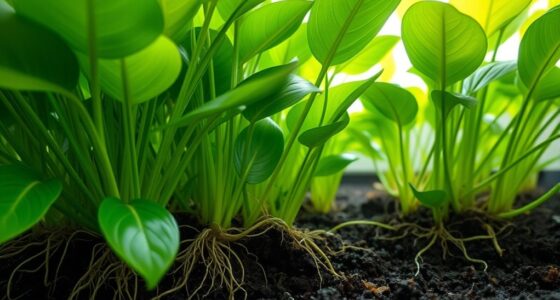
Soil drainage plays an essential role in maintaining healthy indoor plants. Well-draining soil helps excess water escape quickly, preventing soggy conditions that promote root rot. If your soil retains too much moisture, the roots can suffocate, leading to yellowing leaves and overall decline. To improve soil drainage, consider repotting your plants into a high-quality potting mix designed for good drainage, which often includes ingredients like perlite or coarse sand. Additionally, ensure your pots have drainage holes; standing water in the saucer beneath the pot only worsens the problem. If you notice persistent yellow leaves, it might be time to check the soil’s drainage properties and make necessary adjustments.
Monitoring your watering schedule and soil drainage is vital for healthy indoor plants. When watering, always check the soil’s top inch; if it feels dry, it’s usually time to water, but if it’s still moist, hold off. Use your finger or a moisture meter to gauge soil moisture accurately. Be cautious not to water on a fixed schedule without considering these factors, as this can lead to overwatering or underwatering. Remember, different plants have different moisture needs, so research each species to provide ideal care. Additionally, using indirect sunlight can help prevent stress related to excessive watering or improper soil conditions.
indoor plant soil moisture meter
As an affiliate, we earn on qualifying purchases.
As an affiliate, we earn on qualifying purchases.
Frequently Asked Questions
Can Yellow Leaves Indicate Pest Infestations?
Yes, yellow leaves can indicate pest infestations. To determine this, you should focus on pest identification and symptom differentiation. Check for tiny insects, webbing, or sticky residue on your plant. If you see pests alongside yellowing leaves, it’s likely an infestation. However, yellow leaves can also result from overwatering or nutrient deficiencies, so carefully examine your plant to differentiate between pest issues and other causes.
How Often Should I Prune Yellow Leaves?
Think of your plant as a busy city needing maintenance. You should prune yellow leaves as soon as you notice them—don’t wait for a full cleanup. Regular pruning frequency keeps your plant healthy, removing dead or yellow leaves promptly. This leaf removal prevents disease and encourages new growth. Stay attentive, and prune yellow leaves as they appear to keep your indoor garden thriving and vibrant.
Are Yellow Leaves Always a Sign of Overwatering?
No, yellow leaves aren’t always a sign of overwatering. Watering issues like poor drainage can cause root rot, but nutrient deficiencies or inconsistent watering can also lead to yellowing. Check your plant’s watering schedule, make certain proper drainage, and consider fertilizing if nutrients are lacking. If the soil stays soggy or you notice rotting roots, reduce watering frequency and improve soil drainage to help your plant recover.
Which Indoor Plants Are Most Prone to Yellowing?
You’ll find that pothos, peace lilies, and philodendrons are most prone to yellowing. To prevent this, guarantee your indoor plant nutrition is balanced, providing essential nutrients regularly. Also, adjust light exposure—too much direct sunlight can cause yellowing, while too little can weaken the plant. By maintaining proper nutrition and optimizing light, you help your plants stay healthy and vibrant, reducing the chances of yellow leaves.
Can Yellow Leaves Be Reversed Without Repotting?
Yellow leaves can often be reversed without repotting if you address the cause. Foliage discoloration due to nutrient deficiency can be corrected by fertilizing your plant with a balanced, water-soluble fertilizer. Guarantee it receives proper light and adjust watering habits to prevent overwatering. Regularly removing yellowing leaves also helps the plant focus its energy on healthy growth, improving overall appearance and health without the need for repotting.
well-draining potting soil for indoor plants
As an affiliate, we earn on qualifying purchases.
As an affiliate, we earn on qualifying purchases.
Conclusion
Remember, dealing with yellow leaves is just part of caring for your indoor plants. Keep an eye on watering habits, light, and nutrients, and you’ll see them bounce back like a knight returning victorious from battle. Don’t forget, even the most seasoned gardener faced similar trials—think of it as your own personal quest. With patience and attention, your plants will thrive, turning your space into a lush, vibrant oasis—no need to summon Merlin!
plant watering can with adjustable flow
As an affiliate, we earn on qualifying purchases.
As an affiliate, we earn on qualifying purchases.
As an affiliate, we earn on qualifying purchases.
NFL season / tailgating Picks
team gear
As an affiliate, we earn on qualifying purchases.