
Water quality matters for sensitive houseplants because it directly impacts their ability to absorb essential nutrients. Poor water can cause mineral buildup, root problems, and nutrient deficiencies, leading to yellowing or stunted growth. Adjusting pH levels and managing minerals helps keep your plants healthy and vibrant. By understanding the importance of water quality, you can prevent issues before they start. Keep exploring to discover more ways to keep your houseplants thriving.

Get the little things that make your day delivered free — and shop member deals
- Fast, free delivery on millions of items
- Access to Prime Big Deal Days deals on October 6–7
- Prime Video, Amazon Music and more included
Key Takeaways
- Poor water quality can cause mineral buildup, leading to root and soil damage in sensitive houseplants.
- Imbalanced pH levels hinder nutrient absorption, resulting in yellowing or stunted growth.
- High mineral content in water can cause leaf burn, crusty soil, or root rot.
- Regular testing helps detect deficiencies or toxicities, ensuring optimal conditions.
- Using filtered or properly treated water maintains stable pH and mineral levels for healthy plants.
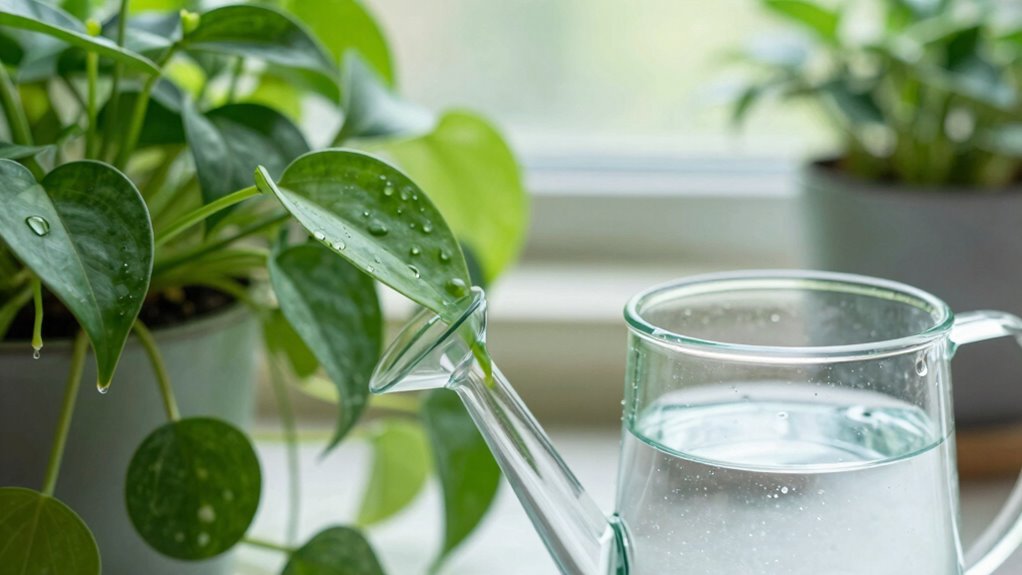
Have you ever wondered why your sensitive houseplants struggle despite proper watering? The answer often lies in the quality of the water you give them. Not all water is created equal, and subtle differences in pH balance and mineral content can markedly impact your plants’ health. Sensitive houseplants, like ferns, orchids, or succulents, are especially vulnerable to fluctuations in water quality because their roots absorb nutrients directly from the water they receive. If the water’s pH isn’t within the ideal range, it can hinder nutrient uptake, leading to yellowing leaves, stunted growth, or even plant decline. Typically, most houseplants thrive when the pH balance is slightly acidic to neutral—around 6.0 to 7.0. Water that’s too alkaline or too acidic can cause mineral lockout, preventing essential nutrients like iron or magnesium from dissolving properly and reaching the roots.
Mineral content in your water also plays an essential role. Hard water, which contains high levels of dissolved minerals like calcium and magnesium, can build up in the soil over time. This buildup can alter the soil’s structure and affect how plants absorb water and nutrients. For sensitive plants, excess minerals can cause leaf tip burn, root rot, or leave a crusty residue on the soil surface. Conversely, soft water with low mineral content might lack vital nutrients necessary for healthy growth, leaving your plants vulnerable to deficiencies. Balancing mineral levels is key to maintaining a healthy environment for your plants. Additionally, understanding your water’s quality parameters can help you make more informed adjustments for optimal plant health. Regularly testing your water can also help you identify mineral imbalances that might be impacting your plants. Recognizing the effects of mineral buildup can help you prevent long-term damage to your plants’ roots and soil health. Properly managing these factors through water treatment techniques can further optimize your plant care routines.
Understanding your water’s pH and mineral content is critical for troubleshooting issues with sensitive houseplants. Testing your water regularly provides useful insights into what adjustments you might need. If your water is too alkaline, you can add a small amount of lemon juice or use specially formulated pH adjusters to bring it closer to the ideal range. If mineral buildup is a concern, letting tap water sit uncovered for 24 hours before watering can allow some minerals to settle or evaporate. Alternatively, using filtered or distilled water can reduce mineral content and help maintain a stable environment. Properly managing these factors ensures your plants can efficiently absorb nutrients, leading to healthier, more vibrant growth. Ultimately, taking the time to understand and adjust your water quality makes a noticeable difference in how well your sensitive houseplants thrive.
As an affiliate, we earn on qualifying purchases.
Frequently Asked Questions
How Often Should I Test My Tap Water for Contaminants?
You should test your tap water for contaminants at least once every few months to guarantee it’s safe for your sensitive houseplants. Regular water testing helps with contaminant detection early, preventing potential harm to your plants. If you notice issues like discoloration or leaf spots, increase testing frequency. Using simple test kits makes contaminant detection easier, so you can adjust your watering routine accordingly and keep your plants thriving.
Can Filtered Water Improve My Houseplants’ Health?
Did you know that over 70% of houseplants can suffer from tap water with chemicals? Filtered water benefits your plants by removing chlorine, fluoride, and heavy metals, leading to healthier growth. Using filtered water enhances plant hydration techniques by providing cleaner moisture, reducing stress, and preventing issues like leaf burn. So, switching to filtered water can greatly improve your houseplants’ vitality and overall well-being.
What Signs Indicate Water-Related Stress in Sensitive Houseplants?
You’ll notice water-related stress in your sensitive houseplants through signs like leaf discoloration and root rot. Discolored leaves may turn yellow or brown, signaling overwatering or poor water quality. Root rot causes roots to decay, leading to wilting and stunted growth. If you see these symptoms, check your watering habits and water quality. Using filtered or rainwater can help prevent these issues, promoting healthier, more resilient plants.
Are There Specific Water pH Levels Ideal for Delicate Plants?
For delicate plants, keep the water pH between 6.0 and 6.5 to guarantee ideal nutrient absorption. You should consider pH adjustment if your water is too alkaline or acidic, as water alkalinity can hinder nutrient availability. Regularly test your water’s pH level, and make adjustments with pH buffers or natural remedies like lemon juice or baking soda. Maintaining proper pH helps your sensitive houseplants thrive.
How Does Water Temperature Affect Sensitive Houseplants’ Growth?
Water temperature directly impacts your sensitive houseplants’ growth by influencing water absorption and root health. Too cold water can slow down absorption, weakening roots, while hot water may cause root stress or damage. Ideally, keep water at room temperature to promote ideal absorption, supporting healthy root development. Consistently using the right temperature helps your plants thrive, ensuring they stay vigorous and resist common issues linked to poor water conditions.
water filtration system for houseplants
As an affiliate, we earn on qualifying purchases.
As an affiliate, we earn on qualifying purchases.
Conclusion
In the end, paying attention to your water quality can make or break your sensitive houseplants. When you use the right water, you’re giving your plants a fighting chance to thrive and flourish. Don’t let poor water turn your green dreams into a thorny mess—it’s better to nip problems in the bud early on. Remember, a little extra effort now can guarantee your plants stay happy and healthy for the long haul.
As an affiliate, we earn on qualifying purchases.
pH adjusters for watering plants
As an affiliate, we earn on qualifying purchases.
As an affiliate, we earn on qualifying purchases.
Fall Picks
fall essentials
As an affiliate, we earn on qualifying purchases.