
You should prune your indoor plants during their active growth periods, typically in spring or early summer, to promote healthy development. Remove dead, yellowing, or diseased leaves promptly and prune flowering plants just after they bloom. Use sharp, sterilized tools for clean cuts and avoid removing more than one-third of the plant at once. Proper technique and timing are key, and you’ll find it easier to keep your plants vibrant and healthy by following these guidelines.
Key Takeaways
- Prune during active growth seasons like spring or early summer for best results.
- Remove dead, diseased, or yellowing leaves promptly anytime to maintain plant health.
- Prune flowering plants just after they bloom to encourage new flowers.
- Use sharp, sterilized tools and make clean cuts at a slight angle above a leaf node.
- Avoid removing more than one-third of the plant to prevent stress and promote healthy growth.
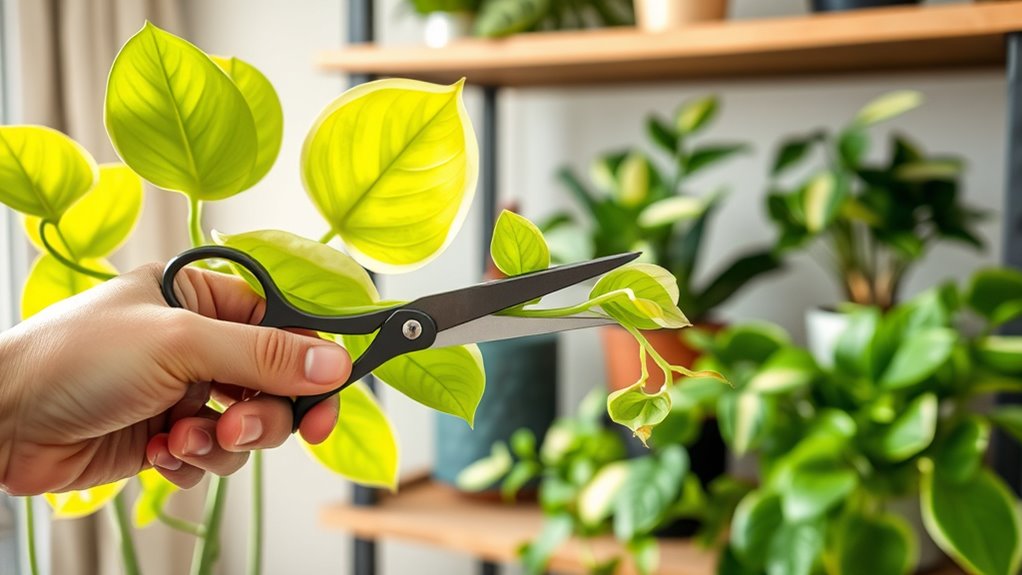
Pruning indoor plants is an essential step to keep them healthy, attractive, and thriving. When you prune correctly, you support your plants’ growth, prevent disease, and maintain their overall appearance. To do this effectively, you need to understand the significance of plant health and the right pruning tools. Healthy plants are better able to resist pests and adapt to their environment, but overgrown or damaged parts can weaken them. Pruning helps remove dead, yellowing, or diseased leaves and stems, ensuring your plant directs its energy toward new, healthy growth. It’s a simple yet vital task that requires the right approach and tools.
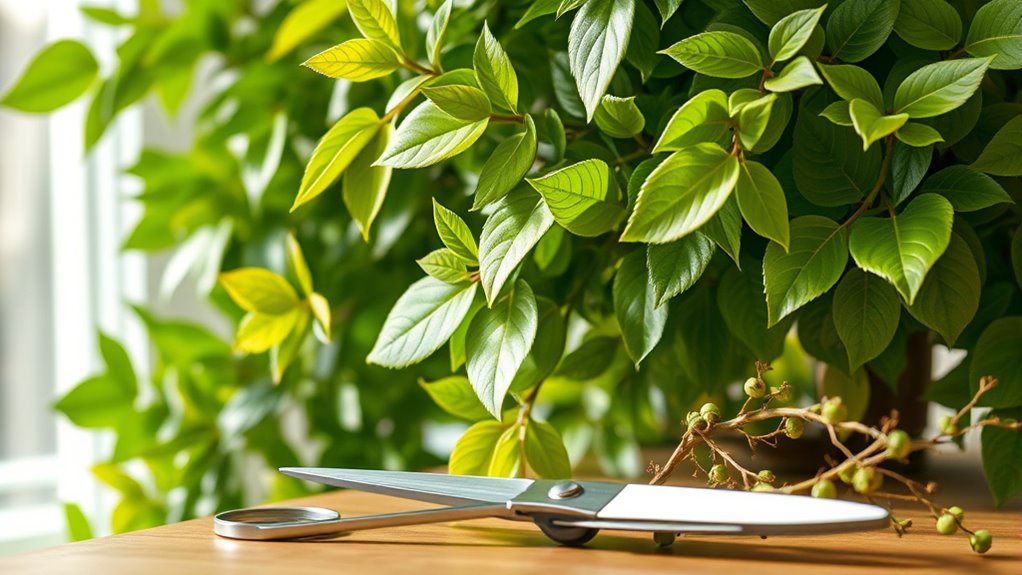
When you’re ready to prune, start by gathering the appropriate pruning tools. Sharp, clean scissors or pruning shears are essential because they make clean cuts without damaging the plant tissue. Dull tools can crush or tear stems, increasing the risk of infection. Always sterilize your tools before use, especially if you’re pruning multiple plants or cutting away diseased parts. This helps prevent the spread of pathogens. Depending on the size of your plant and the thickness of its stems, you might need specialized tools like loppers for thicker branches. Keep your tools sharp and clean for each session to ensure precision and plant safety.
Timing is key when pruning indoor plants. Generally, it’s best to prune during the plant’s active growing period, which is often in spring or early summer. However, if you notice dead or diseased leaves any time of year, don’t delay removing them. Pruning at the right time promotes vigorous growth and prevents the plant from wasting energy on unhealthy parts. For flowering plants, prune just after blooming to encourage the next flush of flowers. For foliage plants, focus on removing leggy or overgrown stems to maintain a lush, compact shape. Additionally, understanding juice cleansing can help you maintain overall plant health by supporting proper hydration and nutrient intake, which is essential for vigorous growth.
When you prune, make clean cuts at a slight angle just above a leaf node or bud. This encourages new growth and helps the plant recover quickly. Avoid removing more than one-third of the plant at a time, as this can stress the plant and hinder recovery. If you’re trimming for shape or size control, step back periodically to assess your work and confirm you’re shaping the plant evenly. Always dispose of pruned debris properly, especially if it’s diseased, to keep your indoor environment clean and healthy.
Frequently Asked Questions
How Often Should I Prune My Indoor Plants?
You should prune your indoor plants every few weeks, depending on their growth rate. Regular pruning encourages healthy growth and keeps them tidy. Before pruning, check your watering schedule and fertilizing frequency—plants often need more care during active growing seasons. Remove dead or yellowing leaves promptly, and trim overgrown stems to maintain shape. Adjust pruning frequency based on your plant’s specific needs and growth pace for the best results.
Can Pruning Help Indoor Plants Grow Faster?
Imagine giving your indoor plants a gentle push to reach their full potential. Pruning can indeed help them grow faster by removing dead or overgrown parts, allowing more sunlight and nutrients from fertilizer application and watering schedule to reach healthy growth points. When you prune, you’re guiding your plants like a gardener shaping a masterpiece, encouraging lush, vigorous growth and transforming your space into a vibrant oasis.
What Tools Are Best for Pruning Indoor Plants?
You should use sharp, clean pruning tools like scissors or pruning shears for the best pruning safety and effective cuts. Select tools that suit your plant’s size and type—small scissors for delicate foliage, larger shears for thicker stems. Always sterilize your tools before use to prevent disease. Proper pruning tools selection helps you make precise cuts, reduces plant stress, and promotes healthy growth.
Should I Prune Dead or Diseased Leaves First?
You should prune dead or diseased leaves first because it’s like stopping a wildfire before it spreads. Removing dead leaves prevents pests and encourages healthy growth, while tackling diseased ones is essential for disease management. Use clean, sharp tools to carefully snip away the problem areas. Doing this early keeps your plants thriving and prevents issues from spreading, ensuring your indoor jungle stays lush and vibrant.
How Do I Prevent Over-Pruning My Indoor Plants?
To prevent over-pruning, set a consistent watering schedule and stick to it, avoiding overwatering which encourages unnecessary growth. Follow a proper fertilizing routine to supply essential nutrients without promoting excessive foliage. Regularly check your plants and prune only what’s necessary, such as dead or diseased leaves, to maintain their health and shape. This balanced approach helps you prune effectively without removing too much at once.
Conclusion
Pruning your indoor plants is like giving them a fresh start—removing dead or overgrown parts helps them breathe and thrive. Remember, timing is everything; spring and early summer are your best bet. With a gentle hand and the right tools, you’ll nurture your green friends into lush, healthy companions. Keep an eye on their growth, and soon, your space will be a vibrant oasis, bursting with life like a garden in full bloom.