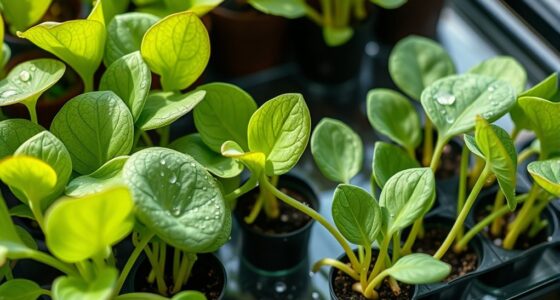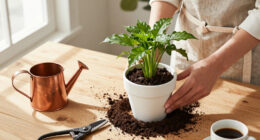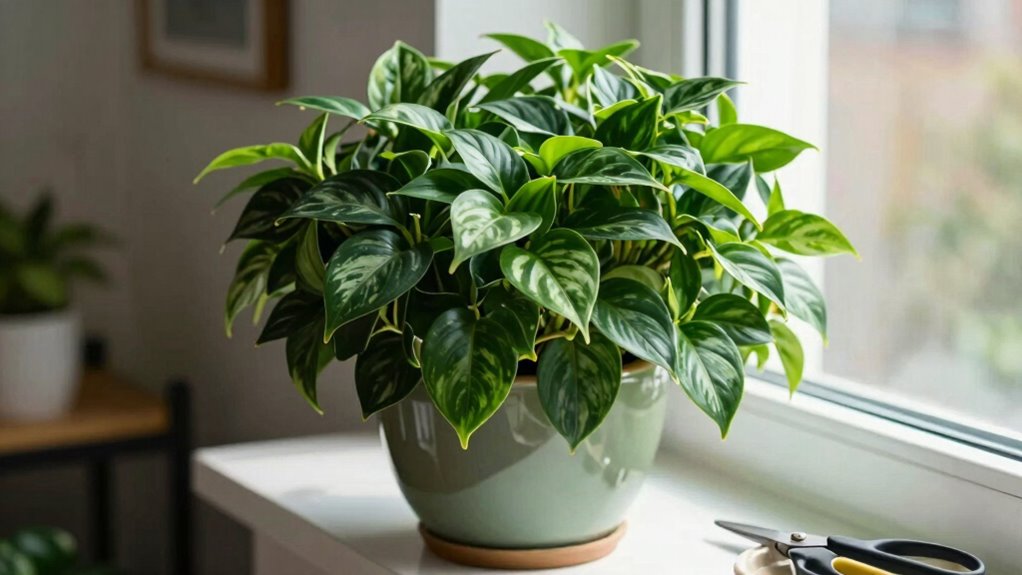

To keep your houseplants full and avoid legginess, guarantee you provide consistent watering based on each plant’s needs, avoiding both overwatering and underwatering. Position them where they get bright, indirect light, or supplement with grow lights if needed, and regularly rotate them for even growth. Tailoring care to each plant’s requirements and making small adjustments can boost their fullness. Keep exploring, and you’ll discover more tips to help your plants flourish.

Get the little things that make your day delivered free — and shop member deals
- Fast, free delivery on millions of items
- Access to Prime Big Deal Days deals on October 6–7
- Prime Video, Amazon Music and more included
Key Takeaways
- Ensure plants receive bright, indirect sunlight and rotate regularly for even light distribution.
- Water thoroughly only when the top inch of soil is dry, avoiding both over- and underwatering.
- Use proper drainage to prevent waterlogging and root rot, supporting healthy, dense foliage.
- Maintain consistent environmental conditions, including humidity and temperature, tailored to each plant’s needs.
- Prune leggy stems to encourage bushier, fuller growth and remove any dead or weak foliage.

Have you ever wondered why some houseplants look lush and full while others seem sparse? The answer often comes down to how well you manage their watering schedule and sunlight exposure. When plants don’t receive the right amount of water, they can become stressed, leading to legginess as they stretch toward the light in search of energy. Similarly, insufficient sunlight causes plants to grow tall and spindly, trying to reach a nearby light source. To keep your houseplants looking full and vibrant, you need to strike a balance between these two factors.
First, pay attention to your plant’s watering needs. A consistent watering schedule is vital because overwatering can drown roots, causing them to rot, while underwatering leaves them weak and unable to sustain dense growth. Check the soil regularly—stick your finger about an inch in, and if it feels dry, it’s time to water. When you do, do so thoroughly, allowing excess water to drain out, so roots don’t sit in water. Proper watering encourages healthy root systems that support lush foliage, filling out the plant’s form. Remember, different plants have different moisture needs, so educate yourself about each species to avoid common watering mistakes. Additionally, maintaining appropriate humidity levels can support healthier plant growth, as air quality and humidity play a role in overall plant vitality. A well-maintained environment also helps prevent issues caused by microplastics in dust, which can settle on leaves and hinder photosynthesis.
Check soil moisture regularly and water thoroughly to support healthy, full houseplants.
Sunlight exposure is equally crucial. Most houseplants thrive with bright, indirect light. When plants don’t get enough sunlight, they stretch upward, elongating their stems in an effort to catch more rays, resulting in a leggy appearance. To prevent this, place your plants near windows with filtered light or consider using sheer curtains to diffuse direct sunlight. If natural light is limited, supplement with grow lights to mimic the sun’s spectrum. Consistent, adequate sunlight encourages compact, bushy growth because the plant doesn’t need to stretch in search of light. Also, rotate your plants regularly to ensure even light distribution, preventing them from leaning or growing unevenly.
Combining an appropriate watering schedule with proper sunlight exposure creates an environment where your houseplants can thrive without becoming leggy. When watering is consistent and tailored to each plant’s needs, and sunlight is ideal, you’ll notice your plants develop fuller, healthier foliage. This balance promotes dense growth, making your houseplants the lush centerpiece you desire. Keep a close eye on their response and adjust as needed—plants are living things that benefit from your attentive care. With these simple steps, you’ll be well on your way to maintaining full, vibrant houseplants that brighten up any space.
As an affiliate, we earn on qualifying purchases.
Frequently Asked Questions
How Often Should I Prune My Houseplants?
You should prune your houseplants every few months or when you notice leggy growth. Use pruning techniques like trimming back leggy stems and removing dead or yellow leaves to encourage fullness. Be mindful of your watering schedule, as healthy plants respond better to pruning. Avoid over-pruning, which can stress your plants; instead, prune gradually to maintain their shape and promote bushier, fuller growth.
What Are the Best Fertilizers for Fuller Growth?
To encourage fuller growth, opt for balanced, water-soluble fertilizers rich in soil nutrients like nitrogen, phosphorus, and potassium. These nutrients nurture lush foliage and dense stems. Use them according to your watering frequency—typically every 4-6 weeks—ensuring your plants receive consistent nourishment without overfeeding. This gentle support helps your houseplants flourish, filling out naturally and maintaining vibrant, healthy growth.
How Do I Encourage Bushier Plant Growth?
To encourage bushier plant growth, you should adjust your watering schedule to avoid overwatering, which can hinder healthy branching. Make sure you’re providing adequate light, as this promotes fuller growth. Regularly prune leggy stems to stimulate new shoots and maintain a dense shape. Also, practice pest prevention by inspecting your plants frequently, since pests can weaken growth. These steps help your plants develop a lush, full appearance over time.
Can Repotting Help Make Plants Look Fuller?
Like a wise old gardener from a bygone era, you can definitely make your plants look fuller by repotting. When you do, consider root pruning to stimulate new growth and improve soil aeration, which encourages healthy roots. Fresh soil provides essential nutrients, helping your plants develop a denser, bushier appearance. Repotting also prevents legginess by giving roots more space to grow outward, resulting in a more vibrant, full plant.
What Lighting Conditions Promote Dense Foliage?
To promote dense foliage, guarantee your houseplants get bright, indirect light, as it encourages lush growth. Maintain high indoor humidity levels, which helps plants produce fuller leaves. Additionally, use plant staking to support and encourage branches to grow outward rather than upward, creating a bushier appearance. Regularly prune leggy stems to stimulate new growth, and keep the environment consistent to help your plants stay healthy and full.
indirect sunlight for houseplants
As an affiliate, we earn on qualifying purchases.
As an affiliate, we earn on qualifying purchases.
Conclusion
With a little care and attention, your houseplants will flourish like a lush, living tapestry, filling every corner with vibrant life. Think of pruning, proper lighting, and regular watering as the gentle strokes of an artist’s brush, shaping and nurturing your green masterpiece. When you tend to your plants with patience and love, they’ll reward you with a full, thriving presence—transforming your space into a verdant sanctuary that breathes life into every room.
As an affiliate, we earn on qualifying purchases.
As an affiliate, we earn on qualifying purchases.
Evergreen bestsellers Picks
bestsellers
As an affiliate, we earn on qualifying purchases.