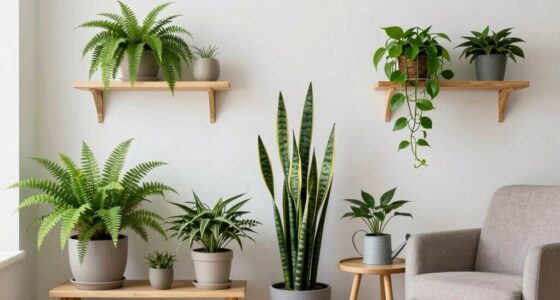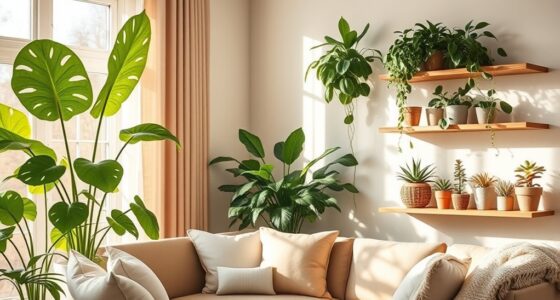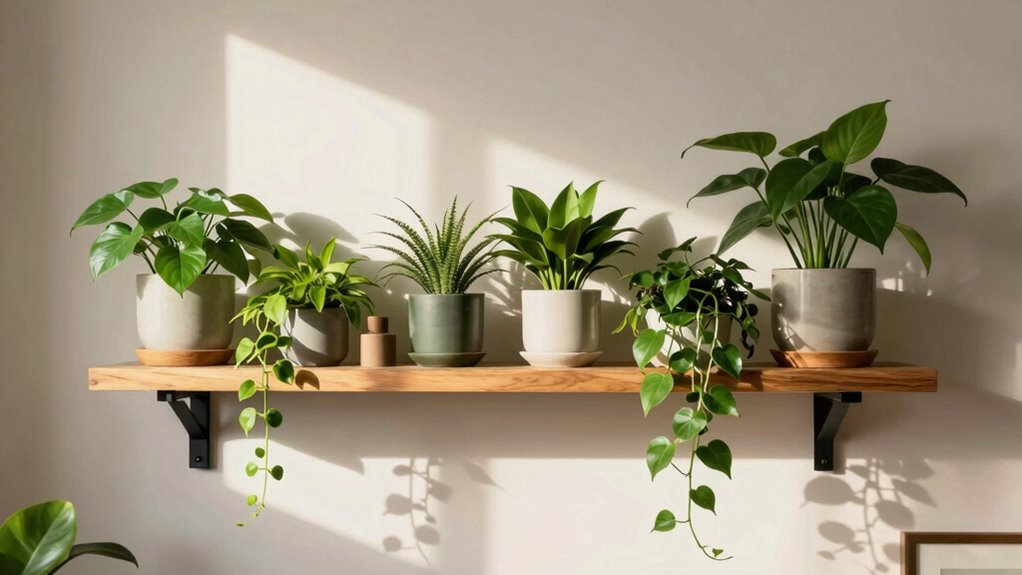

To improve your indoor plant display and maximize light, place shelves near windows or well-lit areas and vary their height and placement to optimize light exposure for each plant. Group plants with similar watering needs for easier care, and use multi-tiered shelves to add visual interest. Incorporate decorative elements and choose materials that match your interior style. Keep in mind different light requirements, and with some smart organization, you’ll create a vibrant, healthy indoor garden—there’s more to discover below.
Key Takeaways
- Position shelves near windows or well-lit areas to maximize natural light exposure for your plants.
- Vary shelf heights and pot sizes to create visual interest and optimize light distribution.
- Group plants with similar light needs together to ensure they receive appropriate illumination.
- Use multiple tiers to keep taller plants higher and prevent shading smaller plants below.
- Incorporate supplemental or smart lighting systems to enhance light where natural sunlight is limited.
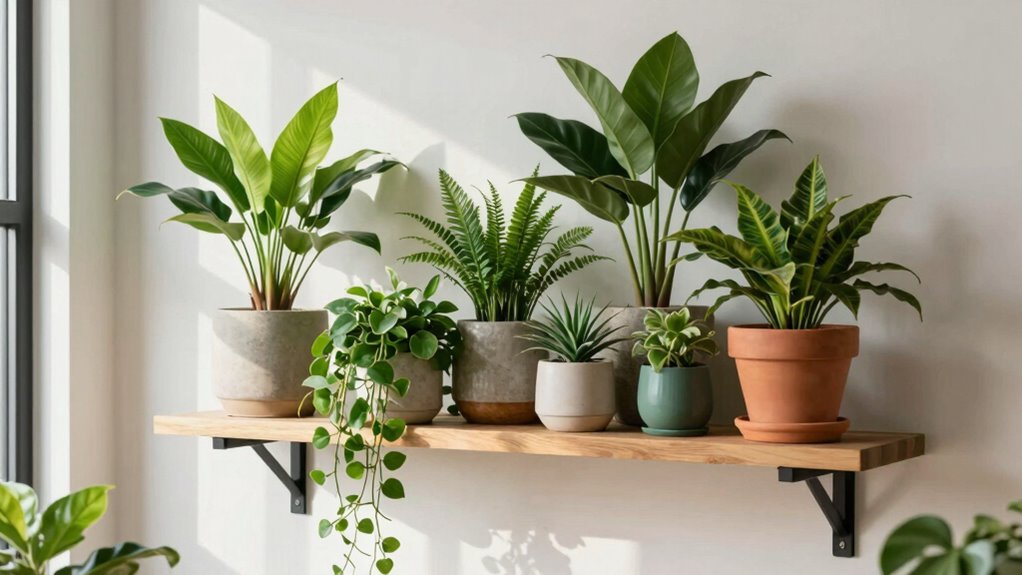
If you’re looking to showcase your indoor plants beautifully and efficiently, choosing the right shelves is essential. The shelves you select can significantly influence how your plants grow, how they look, and how easy it is to care for them. When considering shelves, think about their height, material, and placement, as these factors impact both watering frequency and the decorative plant arrangements. Properly placed shelves allow you to create a vibrant display that balances aesthetic appeal with practical maintenance. Additionally, incorporating eco-friendly materials for your shelves can promote sustainable backyard practices while enhancing the overall design. Position your shelves where your plants can receive the right amount of light. Natural light varies throughout the day, so placing shelves near windows or in well-lit rooms ensures your plants thrive without the risk of overexposure or insufficient light. When arranging your plants on these shelves, consider their individual light needs. Taller plants can be placed on higher shelves where they won’t cast shadows on smaller ones, and shade-loving varieties should be positioned where they’ll get the least direct sunlight. This strategic placement promotes healthy growth and maximizes the visual impact of your decorative plant arrangements. Watering frequency plays a crucial role in how you organize your shelves. Group plants with similar watering needs together to simplify care routines. For instance, succulents require less frequent watering than ferns or pothos. When you arrange plants by watering needs, you reduce the risk of overwatering or underwatering, which can harm your plants and create a cluttered, disorganized appearance. Using multiple tiers or sections on your shelves helps keep these groups separate, making maintenance more straightforward and ensuring each plant gets the attention it needs. The style and material of your shelves also influence your decorative plant arrangements. Open, airy shelves made of wood or metal work well for creating a modern, minimalist look, while vintage or ornate shelves can add character to a cozy space. When designing your display, think about varying the height and size of pots to add visual interest. Incorporating decorative elements, like unique pots, small figurines, or decorative stones, to enhance the overall aesthetic. Understanding light requirements for your plants ensures they receive the optimal amount of illumination for vigorous growth. Interestingly, certain electric bikes and accessories can be used to maintain your indoor garden more efficiently, especially if you incorporate smart lighting or watering systems. Balancing plants of different shapes and sizes on your shelves creates a lively, dynamic display that draws the eye and complements your interior decor. Ultimately, the way you use shelves for indoor plants hinges on thoughtful placement, understanding watering needs, and creating appealing arrangements. Proper shelf organization can also improve airflow around your plants, reducing the risk of pests and diseases. When done right, your shelves won’t just serve as practical storage but will become a focal point showcasing your plants’ beauty and vitality. Properly organized, your indoor garden will flourish while elevating the style of your living space.
indoor plant shelves with adjustable height
As an affiliate, we earn on qualifying purchases.
As an affiliate, we earn on qualifying purchases.
Frequently Asked Questions
How Do I Prevent Shelves From Damaging Plant Roots?
To prevent shelves from damaging plant roots, focus on root protection and shelf drainage. Use moisture-resistant materials or place a tray beneath your plants to catch excess water, avoiding waterlogging. Elevate pots slightly to improve airflow and prevent water from sitting around roots. Regularly check for signs of root stress or rot, and make certain your shelves are sturdy and level to avoid accidental tipping or damage.
What Materials Are Best for Indoor Plant Shelves?
You should choose sturdy, non-toxic materials like natural wood, metal, or acrylic for your plant shelves. These materials support various plant sizes and styles while being durable and safe. Consider decorative shelving options like floating shelves or ladder racks that match your interior decor. Opt for plant shelf styles that provide adequate light and airflow, ensuring your plants thrive without damage. Always select materials that won’t harm your plants or degrade over time.
How Can I Make Shelves More Stable for Heavy Plants?
Did you know that a properly supported shelf can hold up to 80 pounds? To make your shelves more stable for heavy plants, guarantee they’re anchored into wall studs with heavy-duty brackets. Choose brackets that complement your shelf’s aesthetics, and arrange plants evenly to distribute weight. This not only keeps your display secure but also enhances the overall look, making your plant arrangement both functional and stylish.
Should Shelves Be Adjustable for Different Plant Sizes?
Yes, shelves should be adjustable to accommodate different plant heights and optimize shelf spacing. When you adjust shelves, you can better display tall plants without overcrowding smaller ones. This flexibility helps you create a balanced, attractive display while ensuring each plant gets enough light. By customizing shelf height, you prevent overcrowding and give your plants room to grow, making your indoor garden more vibrant and organized.
How Do I Maintain Proper Airflow Around Hanging Plants on Shelves?
To maintain proper airflow around hanging plants on shelves, guarantee there’s enough space between the plants and the shelf above, allowing air circulation to flow freely. Avoid overcrowding, and rotate plants occasionally to prevent stagnation. Good air circulation promotes plant health by reducing mold and pests. Additionally, consider using a small fan nearby if natural airflow is limited, helping to keep the environment fresh and healthy for your plants.
multi-tier plant display shelves
As an affiliate, we earn on qualifying purchases.
As an affiliate, we earn on qualifying purchases.
Conclusion
By using shelves thoughtfully, you transform your space into a lush sanctuary, turning everyday corners into vibrant displays. Shelves aren’t just storage—they’re the stage where your plants thrive and your style shines. Remember, just like a well-placed shelf elevates your plants, your care elevates your home’s spirit. Embrace the art of shelving, and watch your indoor garden flourish—proof that good things truly grow when given the right support.
smart LED grow lights for indoor plants
As an affiliate, we earn on qualifying purchases.
As an affiliate, we earn on qualifying purchases.
decorative wall-mounted plant shelves
As an affiliate, we earn on qualifying purchases.
As an affiliate, we earn on qualifying purchases.