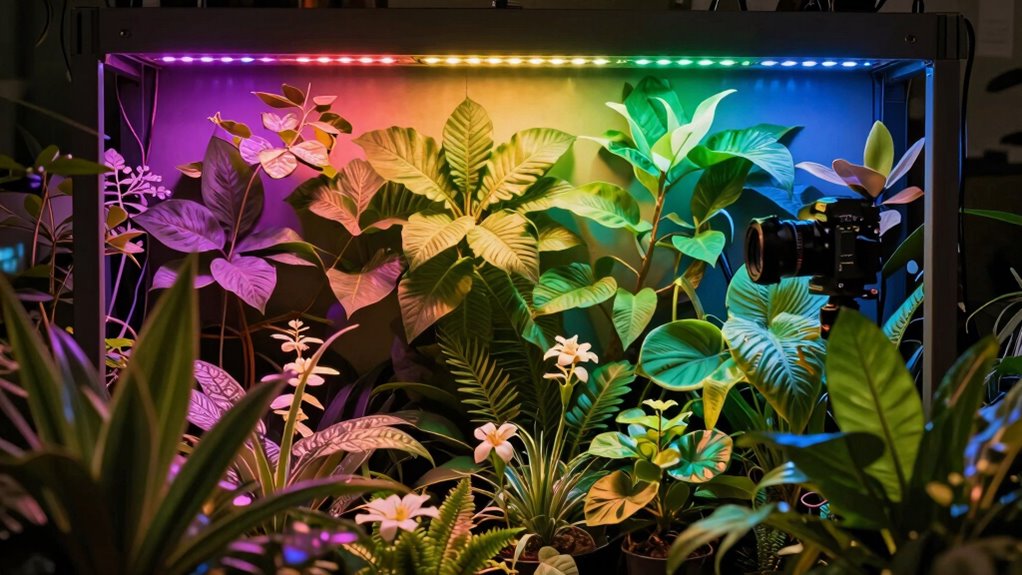
LED grow lights have transformed indoor plantGrowing by offering energy-efficient, customizable light spectra that boost growth, strengthen stems, and promote healthier leaves. They produce less heat, reducing cooling needs and saving on energy bills, while lasting longer than traditional bulbs. With adjustable settings and digital controls, you can optimize conditions for different plants and stages. These innovations support sustainable gardening and make indoor growing more accessible and effective—so, if you’re curious about the details, keep exploring how these advances are changing your indoor garden.

Get the little things that make your day delivered free with Prime
- Fast, free delivery on millions of items
- Prime Video, Amazon Music and more included
- Member-only deals all year
Key Takeaways
- LED grow lights provide targeted wavelengths, boosting photosynthesis and promoting healthier, faster plant growth indoors.
- They are energy-efficient, reducing electricity costs and heat output compared to traditional lighting options.
- Customizable spectra and digital controls enable precise growth conditions tailored to different plants and stages.
- Their long lifespan and lower maintenance needs make indoor gardening more sustainable and cost-effective.
- Technological advancements in spectral tuning and monitoring tools enhance plant growth success and setup versatility.

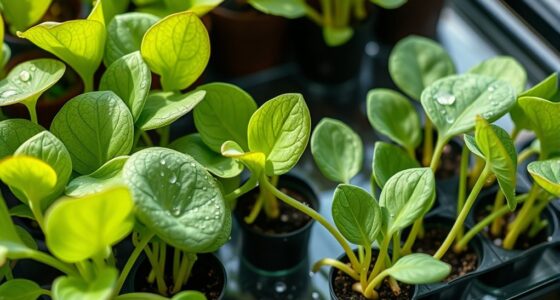
Indoor plant growing has become increasingly popular, and LED grow lights play a crucial role in ensuring your plants thrive year-round. These lights have revolutionized the way you nurture greenery indoors, making it easier to maintain healthy plants regardless of the season or natural light conditions. One major way they’ve transformed indoor gardening is through plant growth enhancement. Unlike traditional lighting options, LED grow lights are designed to emit specific wavelengths that plants need for photosynthesis, such as blue and red light. This targeted spectrum encourages robust growth, stronger stems, and healthier leaves, so your plants develop more efficiently. You don’t have to worry about wasting energy on light spectrums that don’t benefit your plants, which means your efforts are more effective and your plants grow faster and stronger.
Another important change LED grow lights bring to indoor gardening is their energy efficiency advancements. Traditional grow lights, like high-pressure sodium or fluorescent lamps, consume a lot of electricity and generate excessive heat, which can increase your energy bills and require additional cooling systems. LED technology, however, uses far less power to produce the same or even better light quality. This means you’re saving money while minimizing your environmental impact. Plus, because LEDs generate less heat, you can position them closer to your plants without the risk of burning or stressing them out. This efficiency also extends the lifespan of the lights; LEDs last considerably longer than traditional bulbs, reducing replacement costs and maintenance efforts. Additionally, the ability to customize and control LED lighting conditions aligns with the emerging trend of digital control systems in modern indoor gardening setups. Moreover, their adjustable spectrum feature allows growers to optimize light conditions for different plant types and growth stages, further improving overall success. Incorporating monitoring tools can help ensure your plants receive the optimal light and environmental conditions, making your indoor garden more successful and easier to manage. As the technology advances, innovations like spectral tuning are making LEDs even more adaptable to specific plant needs. A growing number of gardeners are also exploring sustainable practices like using LED grow lights to reduce their ecological footprint.
LED grow lights for indoor plants
As an affiliate, we earn on qualifying purchases.
As an affiliate, we earn on qualifying purchases.
Frequently Asked Questions
Are LED Grow Lights Energy-Efficient Compared to Traditional Lighting?
Yes, LED grow lights are energy-efficient compared to traditional lighting. You’ll notice significant energy savings because LEDs consume less power while providing the same or better light intensity. When considering the cost comparison, LEDs might be pricier initially but save you money in the long run through reduced electricity bills and longer lifespan. Overall, switching to LED grow lights helps you grow healthier plants while cutting energy costs.
How Long Do LED Grow Lights Typically Last?
LED grow lights typically last between 25,000 to 50,000 hours, making them highly durable. An interesting statistic is that LEDs consume 75% less energy than traditional lights, and their long lifespan is partly due to minimal heat output. This lower heat output helps maintain a perfect light spectrum for your plants without overheating, ensuring your indoor garden thrives longer. Regularly check for dimming or color shifts to maximize their lifespan.
Can LED Grow Lights Be Used for All Indoor Plants?
Yes, LED grow lights can be used for most indoor plants, but you should consider plant species and light spectrum. Different plants have varying light needs, so choose LEDs that offer the right spectrum for growth, flowering, or fruiting. Adjust the light intensity and duration accordingly. With the right setup, LED grow lights support healthy growth for a wide range of indoor plants, making them versatile and efficient.
What Is the Ideal Distance Between LED Lights and Plants?
You should keep LED grow lights about 12-24 inches above your plants, depending on light intensity and plant type. Too close, and the light may cause heat stress or leaf burn; too far, and your plants won’t get enough light for healthy growth. Regularly check for signs of stress or stretching, adjusting the distance as needed to guarantee ideal plant health and efficient light absorption.
Do LED Grow Lights Emit Any Harmful UV or IR Radiation?
LED grow lights generally emit minimal UV and IR radiation, making them safe for indoor plants and your health when used properly. To guarantee UV safety and reduce IR exposure, choose high-quality LEDs with built-in filters or protective coatings. Keep lights at the recommended distance to prevent unnecessary IR absorption, and avoid prolonged direct exposure. Proper setup helps you enjoy healthy plants without risking harm from UV or IR radiation.
As an affiliate, we earn on qualifying purchases.
Conclusion
Thanks to LED grow lights, you can now turn your basement into a lush jungle, even without a time machine. These lights provide the perfect spectrum for your plants to thrive indoors, making gardening easier and more efficient than ever. No need to wait for the Renaissance to enjoy vibrant greenery; with modern technology, you’re living in a horticultural renaissance right now. Embrace LED grow lights, and watch your indoor garden flourish like never before!
As an affiliate, we earn on qualifying purchases.
plant grow light with digital controls
As an affiliate, we earn on qualifying purchases.
As an affiliate, we earn on qualifying purchases.
Columbus Day / Indigenous Peoples' Day Picks
long weekend sales
As an affiliate, we earn on qualifying purchases.