At your propagation station, you can expand your plants using simple, proven techniques. For leaves, gently cut healthy ones and allow them to callus before placing in water or soil. Stem cuttings involve selecting a sturdy stem, removing lower leaves, and rooting in soil or water. Dividing works well with clumping plants like hostas and ferns by separating root sections. Keep an eye on humidity and moisture; if you’d like more detailed tips, you’ll find plenty of helpful insights ahead.
Key Takeaways
- Leaf propagation involves allowing a cut leaf to callus before planting in moist soil or water.
- Stem cuttings require cutting just below a node, removing lower leaves, and rooting in soil or water.
- Proper tools, humidity, and moisture are essential for successful stem and leaf propagation.
- Division separates clumped plants into sections, promoting rejuvenation and quick multiplication.
- Patience is key, as roots and new growth typically develop over several weeks.
Have you ever wondered how plants and signals travel across vast distances so quickly? It’s fascinating how they manage to grow, adapt, and reproduce through various propagation methods. Understanding these techniques can help you expand your garden effortlessly, whether you’re starting from scratch or trying to save a beloved plant. The most common methods are through leaf cuttings, stem cuttings, and division, each suited to different types of plants and circumstances.
Discover how plants grow, reproduce, and propagate through simple yet fascinating methods like leaf cuttings, stem cuttings, and division.
When it comes to leaf propagation, you’re fundamentally taking a piece of a leaf and encouraging it to develop roots and new growth. This method works well with plants like succulents, pothos, and some begonias. To do this, you carefully cut a healthy leaf from the parent plant, making sure to include a small section of the stem or petiole if necessary. You then allow the cut to callus over for a day or two, preventing rot when planted. Once callused, you place the leaf on moist soil or in water, ensuring the cut side makes contact. Over time, roots will emerge from the cut edge, followed by new shoots. Patience is key here; some plants may take weeks to sprout roots. Leaf propagation is straightforward, requiring minimal effort, and allows you to produce multiple new plants from a single leaf.
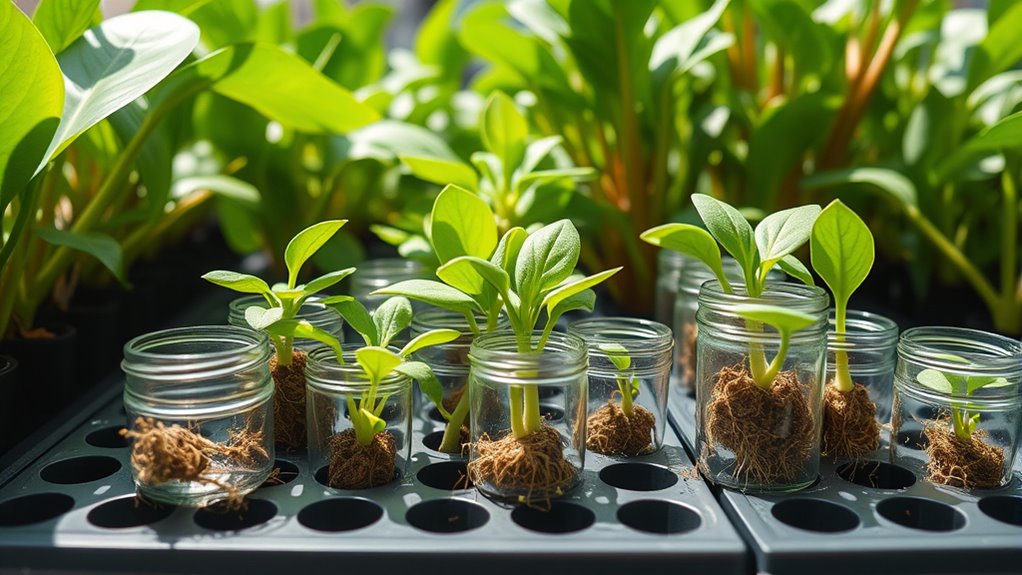
Stem cuttings are perhaps the most common and versatile method for propagating many plants. You start by selecting a healthy stem that has at least a few leaves and is free from disease. Using sharp, clean scissors or pruning shears, you cut just below a node—the point where leaves attach to the stem. Removing the lower leaves helps prevent rot and encourages root growth. You then plant the cutting in well-draining soil or place it in water, making sure at least one node is submerged if rooting in water. Keep the cutting in a warm, humid environment, and be patient as roots develop over several weeks. Once roots are established, you can transplant the new plant into a pot or garden bed. This method is reliable for many houseplants, shrubs, and some trees, providing a quick way to multiply your favorite varieties. Additionally, understanding the contrast ratio of your propagation setup can influence the success rate by ensuring optimal light conditions.
Division involves separating a mature plant into smaller sections, each with its own roots and shoots. This technique is ideal for plants that naturally grow in clumps, such as hostas, ferns, and certain perennials. To divide a plant, you carefully dig it out of the ground or remove it from its container. Gently separate the root ball into parts, making sure each section has enough roots and foliage to stand alone. Replant each division at the same depth as before, water thoroughly, and keep them in a shaded area until they establish. Division is a great way to rejuvenate overgrown plants or create new ones quickly, and it preserves the genetic integrity of the parent plant.
Mastering these propagation methods opens up endless possibilities for your garden. Whether you’re rooting a leaf, cutting a stem, or dividing a mature plant, each approach allows you to multiply your greenery with confidence and ease. With patience and care, you’ll find that propagating plants becomes a rewarding part of your gardening journey.
Frequently Asked Questions
Which Plant Species Are Easiest to Propagate at Home?
You’ll find that succulents, pothos, spider plants, and snake plants are among the easiest to propagate at home. These plants often root quickly from cuttings or division, requiring minimal effort. You simply cut a healthy leaf or stem, place it in water or soil, and wait for roots to develop. Their hardy nature and fast growth make them perfect for beginners wanting to multiply their indoor garden easily.
How Long Does It Typically Take for Cuttings to Root?
It usually takes about 2 to 8 weeks for cuttings to root, depending on the plant species and conditions. You should keep the soil moist, place the cuttings in bright, indirect light, and maintain consistent warmth. Check regularly for new roots by gently tugging; resistance indicates rooting. Patience is key, as some plants root faster than others, but with proper care, you’ll see success within this timeframe.
What Are Common Mistakes to Avoid During Propagation?
You should avoid overwatering, as it can cause rot and hinder root development. Make sure you use clean, sharp tools to prevent infections, and don’t place cuttings in direct sunlight right away—this can stress them out. Be patient and don’t disturb the cuttings too often; frequent handling can damage delicate roots. Finally, ensure your cuttings have proper humidity and ventilation to encourage healthy growth.
Can Propagation Be Done Year-Round or Seasonal?
You can propagate plants year-round if you provide the right conditions like proper lighting, humidity, and temperature. Don’t worry about seasonal limits—many plants root successfully indoors anytime. Just guarantee you adjust your environment to mimic their natural growing conditions, and you’ll have success regardless of the season. Keep in mind that some plants may root faster during specific times, but with patience, propagation is always possible.
How Do I Ensure Healthy Growth After Propagation?
To guarantee healthy growth after propagation, provide your new plants with proper lighting, watering, and nutrients. Keep the soil moist but not waterlogged, and place them in bright, indirect sunlight. Avoid over-fertilizing, and maintain good air circulation to prevent diseases. Regularly check for pests, and prune dead or yellowing leaves. With consistent care, your propagated plants will develop strong roots and thrive.
Conclusion
Think of propagation as tending a mighty tree. Your careful steps—leaf, stem, and division methods—are like nurturing roots, guiding new shoots to grow strong. Just as a gardener patiently tends to each branch, your efforts will lead to a thriving garden of plants. Trust in these simple techniques, and soon you’ll watch your green oasis flourish, spreading life like branches reaching toward the sun. Your garden’s future is in your hands—nurture it wisely.