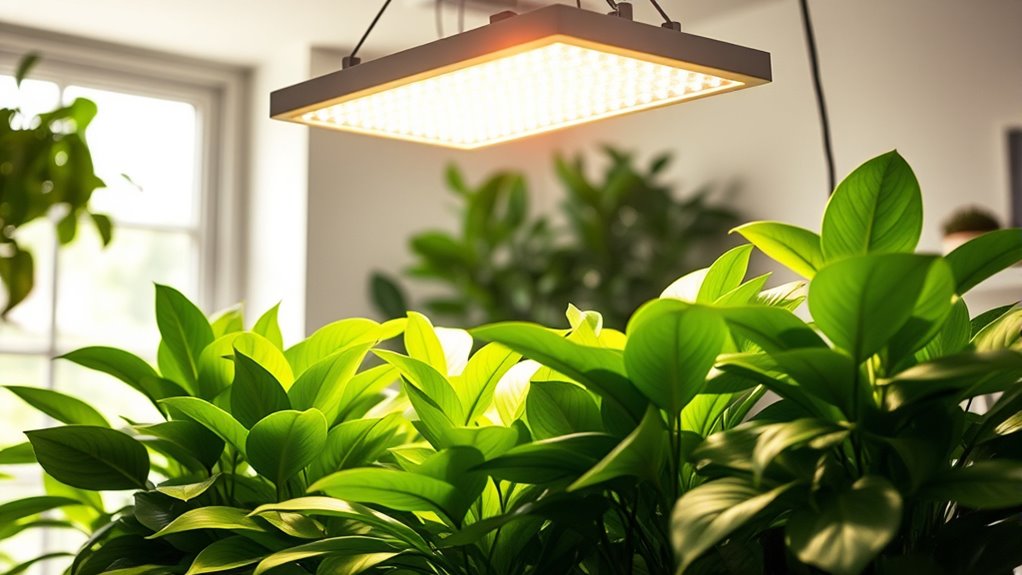

If your indoor space doesn’t get enough natural sunlight, grow lights can help your plants thrive. They provide a consistent and targeted light spectrum that supports every stage of growth, from seedlings to flowering. Plus, modern LED options produce less heat, are energy-efficient, and customizable for your plants’ needs. If you want healthier, happier plants year-round, using grow lights could be the perfect solution—there’s more to discover about making the best choice for your indoors.
Key Takeaways
- Natural sunlight may be insufficient indoors, especially in winter or shaded areas, making grow lights beneficial.
- Grow lights provide consistent, targeted light tailored to each plant’s growth stage, promoting healthier development.
- They support faster growth and prevent legginess by supplementing or replacing inadequate natural light.
- LED grow lights are energy-efficient, produce less heat, and can be customized for specific plant needs.
- Not all indoor plants require grow lights, but those with high light demands or limited natural light benefit significantly.

If you’re looking to keep your indoor plants healthy and thriving year-round, grow lights can be a game-changer. Modern grow lights, especially those utilizing LED technology, have revolutionized indoor gardening by providing the right light spectrum to support plant health at every stage of growth. Unlike natural sunlight, which can be inconsistent or limited indoors, LED grow lights deliver targeted wavelengths that plants need to photosynthesize effectively. This makes them especially useful during winter months, in rooms with limited sunlight, or for plants that require specific light conditions to flourish.
LED technology is highly efficient and customizable, allowing you to choose lights that match your plants’ specific needs. LEDs emit less heat compared to traditional lighting options, so you can keep them close to your plants without risking damage. Their energy efficiency also means lower electricity bills and longer-lasting bulbs, making them a practical investment for any indoor gardener. With adjustable brightness and spectrum settings, you can fine-tune the light output to match different plant growth stages, ensuring *ideal* development throughout their lifecycle.
LED grow lights are energy-efficient, customizable, and produce less heat, promoting healthy plant growth without risk of damage.
Understanding plant growth stages is essential to maximizing the benefits of grow lights. During the seedling or germination stage, your plants need gentle, blue-spectrum light that encourages healthy leaf development. As they *shift* into the vegetative phase, they require more intense, broad-spectrum light to promote strong stems and lush foliage. When plants reach the flowering or fruiting stage, they benefit from a specific light spectrum that enhances blooming and fruit production. LED grow lights that allow you to switch between or combine different spectrums give you full control over these stages, helping your plants thrive from start to finish.
You might wonder if your indoor plants really need grow lights. The answer depends on several factors: how much natural sunlight your space receives, the types of plants you’re growing, and their specific light requirements. Many common houseplants can survive with ambient light, but for *maximum* growth and to prevent legginess or poor health, supplemental grow lights often make a significant difference. If you want your plants to grow faster, develop healthier leaves, and produce more vibrant flowers or fruits, using grow lights tailored to their needs is a smart move.

Bstrip Indoor Greenhouse with Grow Light, Indoor Greenhouse Cabinet with 6 Pack 90W Grow Lights with Timer, Mini Green House for Indoor Plant, Seed Starter, Seeding, 35.4"x13.8"x70.8"
Indoor Greenhouse with Grow Light - This small greenhouse measures 35.4 inches long x 13.8 inches wide x...
As an affiliate, we earn on qualifying purchases.
Frequently Asked Questions
Can All Indoor Plants Benefit From Grow Lights?
Not all indoor plants benefit equally from grow lights. Some plant species, especially those with high light requirements like succulents and herbs, thrive with supplemental light. Others, such as low-light plants like pothos or snake plants, may not need it. When choosing grow lights, focus on the right light spectrum to match your plant’s needs, ensuring they get the appropriate amount of light for healthy growth.
How Do I Choose the Right Wattage for Grow Lights?
If you want your plants to thrive, pick a wattage that matches their needs, not just the fanciest bulb. You should consider the light spectrum they require—full spectrum for most—and balance it with power consumption. Too weak, and they’ll sulk; too strong, and you’ll waste energy and fry leaves. Aim for the right wattage to give your plants just enough glow without turning your home into a solar factory.
Are LED Grow Lights More Energy-Efficient Than Fluorescent?
Yes, LED grow lights are more energy-efficient than fluorescent ones. Their high LED efficiency means they produce more light per watt, reducing your electricity bills. Compared to fluorescent lights, LEDs generate less heat and last longer, making them a smarter choice for indoor plant growth. So, if you’re looking to save energy and enhance plant health, LEDs are the better option for your indoor gardening setup.
How Close Should Grow Lights Be to Indoor Plants?
You should keep grow lights about 12 to 24 inches from your indoor plants, depending on the light type and plant needs. Maintaining the right light distance is essential for maximum plant health, as too close can cause leaf burn, while too far reduces effectiveness. Adjust the distance as plants grow, ensuring they receive adequate light without stress, promoting healthy growth and vibrant foliage.
Do Grow Lights Replace Natural Sunlight Entirely?
Think of grow lights as a flashlight in a dark room—helpful, but not a complete replacement. They can’t fully mimic natural sunlight, which provides a broad spectrum essential for healthy plant growth cycles. While artificial sunlight boosts growth indoors, it doesn’t replace the full range of outdoor light. Relying solely on grow lights can limit your plants’ development, so supplement them with natural sunlight whenever possible for ideal results.
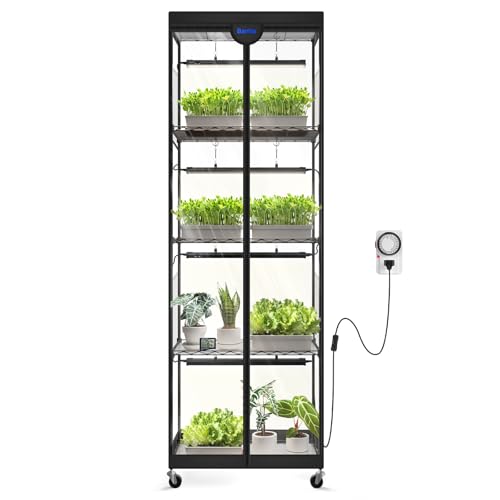
Barrina LP600 Mini Greenhouse with Grow Lights, 5-Tier Plant Stand with 100W TX-S25 1.6FT 5000K Full Spectrum Plant Shelf with Tent, Timer & Thermometer for for Seed Trays Growth, 23.6 x 13.8 x 70.9IN
High PPFD & Individual Control: 1.6FT 5000K full spectrum LED grow lights (CRI 97) deliver high PPFD (431.9...
As an affiliate, we earn on qualifying purchases.
Conclusion
Remember, a little light goes a long way. If your indoor plants struggle to thrive with natural sunlight, grow lights can be a game-changer. They provide the extra boost your plants need to flourish, even on cloudy days or in dim rooms. As the saying goes, “Where there’s a will, there’s a way.” With the right grow lights, you can turn any space into a lush indoor garden and keep your plants healthy year-round.

Abimars Walk-in Greenhouse with Height-Adjustable Shelves, Heavy Duty Green House for Outdoors/Indoors, Heavy-Duty Steel Frame & Thickened PVC Cover, 82"x57"x55.5", Black
Forget flimsy frames and wobbly shelves—Our greenhouses for outdoors use industrial-grade steel support legs, and every shelf is...
As an affiliate, we earn on qualifying purchases.

BACEKOLL Plant Stand Indoor with Grow Lights, 6 Tiered Tall Plant Shelf, 63" Metal Plant Stand for Indoor Plants Multiple, Half-Moon Plant Rack Display Shelf, 2 Pcs Plant Holder for Living Room, Patio
【Plant Stand with Grow Lights】 To support the flourishing growth of indoor plants, we've integrated full-spectrum grow lights...
As an affiliate, we earn on qualifying purchases.