To keep your indoor plants healthy, fertilize during their active growth periods in spring and summer with organic fertilizers like compost or fish emulsion, following recommended amounts to avoid overfeeding. Reduce or skip fertilization in fall and winter when plants slow down. Watch for signs like pale leaves or stunted growth to adjust your routine. For detailed tips on timing, quantities, and techniques, continue exploring how to nurture your indoor garden effectively.

Get the little things that make your day delivered free with Prime
- Fast, free delivery on millions of items
- Prime Video, Amazon Music and more included
- Member-only deals all year
Key Takeaways
- Fertilize indoor plants during active growing seasons, primarily spring and summer, and reduce or pause in fall and winter.
- Use organic fertilizers like compost, fish emulsion, or bone meal to provide slow-release nutrients safely.
- Test soil regularly to identify nutrient deficiencies and adjust fertilization accordingly.
- Follow recommended application rates to prevent over-fertilizing, which can harm roots and overall plant health.
- Monitor plant signs such as pale leaves or stunted growth to optimize fertilization timing and amounts.
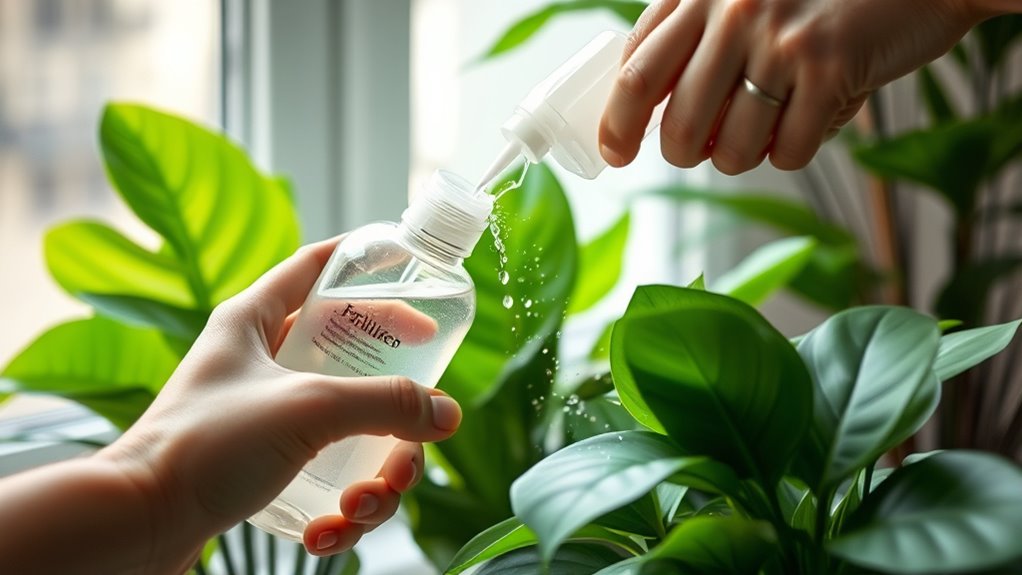
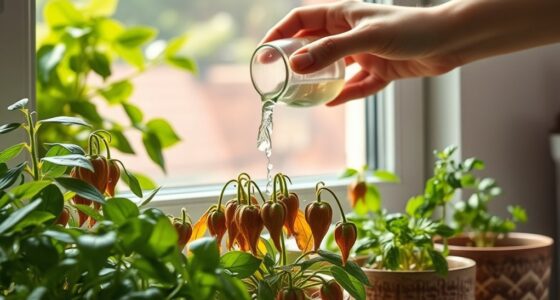
Fertilizing indoor plants is essential for keeping them healthy, vibrant, and thriving. When you want your plants to flourish, understanding the right time, type, and amount of fertilizer to use makes all the difference. One of the first steps you should take is soil testing. This process helps you determine the current nutrient levels in your plant’s soil or potting mix. By analyzing the soil, you can identify deficiencies or imbalances that might be hindering growth. Soil testing allows you to tailor your fertilizing routine, avoiding over-fertilization that can damage roots or under-fertilization that leaves plants lacking essential nutrients. It’s a simple, effective way to give your indoor plants exactly what they need to thrive.
Once you’ve assessed your soil, you can choose the appropriate fertilizers, with organic options often being the best choice for indoor plants. Organic fertilizers come from natural sources like compost, fish emulsion, or bone meal, and they release nutrients slowly, which reduces the risk of overfeeding. These fertilizers improve soil health over time, fostering a balanced environment for root development and overall plant vitality. When applying organic fertilizers, always follow the recommended dosage to prevent excess buildup, which can cause root burn or other issues. Organic options are also safer for indoor environments, especially if you have pets or children, as they don’t contain synthetic chemicals. Additionally, understanding the Utilitarian principle behind applying fertilizers ensures you maximize the benefits while minimizing waste or harm.
Organic fertilizers from natural sources promote soil health and are safer for indoor plants and pets.
Timing your fertilization schedule is equally important. For most indoor plants, you should fertilize during the active growing season—spring and summer—when plants naturally need more nutrients. During fall and winter, when growth slows, reduce or pause fertilizing altogether. This not only conserves resources but also prevents unnecessary stress on your plants. You can also monitor your plants’ appearance for signs of nutrient deficiencies, such as pale leaves or stunted growth, and adjust your fertilizing routine accordingly.
As an affiliate, we earn on qualifying purchases.
Frequently Asked Questions
Can I Fertilize Indoor Plants During Winter Dormancy?
You should avoid fertilizing indoor plants during winter dormancy because their growth slows down, and they don’t need extra nutrients. Waiting for the right fertilizer timing guarantees you don’t overfeed, which can harm the plant. If you must fertilize, use a diluted, balanced fertilizer sparingly. Typically, it’s best to pause fertilizing until new growth appears in spring, aligning with natural growth cycles and promoting healthy development.
Are Organic Fertilizers Better for Indoor Plants Than Chemical Ones?
You might think organic fertilizers are better, but it depends. Organic nutrients offer natural benefits like improving soil health and slowly releasing nutrients, which can be gentler for your indoor plants. Chemical options, however, provide quick results and precise nutrient levels. If you prefer eco-friendly, sustainable options, go organic. For fast growth, chemical fertilizers might be more effective. Choose based on your plants’ needs and your gardening style.
How Do I Identify Nutrient Deficiencies in My Indoor Plants?
You can identify nutrient deficiencies in your indoor plants by observing leaf discoloration, such as yellowing or browning, and noticing stunted growth. If leaves look pale or unevenly colored, it’s a sign they might lack essential nutrients like nitrogen or iron. Additionally, if your plant isn’t growing as expected or new leaves are small and weak, these are clues you need to adjust fertilization or improve nutrient intake.
Is It Safe to Over-Fertilize Indoor Plants?
Over-fertilizing indoor plants isn’t safe because it increases risks like root burn, leaf scorch, and nutrient imbalances. Watch for signs of excess fertilizer, such as yellowing leaves, wilting, or brown edges. To avoid these issues, follow recommended amounts carefully and avoid fertilizing too often. If you notice any of these signs, flush the soil with water to remove excess nutrients and help your plants recover.
Can I Use Leftover Garden Fertilizers for Indoor Plants?
Sure, you can use leftover garden fertilizer for indoor plant safety—just don’t assume all fertilizers are equal. Garden fertilizers often contain higher nutrient concentrations and may have additives unsuitable for indoor plants. While it might seem economical, it’s best to dilute them properly and avoid over-fertilizing. Always check labels and research your specific indoor plants’ needs. Otherwise, you risk harming your plants or causing an imbalance in their growth.
fish emulsion fertilizer for houseplants
As an affiliate, we earn on qualifying purchases.
As an affiliate, we earn on qualifying purchases.
Conclusion
Remember, fertilizing your indoor plants is like feeding a growing child—you need to give just enough to keep them thriving without overwhelming them. Stick to a regular schedule, use the right type of fertilizer, and follow the recommended amounts. With proper care, your green companions will flourish like a well-tended garden of joy, filling your space with life and vibrancy. Keep nurturing them, and they’ll reward you with lush, healthy growth every time.
As an affiliate, we earn on qualifying purchases.
indoor plant fertilization schedule
As an affiliate, we earn on qualifying purchases.
As an affiliate, we earn on qualifying purchases.
Halloween Picks
halloween
As an affiliate, we earn on qualifying purchases.