
To keep your dwarf citrus healthy indoors, choosing the right container is vital. You need a sturdy, well-draining pot that allows root expansion and prevents waterlogging. Proper size and materials help avoid root-bound issues and make maintenance easier. Good placement and regular water management ensure the tree gets enough sunlight and moisture without overwatering. Thoughtful container planning supports strong growth and healthy fruit production, and if you keep exploring, you’ll discover practical tips for peak citrus care.

Get the little things that make your day delivered free — and shop member deals
- Fast, free delivery on millions of items
- Access to Prime Big Deal Days deals on October 6–7
- Prime Video, Amazon Music and more included
Key Takeaways
- Proper containers prevent root-bound issues, supporting healthy growth and fruit production.
- Well-chosen containers with drainage ensure soil health and prevent waterlogging.
- Container selection impacts pest management and ease of cleaning, reducing pest risks indoors.
- Appropriate container size and placement promote adequate sunlight exposure and environmental control.
- Thoughtful planning facilitates proper watering, soil aeration, and overall plant health maintenance.
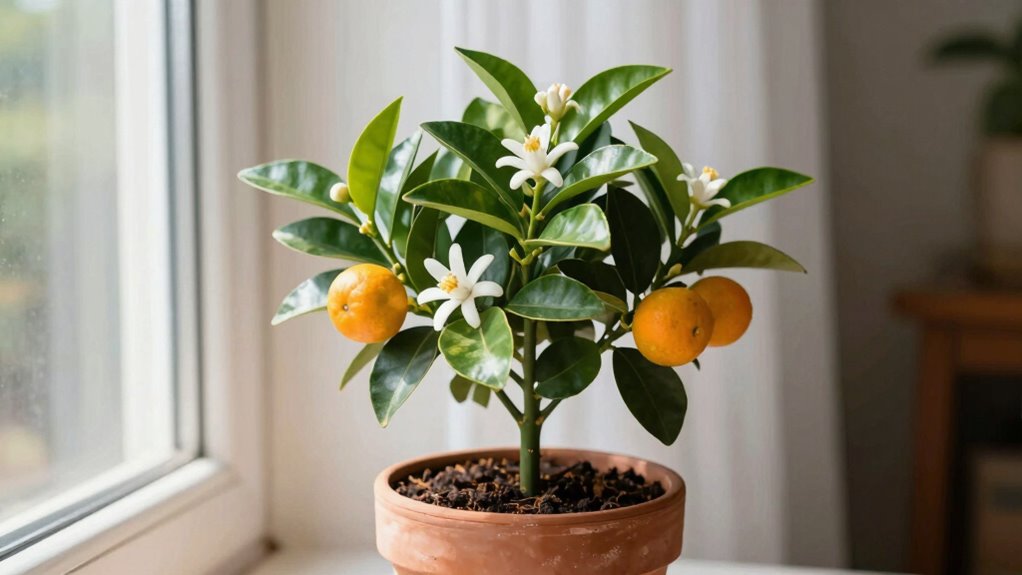
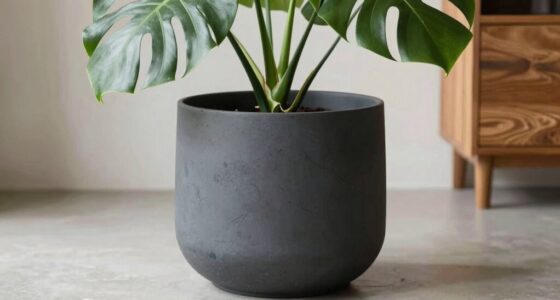
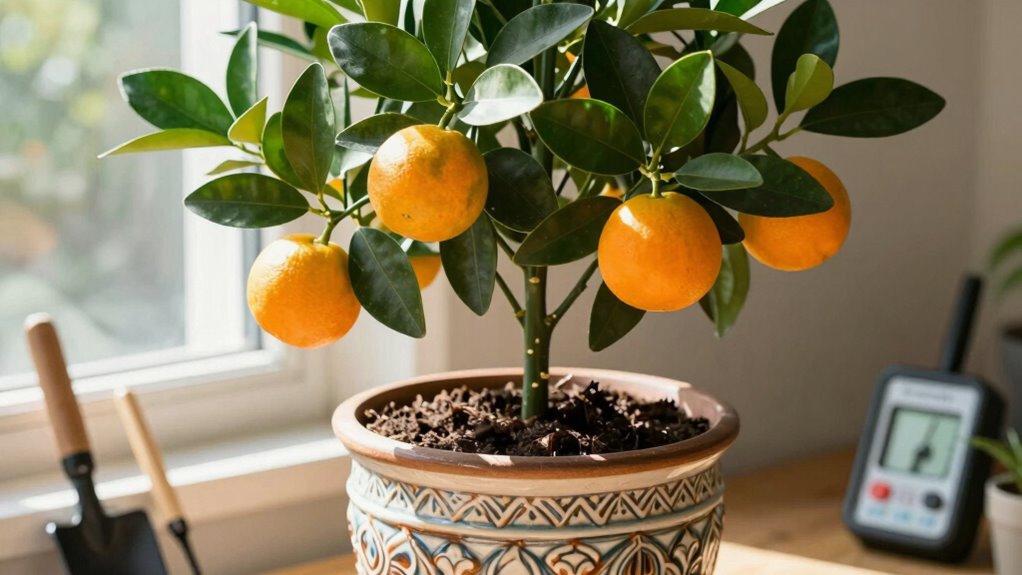
If you want to enjoy fresh citrus year-round, growing dwarf citrus trees indoors in containers is a smart choice. But to keep your indoor citrus healthy and thriving, thoughtful container planning is essential. The first consideration is selecting the right container size and material. Dwarf citrus trees grow best in pots that allow room for roots to expand and prevent becoming root-bound. Choose sturdy containers with drainage holes—clay or plastic are both good options—so excess water can escape easily. Proper soil drainage is critical because soggy soil can lead to root rot and other diseases. You should fill your container with well-draining potting mix designed for citrus or other fruit trees. This mix typically contains organic matter, perlite, or coarse sand to facilitate good drainage and air circulation around the roots.
Another vital aspect is pest management. Indoor environments may seem less prone to pests, but citrus trees can still attract pests like scale, aphids, or spider mites. An effective plan involves regular inspection of your tree’s leaves, stems, and soil surface. Keeping the area clean and free of fallen leaves or fruit debris minimizes pest hiding spots. If pests appear, act swiftly with natural remedies like neem oil or insecticidal soap, and avoid over-fertilizing, which can attract pests. Proper container planning also helps with pest control—by choosing containers that are easy to move and clean, you can quickly isolate and treat infested plants without spreading pests to other houseplants.
You’ll also want to think about the placement of your container. Place it in a bright, sunny spot where it can receive at least six hours of direct sunlight daily. This helps the tree develop healthy foliage and fruit. Be mindful of temperature and humidity levels, as indoor citrus trees prefer consistent warmth and moderate humidity. When watering, ensure you’re not overdoing it; the soil should be moist but not waterlogged. Check the soil moisture regularly and water only when the top inch feels dry. This practice supports healthy root systems and prevents issues related to poor soil drainage.
As an affiliate, we earn on qualifying purchases.
Frequently Asked Questions
How Often Should I Water My Dwarf Citrus Indoors?
You should water your dwarf citrus when the soil moisture feels dry about an inch below the surface. Typically, this means establishing a watering schedule of once a week, but it can vary based on indoor conditions like humidity and temperature. Always check the soil moisture and avoid overwatering, as soggy soil can lead to root rot. Adjust your watering routine accordingly to keep your plant healthy.
What Are the Best Lighting Conditions for Indoor Dwarf Citrus?
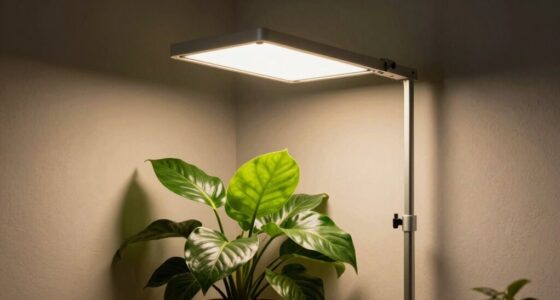
Imagine your dwarf citrus basking in a golden sunbeam; it craves at least 10-12 hours of sunlight daily. If natural light’s scarce, supplement with artificial lighting—bright, full-spectrum grow lights mimic the sun’s warmth and intensity. Keep the light close but not too near to avoid scorching. Consistent, ample illumination energizes your plant, encouraging lush leaves and bountiful fruit, transforming your space into a citrus grove.
Can Dwarf Citrus Trees Be Grown Without Fertilizer?
You can grow dwarf citrus trees without fertilizer, but soil nutrition is vital. Without added fertilizer, you’ll need to rely on natural sources like compost or organic amendments as fertilizer alternatives. These help maintain healthy soil, providing essential nutrients for growth and fruit production. Regularly monitor your plant’s health, and supplement with natural options when necessary. Proper container planning guarantees your citrus receives enough nutrients and has room to thrive indoors.
How Do I Prevent Pests on Indoor Dwarf Citrus?
Think of your dwarf citrus as a delicate symphony, vulnerable to pests that can drown out its harmony. To prevent pests, choose pest-resistant varieties and inspect your tree regularly. Use organic pest control methods like neem oil or insecticidal soap to keep unwanted guests at bay. Keep your plant healthy with proper watering and sunlight, creating a resilient fortress that naturally wards off pests, letting your citrus thrive in peaceful harmony.
When Is the Best Time to Repot My Dwarf Citrus?
You should repot your dwarf citrus when it outgrows its current container, typically every 2-3 years. Choose container materials like terracotta or plastic, ensuring proper drainage. Follow a consistent repotting schedule, ideally in early spring before the growing season begins. During repotting, gently loosen roots and use fresh soil to promote healthy growth. This helps prevent pests and keeps your plant thriving indoors.
As an affiliate, we earn on qualifying purchases.
Conclusion
Just like a careful gardener tends to each bloom, you must plan your dwarf citrus containers with intention and care. Think of it as crafting a miniature orchard, where every choice shapes the future harvest. With patience and thoughtful placement, your indoor citrus will thrive, offering zest and joy. Remember, a well-planned container is the foundation for growth—turning your space into a lush haven, echoing the promise of nature’s own artistry waiting to flourish.
well-draining citrus potting mix
As an affiliate, we earn on qualifying purchases.
As an affiliate, we earn on qualifying purchases.
As an affiliate, we earn on qualifying purchases.
Fall Picks
fall essentials
As an affiliate, we earn on qualifying purchases.