
Adding extra CO₂ to your indoor plants can boost photosynthesis, helping them grow faster and develop healthier foliage. However, plants only benefit when combined with good lighting, watering, and nutrients. Too much CO₂ can create unsafe environments or do little if other conditions aren’t ideal. Controlling CO₂ levels carefully ensures your houseplants thrive without risks. Want to discover the best ways to safely enhance your plants’ growth? Keep exploring to learn more.
Key Takeaways
- Indoor plants often benefit from increased CO2 if lighting, watering, and nutrients are optimal.
- CO2 enrichment can boost photosynthesis and accelerate growth in controlled indoor environments.
- Proper monitoring ensures CO2 levels remain safe and effective without harming plants or humans.
- Without adequate light or care, extra CO2 provides limited or no growth benefits.
- DIY and commercial CO2 systems can be used, but proper management is crucial for safe, effective results.
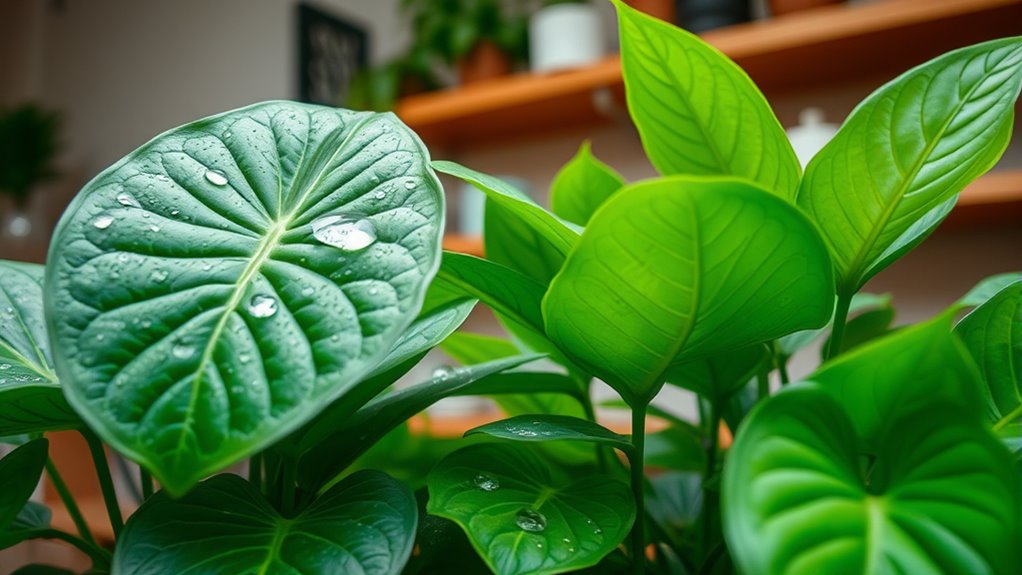
Have you ever wondered if increasing the carbon dioxide (CO2) levels around your indoor plants can boost their growth? The idea behind CO2 enrichment is rooted in enhancing photosynthesis, the process by which plants convert light, water, and CO2 into energy. When you supply more CO2, you’re effectively giving your plants a key ingredient that can improve photosynthesis enhancement, potentially leading to faster growth and healthier foliage. But it’s important to understand how this works and whether it’s worth the effort for your indoor garden.
Increasing CO2 around your indoor plants can boost photosynthesis and promote faster, healthier growth.
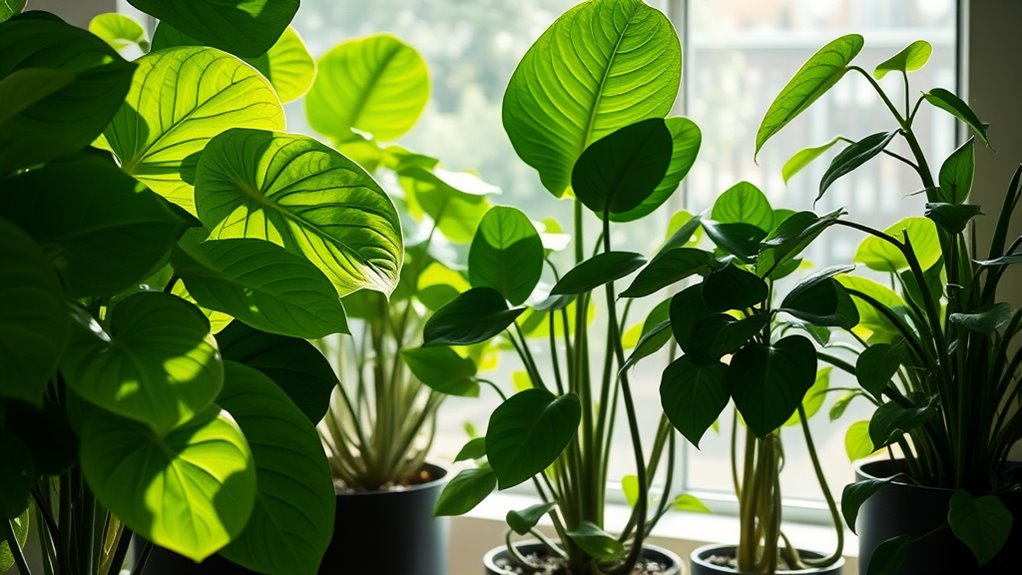
In natural conditions, CO2 levels are usually sufficient for most plants, but indoor environments often have limited airflow and lower CO2 concentrations. By increasing the CO2, you’re aiming for growth rate optimization—encouraging your plants to grow more vigorously within a shorter period. This can be especially beneficial if you’re growing plants that thrive under high-light and high-CO2 conditions, such as certain tropical species or those cultivated for maximum foliage. When you enrich the air with extra CO2, your plants can photosynthesize more efficiently, producing more sugars and energy that fuel their development.
Furthermore, understanding the importance of light and nutrients ensures that CO2 enrichment yields the best possible results. When you enrich the air with extra CO2, your plants can photosynthesize more efficiently, producing more sugars and energy that fuel their development.
However, boosting CO2 isn’t just about turning up a dial. You need to verify other factors are optimized too—adequate lighting, proper watering, and suitable nutrients. Without these, adding CO2 alone won’t substantially improve growth. If your indoor plants are under low light or suffering from nutrient deficiencies, the benefits of increased CO2 will be limited. Think of CO2 enrichment as a catalyst that amplifies the effects of good care rather than a standalone solution.
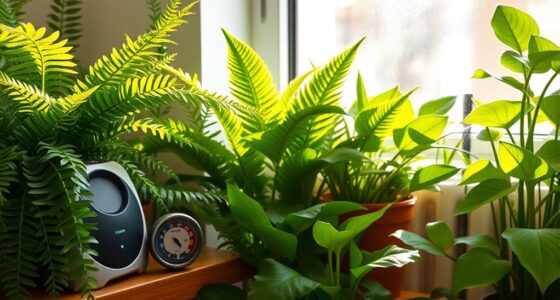
You can implement CO2 enrichment in several ways, from simple DIY methods to more sophisticated systems. Some hobbyists use containers with baking soda and vinegar to produce CO2, while others invest in commercially available CO2 generators or tanks. Remember, the key is to maintain a balanced environment; too much CO2 can lead to reduced oxygen levels, which might harm your plants or create an unhealthy space for you. Proper monitoring with CO2 meters can help you keep levels within safe and effective ranges.

YNNICO Indoor Self Watering Planters with Drainage Holes and Saucers, 8, 7, 6.5, 6, 5.5, 5 Inches, Black, 6 Pots
【Practical Size Combo】-These plastic planters indoor combines with 6 different sizes, 8 inch 7inch 6.5 inch 6 inch...
As an affiliate, we earn on qualifying purchases.
Frequently Asked Questions
Can CO2 Enrichment Help Sick or Stressed Indoor Plants Recover Faster?
If your indoor plants are sick or stressed, you might wonder if CO2 enrichment can help them recover faster. While increasing CO2 can boost photosynthesis, it’s also essential to improve soil nutrients and adjust watering frequency to support recovery. Proper soil health and consistent watering help plants strengthen, making them more resilient. So, CO2 alone isn’t enough—combine it with good soil care for the best chance of recovery.
Is There a Safe Way to Increase CO2 Levels Without Harming Pets?
You can safely increase CO2 levels indoors without risking pet safety by avoiding methods that produce toxins. Instead, improve ventilation or use CO2 generators designed for indoor use, which typically have built-in safety features. Avoid burning fuels or using chemical sources that pose toxin risks. Always keep pets in well-ventilated areas and monitor CO2 levels with a reliable meter to guarantee a safe environment for everyone.
How Does CO2 Enrichment Compare to Other Indoor Plant Growth Methods?
Think of it as hitting two birds with one stone. Compared to other methods like proper lighting or watering, CO2 enrichment can considerably boost growth efficiency by optimizing resource use. While it’s effective, it’s not a magic bullet—other techniques can be more straightforward and safer. Combining methods often yields the best results, helping your houseplants thrive without risking your pets or wasting resources.
What Are the Long-Term Effects of Elevated CO2 on Indoor Plant Health?
Elevated CO2 can boost your indoor plant’s photosynthesis efficiency, leading to faster growth. However, long-term exposure might cause nutrient absorption issues if other nutrients aren’t balanced. You could see healthier leaves initially, but over time, deficiencies may develop, weakening your plants. To maintain long-term health, guarantee proper nutrient levels and avoid excessive CO2. This balanced approach helps your plants thrive without risking adverse effects from prolonged CO2 enrichment.
Are There Specific Plant Species That Benefit More From CO2 Enrichment?
Imagine lush, vibrant leaves reaching toward a gentle light, thriving with just the right boost. You’ll find that species specificity plays a key role in growth enhancement—some plants, like ferns and tropicals, respond more positively to extra CO2. These plants have evolved to maximize CO2 use, so they’ll likely flourish more than others. To get the best results, identify your plant’s natural preferences and tailor your enrichment accordingly.

Fielda 8/10/12 Inch Self Watering Pots for Indoor/Outdoor Plants - Large Plastic Planter with Drainage Holes, Water Level Indicator & Deep Reservoir, Modern Decorative Flower Pots (White)
🌿 【Self-Watering Pots with Water Level Indicator】 Designed for busy plant lovers, our 8/10/12 self-watering pots feature a...
As an affiliate, we earn on qualifying purchases.
Conclusion
Just as plants once thrived in the Earth’s lush prehistoric skies, adding extra CO2 can boost your indoor garden’s growth. But remember, like a delicate balance in a symphony, too much can harm more than help. Consider your plants’ needs carefully—sometimes, nature’s own rhythm is best left undisturbed. With mindful enrichment, you can help your houseplants flourish, turning your home into a vibrant, green oasis that echoes the ancient, thriving world of plant life.

Bstrip Indoor Greenhouse with Grow Light, Indoor Greenhouse Cabinet with 6 Pack 90W Grow Lights with Timer, Mini Green House for Indoor Plant, Seed Starter, Seeding, 35.4"x13.8"x70.8"
Indoor Greenhouse with Grow Light - This small greenhouse measures 35.4 inches long x 13.8 inches wide x...
As an affiliate, we earn on qualifying purchases.

AC Infinity AIRPLATE T8 White, Quiet Cooling Dual-Fan System 6" with Thermostat Control, for Home Theater AV Cabinets
An ultra-quiet UL-certified dual fan system designed for cooling cabinets that requires minimal noise.
As an affiliate, we earn on qualifying purchases.