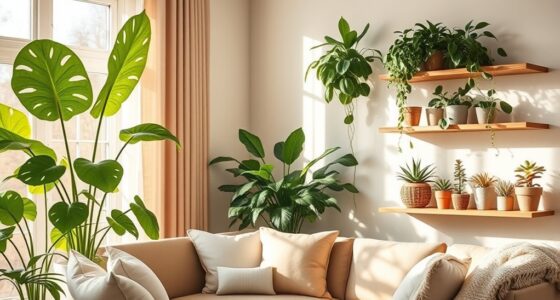
Having houseplants can genuinely lower your stress and improve your mood. When you spend time caring for or simply gazing at greenery, it activates your connection to nature’s calming effects, helping to reduce cortisol levels and slow your heart rate. Greenery inside makes your space more inviting, encouraging mindfulness and relaxation. As you continue exploring, you’ll discover even more ways that incorporating plants into your environment boosts your emotional resilience and well-being.
Key Takeaways
- Houseplants activate the biophilia response, fostering innate comfort and reducing stress through natural connection.
- Gazing at greenery slows heart rate and lowers blood pressure, providing immediate calming effects.
- Caring routines for plants promote mindfulness, distraction, and emotional regulation during stressful times.
- The presence of houseplants enhances indoor environments, creating peaceful spaces that encourage relaxation.
- Interacting with plants supports emotional resilience by symbolizing growth, patience, and nurturing, strengthening mental well-being.

Houseplants are more than just decorative touches; they actively influence our mental well-being and emotional states. When you bring greenery into your space, you’re not just adding visual appeal—you’re creating an environment that can help reduce stress and improve your mood. The presence of plants has been linked to lower cortisol levels, which means your body experiences less stress when surrounded by natural elements. As you tend to your houseplants, you may find yourself feeling more grounded and centered, as caring for them provides a sense of purpose and accomplishment.
Houseplants boost mood, reduce stress, and foster a sense of purpose and calm in your space.
You might notice that looking at your plants can have an immediate calming effect. The simple act of gazing at green leaves and delicate flowers can slow your heart rate and lower your blood pressure. This phenomenon is rooted in the biophilia hypothesis, which suggests that humans have an innate affinity for nature. When you’re immersed in natural elements, your brain relaxes, and your emotional state stabilizes. This connection to nature, even indoors, helps break the cycle of stress and anxiety that can build up during busy days. Additionally, the act of nurturing houseplants can foster a sense of responsibility and routine that supports mental stability.
Houseplants also enhance your environment’s atmosphere, making it feel more inviting and peaceful. The presence of greenery can soften the harshness of modern spaces, creating a sanctuary where you can unwind. This improved ambiance encourages mindfulness and encourages you to pause and breathe deeply. As you care for your plants, you may notice a shift in your mental outlook; focusing on nurturing something living fosters patience, attention, and a sense of control, all of which counteract feelings of helplessness or overwhelm.
Furthermore, your interaction with houseplants can serve as a form of gentle therapy. The routine of watering, pruning, or simply observing growth can provide a distraction from worries, helping you stay present. This act of tending to your plants offers a tangible way to practice self-care and emotional regulation. The routine fosters a sense of rhythm and stability, which can be especially comforting during stressful times. Over time, you may find that your plants become a source of emotional resilience, reminding you that growth takes patience and care.
In essence, incorporating houseplants into your space isn’t just about aesthetics; it’s a strategic way to nurture your mental health. Their presence creates a calming environment, encourages mindfulness, and provides a sense of connection to nature—all of which contribute to reducing stress and enhancing your overall emotional well-being. Recognizing the psychological benefits of nature can motivate you to integrate more greenery into your daily environment.
Frequently Asked Questions
Can Houseplants Improve Mental Health Beyond Stress Reduction?
Yes, houseplants can boost your mental health beyond stress reduction. They improve your mood, increase feelings of well-being, and enhance focus and creativity. Taking care of plants gives you a sense of purpose and accomplishment, fighting feelings of loneliness or depression. Plus, their presence can encourage mindfulness as you tend to them, fostering a positive daily routine. Incorporating houseplants into your space can truly support your overall mental health and resilience.
Do Different Plant Species Have Varying Psychological Benefits?
Yes, different plant species offer unique psychological benefits. For example, succulents are low-maintenance and promote calmness, while flowering plants like peace lilies can boost mood with their vibrant colors. Ferns and air plants improve air quality, enhancing focus and relaxation. You can select plants based on your needs—whether reducing anxiety, increasing focus, or simply enjoying visual beauty—to maximize mental health benefits in your space.
How Quickly Can Houseplants Influence Mood Changes?
Think of houseplants as gentle whispers from nature, quietly shifting your mood. You can start feeling calmer within minutes of caring for or simply gazing at them. Their vibrant greens and soothing presence act like a calming melody, instantly reducing stress. So, as you nurture your plants, you invite tranquility into your space, experiencing mood improvements almost immediately—proving that nature’s touch is powerful and immediate.
Are There Specific Houseplants Best for Anxiety Relief?
Yes, certain houseplants are especially good for anxiety relief. You might find that lavender, with its calming scent, helps soothe your nerves. Aloe Vera not only purifies the air but also promotes relaxation. Spider plants and snake plants are easy to care for and can boost your mood by improving your environment. Incorporate these into your space to create a calming atmosphere and help ease your anxiety naturally.
Can Houseplants Help With Sleep Quality?
Yes, houseplants can improve your sleep quality by purifying the air, increasing humidity, and creating a calming environment. Plants like lavender, aloe vera, and snake plants release soothing scents and oxygen, helping you relax and breathe easier at night. You’ll fall asleep faster, stay asleep longer, and wake up feeling more refreshed. Incorporate these plants into your bedroom to transform your space into a peaceful retreat that promotes restful sleep.
Conclusion
Bringing houseplants into your space is like planting seeds of calm in your daily life. Their presence nurtures your well-being, turning your home into a sanctuary of serenity. As you care for them, you cultivate not just greenery, but a peaceful mind. Remember, these plants are gentle reminders that nature’s touch can quiet your worries and grow your happiness—making your environment a lush oasis amid life’s chaos.