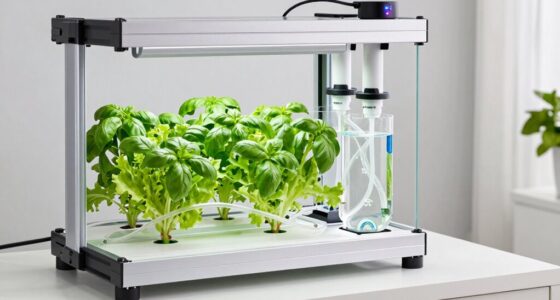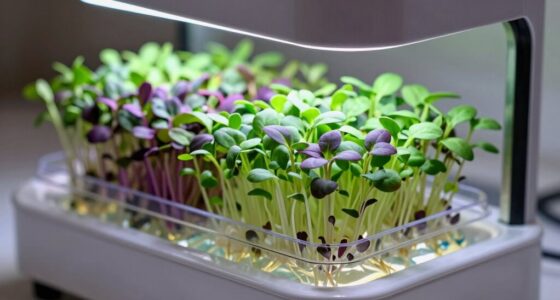
Your plants’ growth in a hydroponic system depends heavily on maintaining the right root zone temperature. If it’s too cold, nutrient absorption slows, and growth becomes stunted; if it’s too hot, roots can stress, suffocate, or even rot. Keeping the temperature between 18-22°C guarantees roots stay active, absorption stays efficient, and your plants thrive. To learn how to control and optimize root temperature for better yields, keep going—there’s more to discover.

Get the little things that make your day delivered free — and shop member deals
- Fast, free delivery on millions of items
- Access to Prime Big Deal Days deals on October 6–7
- Prime Video, Amazon Music and more included
Key Takeaways
- Proper root zone temperature ensures optimal nutrient absorption and metabolic activity for healthy plant growth.
- Extreme temperatures can cause root stress, impair oxygen availability, and lead to root rot.
- Maintaining the ideal range (18-22°C) promotes vigorous growth and prevents deficiencies.
- Fluctuations outside the optimal range disrupt root function and can cause symptoms like yellowing leaves.
- Consistent temperature control is essential for maximizing hydroponic productivity and plant health.
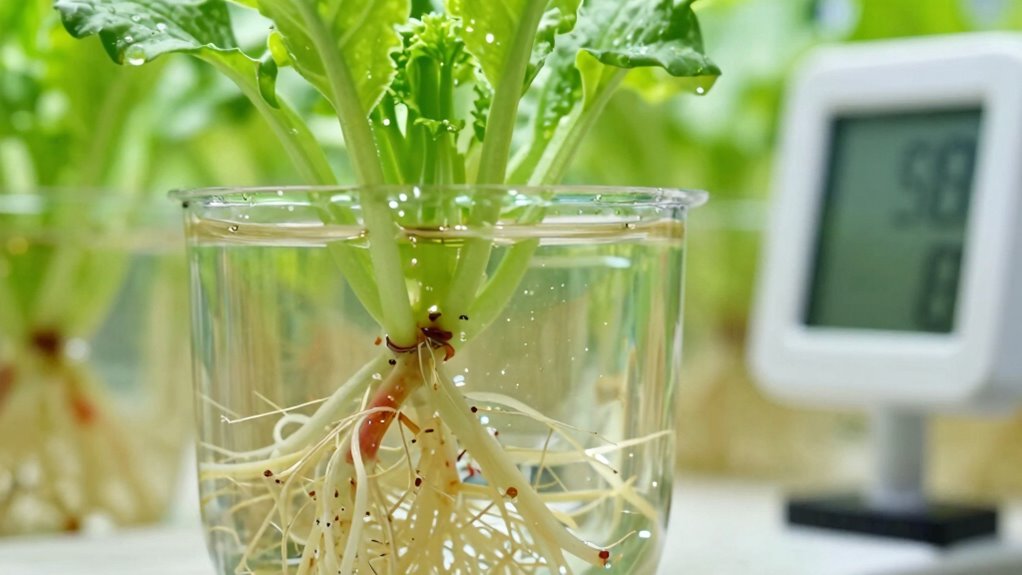
Understanding the temperature of the root zone is vital for successful hydroponic growth because it directly influences nutrient uptake and plant health. When the root zone is too cold or too hot, your plants struggle to absorb the nutrients they need to thrive. Proper temperature management guarantees that roots remain active and capable of efficiently taking in essential minerals and water. If the root zone becomes too cold, nutrient absorption slows down markedly, leading to stunted growth and weak plants. Conversely, excessively high temperatures can cause roots to become stressed, decrease oxygen availability, and impair overall root zone health. Maintaining an ideal temperature range is key for keeping your plants healthy and productive.
In hydroponic systems, controlling root zone temperature is more straightforward than in soil, but it still requires attention. If you don’t monitor it closely, external factors like ambient temperature or lighting can cause fluctuations. When the root zone temperature is within the perfect range—typically around 18-22°C (65-72°F)—you’ll notice your plants grow vigorously, with lush foliage and strong stems. This range supports active nutrient absorption because roots are metabolically efficient at these temperatures. When roots function optimally, they can uptake nutrients quickly, preventing deficiencies and promoting steady growth. If the temperature drifts outside this range, you may see symptoms like yellowing leaves, slowed growth, or even root rot in extreme cases. Maintaining proper root zone temperature is essential for consistent and healthy hydroponic production. Proper temperature regulation can prevent many common issues related to nutrient uptake and root health. Additionally, understanding the impact of temperature fluctuations helps in designing more effective climate control strategies for your system. Recognizing how temperature stability impacts overall plant health can lead to better management practices and higher yields.
Monitoring and adjusting the oxygen levels in your nutrient solution is also crucial because temperature fluctuations can significantly affect root respiration and overall plant vitality.
hydroponic root zone temperature controller
As an affiliate, we earn on qualifying purchases.
As an affiliate, we earn on qualifying purchases.
Frequently Asked Questions
How Quickly Does Root Zone Temperature Affect Plant Health?
Root zone temperature affects plant health within hours to days, depending on the severity of the change. You’ll notice root adaptation and overall plant stress if temperature regulation isn’t maintained. Rapid fluctuations can hinder nutrient uptake and root growth, so it’s essential to monitor and control temperature consistently. By maintaining ideal conditions, you guarantee healthy root development, promoting stronger, more resilient plants in your hydroponic system.
Can Root Zone Temperature Fluctuations Harm Beneficial Microbes?
Ever wondered if temperature fluctuations could disrupt your beneficial microbes? Yes, they can cause microbial imbalance and temperature stress, harming these essential helpers. When root zone temperatures swing wildly, microbes struggle to survive or thrive, which weakens nutrient uptake and plant health. Maintaining stable temperatures guarantees beneficial microbes flourish, supporting strong growth and resilience. Don’t let temperature stress undermine your hydroponic success—keep conditions steady for ideal microbial harmony.
What Tools Are Best for Measuring Root Zone Temperature Accurately?
You should use a digital soil or root zone thermometer for accurate root zone monitoring. These tools provide precise temperature readings, helping you maintain ideal conditions. For reliable results, place the probe directly into the root zone, avoiding interference with roots. Pair this with temperature regulation techniques like insulation, water chillers, or heating systems to keep root temperatures steady, promoting healthy plant growth and preventing stress caused by fluctuations.
Does Root Zone Temperature Impact Nutrient Uptake Efficiency?
Think of it this way: if your root zone temperature isn’t just right, nutrient absorption takes a hit, and growth slows down. When the temperature’s too high or low, roots struggle to efficiently uptake nutrients, causing deficiencies. Maintaining ideal root zone temperature guarantees your plants absorb nutrients effectively, promoting healthy growth. So, keeping it in the sweet spot is essential for thriving hydroponic plants.
How Does Root Zone Temperature Influence Plant Disease Susceptibility?
You’ll find that root zone temperature directly impacts plant disease susceptibility by affecting root health and disease resistance. When the temperature is too high or low, it stresses your plants, weakening their immune systems and making them more vulnerable to pathogens. Ideal temperature helps maintain strong root health, boosting disease resistance, and keeping your hydroponic system healthy. Proper temperature management is essential for preventing infections and promoting overall plant vitality.
hydroponic nutrient solution temperature monitor
As an affiliate, we earn on qualifying purchases.
As an affiliate, we earn on qualifying purchases.
Conclusion
You see, maintaining ideal root zone temperature is essential for healthy hydroponic growth. It influences nutrient uptake, root development, and overall plant vigor. When you keep it just right, you foster strong roots, vigorous growth, and abundant yields. When you ignore it, you risk disease, stunted growth, and poor productivity. So, pay attention to your root zone temperature, adjust when needed, and watch your hydroponic system thrive. Because, ultimately, healthy roots lead to thriving plants.
hydroponic system temperature regulator
As an affiliate, we earn on qualifying purchases.
As an affiliate, we earn on qualifying purchases.
As an affiliate, we earn on qualifying purchases.
NFL season / tailgating Picks
team gear
As an affiliate, we earn on qualifying purchases.