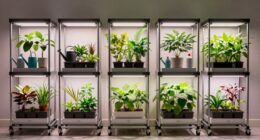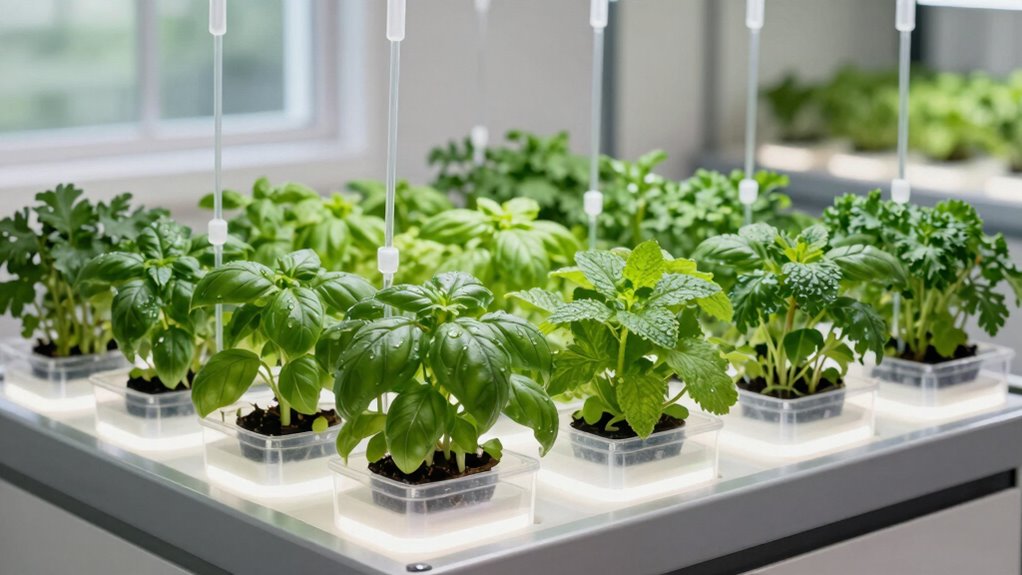

To keep your hydroponic herbs compact and productive, focus on maintaining ideal nutrient levels, pH, and EC, adjusting them as needed to prevent deficiencies or excesses. Use full-spectrum grow lights positioned close to the plants, set on a consistent cycle of 14-16 hours, and include reflective surfaces for even light distribution. Regularly monitor and refresh your nutrient solutions and environment to support healthy, bushy growth. Keep learning how to fine-tune these factors for the best results.

Get the little things that make your day delivered free — and shop member deals
- Fast, free delivery on millions of items
- Access to Prime Big Deal Days deals on October 6–7
- Prime Video, Amazon Music and more included
Key Takeaways
- Maintain optimal light intensity and cycle (14-16 hours) to prevent leggy, elongated growth.
- Regularly monitor and adjust nutrient pH and EC to ensure healthy, dense foliage.
- Use reflective surfaces to promote even light distribution and reduce stretching.
- Prune and pinch herbs regularly to encourage bushy, compact growth.
- Change nutrient solutions periodically to prevent deficiencies or excesses affecting plant shape.
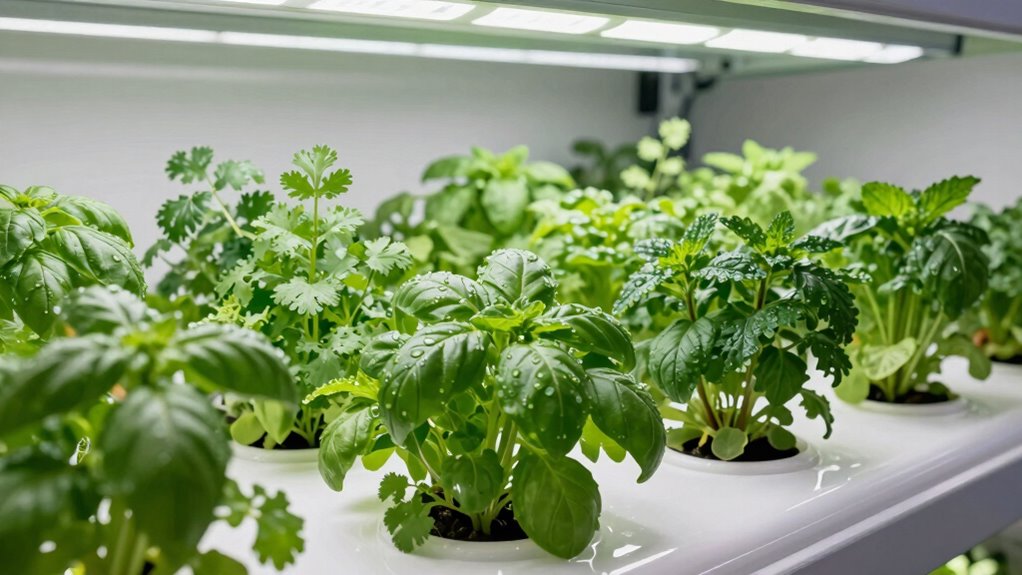
Have you ever wondered how to grow fresh herbs indoors without soil? If you’re venturing into hydroponic herb gardening, keeping your plants compact and productive is key to maximizing your space and yield. To achieve this, you need to focus on nutrient optimization and light management, two essential factors that directly influence plant health and growth habits.
Nutrient optimization involves providing your herbs with the right balance of nutrients to promote healthy, dense, and bushy growth. Since hydroponic systems deliver nutrients directly to the roots through water, you have the advantage of precise control. Regularly monitor your nutrient solution’s pH and electrical conductivity (EC) to guarantee they stay within ideal ranges for herbs like basil, parsley, and mint. Adjust the nutrient concentration if your plants show signs of deficiencies or excesses—yellowing leaves might indicate nitrogen deficiency, while burnt leaf edges could suggest nutrient burn. Using a high-quality, balanced hydroponic fertilizer tailored for leafy herbs will help maintain steady growth and prevent legginess, which can make plants tall and spindly. Consistent feeding schedules and periodic solution changes keep nutrients fresh and prevent imbalances that could cause rapid, uncontrolled growth.
Monitor pH and EC regularly to ensure your herbs thrive with balanced nutrients and healthy growth.
Light management is equally indispensable to keeping your herbs compact. In an indoor hydroponic setup, providing the right amount of light ensures your plants grow densely without stretching toward the light source. Use grow lights that emit full-spectrum, high-intensity light to mimic the sun’s rays, and position them at the proper distance from your plants—usually a few inches above the canopy. Keep the light cycle consistent, ideally 14 to 16 hours per day, to encourage robust, bushy growth and prevent etiolation, which causes elongated stems. If your herbs start to stretch, adjust your light height or increase light intensity. Additionally, incorporating reflective surfaces around your setup can help distribute light evenly, reducing the chances of uneven growth and encouraging a more compact form.
Combining these strategies—fine-tuning nutrient delivery and carefully managing your lighting—creates an environment where your hydroponic herbs stay lush, compact, and highly productive. Regular observation and adjustments are essential, as plants’ needs evolve with growth stages. With proper care, you’ll enjoy fresh, flavorful herbs that thrive indoors, all while maintaining a neat, manageable garden.
As an affiliate, we earn on qualifying purchases.
Frequently Asked Questions
How Often Should I Prune Hydroponic Herbs?
You should prune your hydroponic herbs about once a week, depending on their growth rate. Regular herb trimming encourages bushier, healthier plants and prevents them from becoming leggy. Keep an eye on the size and shape of your herbs, and prune whenever you notice they’re getting too tall or spindly. Consistent pruning not only maintains compactness but also boosts overall productivity and flavor, ensuring you get fresh herbs whenever you need them.
Which Herbs Naturally Stay Compact in Hydroponic Systems?
Think of basil and chives as the disciplined dancers of your hydroponic garden—they naturally stay compact. These herbs respond well to regular herb pruning, which helps maintain their size and shape. Growth regulators aren’t usually necessary, but gentle pruning encourages bushier growth. By consistently trimming and monitoring, you keep these herbs thriving without letting them turn into unruly jungle vines, ensuring a neat, productive hydroponic system.
Can Nutrient Imbalance Cause Herbs to Become Leggy?
Yes, nutrient imbalance can cause your herbs to become leggy. If they lack essential nutrients, they struggle with root health and growth, leading to elongated stems as they stretch for nutrients. A deficiency in nitrogen, for example, can make plants grow taller but weaker. Regularly check and adjust your nutrient solution to guarantee your herbs receive balanced nutrients, promoting compact, healthy growth and preventing legginess.
What’s the Best Light Cycle for Compact Herb Growth?
The best light cycle for compact herb growth is around 16-18 hours of LED lighting daily, followed by 6-8 hours of darkness. This light duration encourages healthy, bushy growth without stretching your herbs. Make sure your LED lights provide enough intensity and coverage. You can also adjust the cycle slightly based on your herbs’ specific needs, but sticking to this schedule helps keep them compact and productive.
How Do I Prevent Pests in Hydroponic Herb Setups?
To prevent pests in your hydroponic herb setup, choose pest-resistant varieties to reduce vulnerability. Regularly inspect plants for early signs of pests, and keep your environment clean to discourage infestations. Use organic pest control methods like neem oil or insecticidal soap, which are safe for herbs and your system. Maintaining good airflow and avoiding overwatering can also prevent pest problems, keeping your herbs healthy and productive.
full spectrum LED grow lights for herbs
As an affiliate, we earn on qualifying purchases.
As an affiliate, we earn on qualifying purchases.
Conclusion
So, next time you’re marveling at those lush, compact herbs thriving in your hydroponic setup, remember—they’re basically the little overachievers of the plant world. With just a bit of patience and proper care, you’ve turned a simple system into a mini jungle. Who knew that keeping herbs small, productive, and perfectly placed was as easy as giving them the right environment—and maybe a little bit of irony, since their success depends on your careful attention!
hydroponic nutrient solution for herbs
As an affiliate, we earn on qualifying purchases.
As an affiliate, we earn on qualifying purchases.
As an affiliate, we earn on qualifying purchases.
Halloween Picks
halloween
As an affiliate, we earn on qualifying purchases.