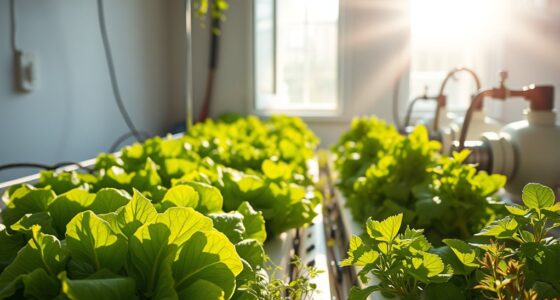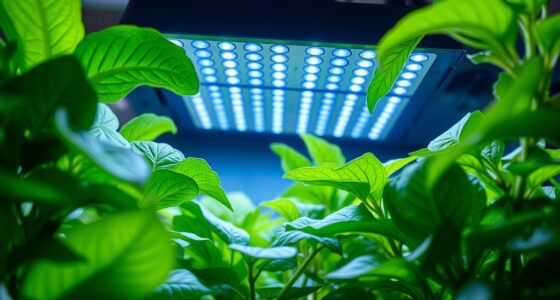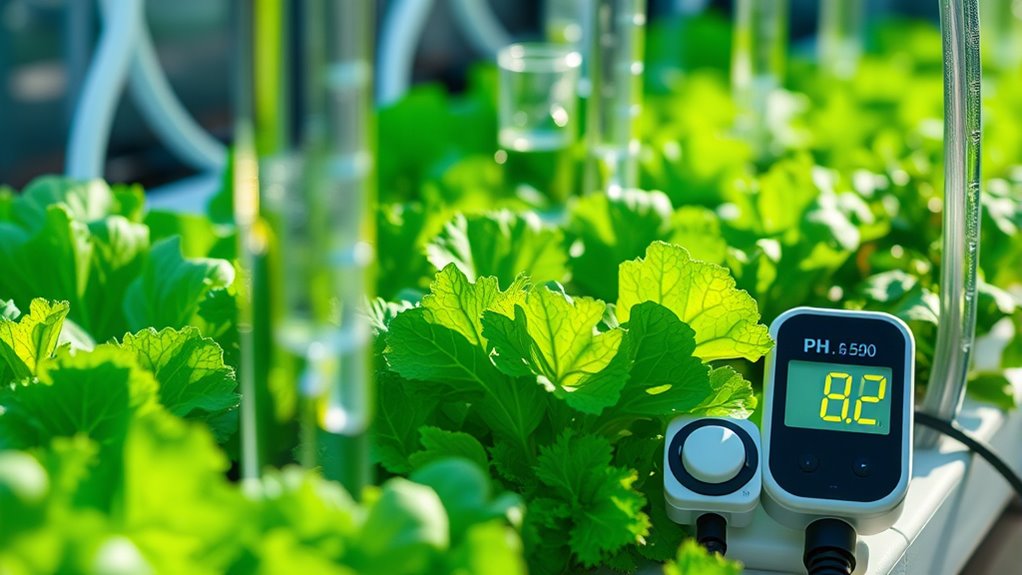

To keep your hydroponic system balanced, regularly check your pH levels with a reliable meter or test kit. Aim for a pH between 5.5 and 6.5 to guarantee nutrients stay available, but watch for fluctuations caused by water quality or overfeeding. Adjust pH promptly with pH up or down solutions, and consider automation systems for steady control. Staying proactive helps prevent nutrient lock and promotes healthy plant growth—if you want to master pH stability, keep exploring these key strategies.
Key Takeaways
- Maintain pH levels between 5.5 and 6.5 for optimal nutrient availability and plant growth.
- Regularly test pH daily using reliable pH meters or testing kits to detect fluctuations early.
- Adjust pH with pH up or down solutions promptly when levels drift outside the ideal range.
- Use high-quality, buffered nutrients and pre-treated water to minimize pH swings caused by mineral content.
- Consider automated pH management systems to ensure consistent pH levels and promote healthy plant development.
Have you ever wondered why maintaining the right pH level is essential in hydroponic systems? pH affects nutrient availability and plant health, so keeping it balanced guarantees your plants grow strong and produce maximum yields. When the pH strays outside the ideal range, it can lead to nutrient lock, where essential nutrients become inaccessible to your plants, or cause pH fluctuation, making it difficult for your system to stay stable. This instability can stunt growth, reduce yields, or even kill your plants if left unchecked.
Understanding how pH impacts nutrient uptake is vital. Every nutrient has a specific pH range in which it is most available. If the pH drops too low or rises too high, nutrients like iron, calcium, or magnesium can become insoluble, creating nutrient lock. This means your plants are physically unable to absorb key elements, even if they’re present in your solution. As a result, deficiencies develop despite sufficient nutrient levels, which can compromise overall plant health.
pH fluctuation is a common challenge in hydroponic systems. It occurs when the pH swings between acidic and alkaline conditions due to various factors, such as water quality, nutrient solution composition, or biological activity. These fluctuations stress your plants and disrupt their nutrient absorption. Regularly testing and adjusting pH levels helps prevent these swings, maintaining a stable environment for root health and nutrient availability.
To manage nutrient lock and pH fluctuation, you should monitor pH levels frequently, ideally daily. Use reliable testing kits or digital pH meters to assess the solution. When you notice pH drifting outside the ideal range—generally between 5.5 and 6.5 for most crops—you need to adjust it with pH up or pH down solutions. Consistent adjustments help keep the system stable, reducing the risk of nutrient lock and pH swings. Additionally, choosing high-quality, buffered nutrients can aid in maintaining pH stability, as they resist rapid changes.
Keep in mind that water source quality plays a significant role. Hard water or water with high mineral content can cause pH to fluctuate more rapidly. Pre-treating water or using reverse osmosis filters can minimize these issues. Also, avoid overfeeding nutrients, which can contribute to pH swings by altering the solution’s chemistry.
Incorporating automation in pH management through automatic dosing systems can significantly reduce manual efforts and help maintain more consistent pH levels, leading to healthier plant growth.

WooRoot Large Hydroponics Growing System, 148-Pod Vertical Indoor Garden, Hydroponic Tower with Full-Spectrum Grow Lights, Ultra-Quiet Pump, Dual Water Tanks, 30-Day Self-Managed for Home & Commercial
Professional Large-Scale Vertical Hydroponics Growing System: WooRoot Max is an advanced commercial-grade Tower Garden Growing System for large-scale...
As an affiliate, we earn on qualifying purchases.
Frequently Asked Questions
How Often Should I Test Ph Levels in My Hydroponic System?
You should test your hydroponic system’s pH levels at least once daily to guarantee ideal nutrient absorption and root health. Regular monitoring helps catch fluctuations early, preventing stress on your plants. If you’re growing in a highly active system or during critical growth stages, consider testing multiple times a day. Consistent pH checks keep your plants healthy, promote strong root development, and maximize nutrient uptake for better yields.
Can Ph Fluctuations Harm My Plants?
Yes, pH fluctuations can harm your plants by causing plant stress and nutrient lockout. When pH levels swing outside the ideal range, your plants struggle to absorb essential nutrients, leading to deficiencies. This imbalance stresses your plants, stunting growth and reducing yields. To prevent this, monitor pH regularly and make adjustments promptly, keeping the pH stable and within the perfect range for healthy, thriving plants.
What Are the Best Tools for Measuring Ph Accurately?
You can’t afford to wing it when measuring pH, so get the right tools. Digital meters are your best bet for accuracy, offering quick and reliable readings. Make certain to regularly calibrate your pH meter to keep it in top shape and avoid costly mistakes. Investing in a high-quality digital meter with easy calibration features ensures your pH stays just right, helping your plants thrive instead of just surviving.
How Quickly Does Ph Adjust After Adding Solutions?
After adding pH adjusters, expect the pH to change within minutes, but it may take up to 30 minutes for stabilization due to pH buffering in your nutrient solution. This buffering prevents rapid shifts, reducing nutrient lock and maintaining ideal conditions. Always recheck the pH after the adjustment and wait a bit before making further changes, ensuring your plants receive balanced, stable nutrient uptake.
Are There Natural Ways to Stabilize Ph Levels?
While it’s tempting to find quick fixes, natural pH stabilization relies on organic pH buffers like compost teas or mineral amendments. These gentle solutions help maintain steady pH levels without harsh chemicals, promoting healthier plant growth. Incorporate natural pH buffers into your system regularly, and you’ll foster a resilient environment. Patience and consistency with organic methods can create a balanced, thriving hydroponic setup over time.

Woolooloo Large Hydroponics Growing System Kit, 5-Tier Indoor Herb Garden with Smart Climate Control, Auto Misting, Full Spectrum Grow Light, Vertical Hydroponic System for Home or Commercial
5-Tier Large hydroponics growing system kit Growing System: Maximize your indoor gardening with a modular 5-tier hydroponic kit...
As an affiliate, we earn on qualifying purchases.
Conclusion
Keeping your hydroponic system’s pH balanced is vital for healthy plant growth. Regular testing and timely adjustments ensure your plants get the nutrients they need without any hiccups. Remember, a little maintenance now saves a lot of trouble later—don’t let pH issues catch you off guard. By staying vigilant and proactive, you can keep your garden thriving and avoid the pitfalls of neglect. After all, an ounce of prevention is worth a pound of cure.

Gardyn Home 4 Vertical Hydroponics Growing System Kit - 30 Non-GMO Plants, Herbs, Vegetables - Smart Tower Garden Hydroponic Herb Garden Planter Indoor Kit - Indoor Gardening System w/LED Grow Lights
NEXT-GENERATION HYDROPONIC SYSTEM: The Gardyn Home 4 is a cutting-edge hydroponics growing system kit designed to grow 30...
As an affiliate, we earn on qualifying purchases.

Ahopegarden Indoor Garden Hydroponics Growing System: 10 Pods Plant Germination Kit Herb Vegetable Growth Lamp Countertop with LED Grow Light - Hydrophonic Planter Grower Harvest Lettuce
High planting efficiency: Start an indoor herb garden with the Ahopegarden hydroponic growing system, which includes a water...
As an affiliate, we earn on qualifying purchases.