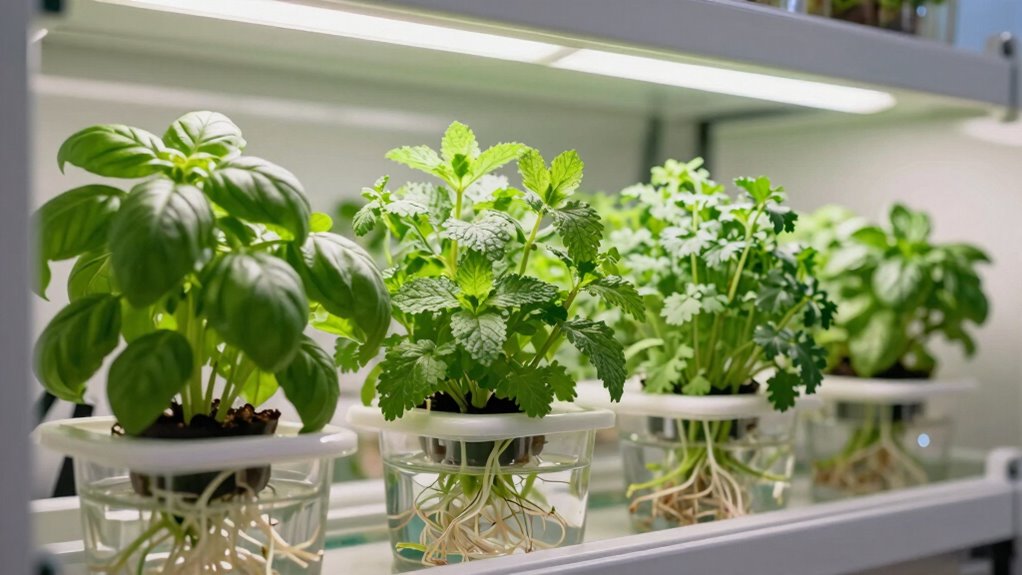

Hydroponic herb gardens support year-round harvests by providing a controlled environment with consistent light, temperature, and nutrient delivery. This method uses soil alternatives like coconut coir or rockwool, keeping pests and diseases at bay. You can place your garden indoors under grow lights or in sunny spots, ensuring herbs grow quickly and healthily regardless of the season. Keep going to discover more ways this method keeps your herbs fresh all year.
Key Takeaways
- Hydroponic systems provide consistent light exposure indoors, enabling continuous herb growth regardless of outdoor seasons.
- They utilize grow lights or sunny windows to simulate ideal sunlight conditions year-round.
- The controlled environment reduces seasonal variations, ensuring stable temperature and humidity for herbs.
- Soil alternatives eliminate outdoor pests and diseases, supporting healthy, uninterrupted herb cultivation.
- Precise nutrient delivery promotes vigorous growth and higher yields throughout the year.
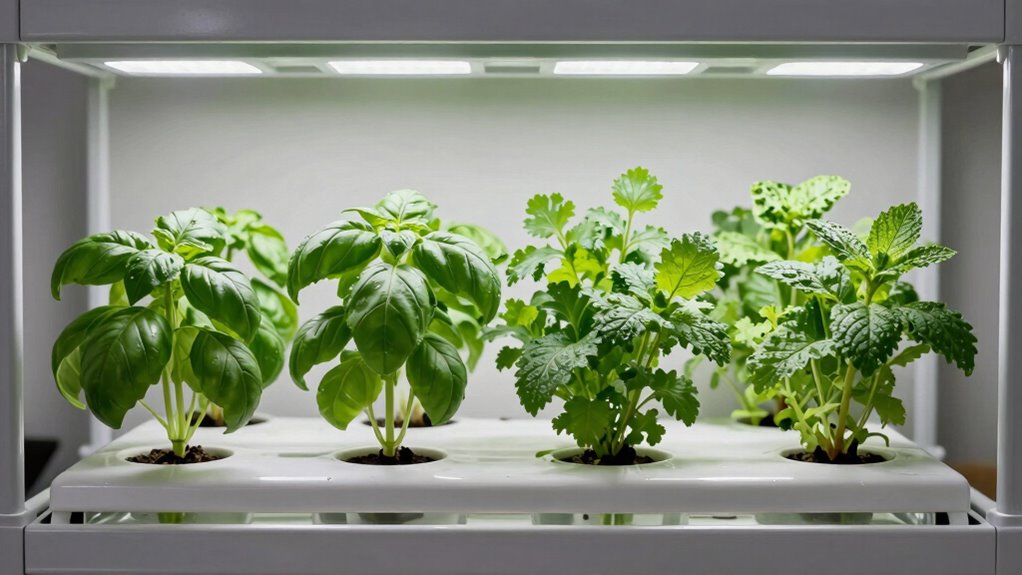
Have you ever wondered how to grow fresh herbs indoors without soil? If so, hydroponic herb gardens might be just what you need. Unlike traditional gardening, hydroponics uses soil alternatives such as coconut coir, perlite, or rockwool to support plant roots. These mediums provide a clean, sterile environment, making it easier to control pest problems and prevent soil-borne diseases. Because you’re not dealing with soil, you eliminate many common pests that attack herb plants outdoors, like aphids or soil-dwelling insects. This makes pest control much simpler and more effective, reducing the need for chemical treatments and keeping your herbs healthy.
Growing herbs without soil simplifies pest control and prevents soil-borne diseases.
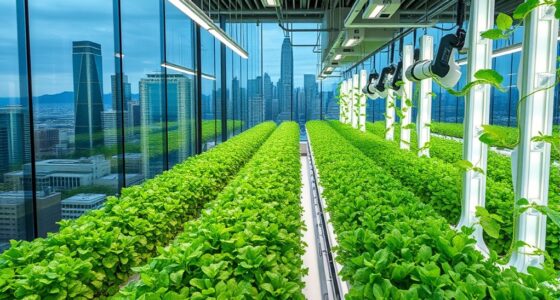
One of the biggest advantages of hydroponic systems is their ability to support year-round harvests. When you grow herbs indoors, you’re not limited by outdoor weather or seasons. You can set up your hydroponic garden in a sunny windowsill or dedicate a space with grow lights, ensuring your herbs get the right amount of light every day. Since the environment is controlled, plants grow faster and more consistently, giving you fresh herbs whenever you need them, regardless of the time of year. This means you can enjoy basil, mint, cilantro, or rosemary anytime, without waiting for the right season or risking outdoor pests.
With hydroponics, you also gain precision in nutrient delivery. Your herbs receive exactly what they need through nutrient-rich water solutions, promoting healthy growth and flavor. This controlled feeding schedule ensures your plants stay vigorous and produce abundant foliage, which is especially important if you want a continuous supply of fresh herbs. Plus, since there’s no soil, there’s less mess and fewer worries about soil-borne diseases or mold.
Another benefit is that hydroponic systems are often space-efficient. They can be stacked or arranged in small areas, making them perfect for apartment living or limited spaces. You can grow a variety of herbs simultaneously without worrying about cross-contamination or overcrowding. Additionally, because you’re not using soil, you reduce the risk of attracting pests that thrive in traditional garden beds. This makes pest control straightforward—simply monitor your water and nutrient levels, and keep your system clean.

Ahopegarden Indoor Garden Hydroponics Growing System: 10 Pods Plant Germination Kit Herb Vegetable Growth Lamp Countertop with LED Grow Light – Hydrophonic Planter Grower Harvest Lettuce
High planting efficiency: Start an indoor herb garden with the Ahopegarden hydroponic growing system, which includes a water…
As an affiliate, we earn on qualifying purchases.
As an affiliate, we earn on qualifying purchases.
Frequently Asked Questions
What Are the Initial Costs of Setting up a Hydroponic Herb Garden?
Setting up a hydroponic herb garden costs between $100 and $500 initially, depending on size and equipment. You’ll need supplies like a grow tray, nutrient solutions, and grow lights. Plant propagation can be done easily with cuttings, reducing costs. While organic certifications aren’t mandatory, choosing organic-approved nutrients can boost your garden’s quality. Overall, investing upfront enables you to enjoy fresh herbs year-round with minimal ongoing expenses.
How Much Maintenance Is Required for Hydroponic Herb Systems?
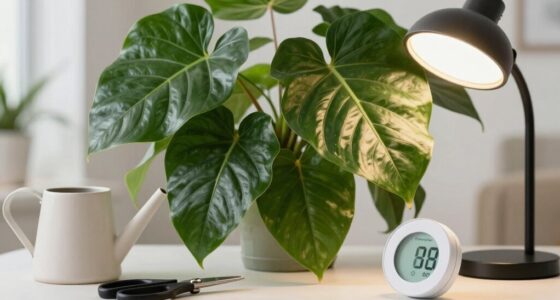
You need to check your water pH regularly, usually once a week, to keep your hydroponic system healthy. You’ll also perform system cleaning every month to prevent algae and disease buildup. Monitoring nutrient levels and adjusting water pH helps your herbs thrive. Although maintenance isn’t overly demanding, consistent care guarantees your plants stay healthy and productive, making your hydroponic herb garden a reliable source of fresh herbs year-round.
Can Hydroponic Herbs Be Grown Indoors Without Natural Sunlight?
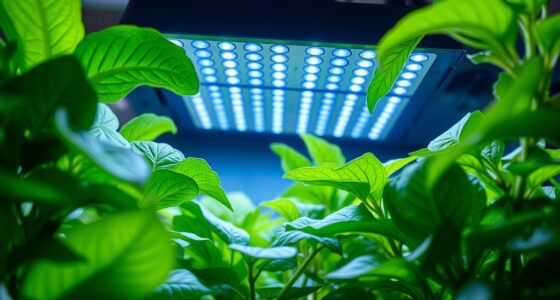
Yes, you can grow hydroponic herbs indoors without natural sunlight by using artificial lighting. LED grow lights provide the necessary spectrum for healthy growth. You’ll also need to regularly supply nutrient solutions tailored for herbs to guarantee they get essential nutrients. With proper lighting and nutrient management, your hydroponic herbs will thrive indoors year-round, giving you fresh herbs anytime without relying on natural sunlight.
What Are Common Pests or Diseases in Hydroponic Herb Gardens?
Think of your hydroponic garden as a peaceful forest, but pests like aphids, spider mites, and whiteflies can invade, threatening your herbs. Diseases like root rot and powdery mildew also lurk in the shadows. To protect your garden, practice pest prevention by maintaining cleanliness and proper airflow. Effective disease management involves monitoring plants closely, ensuring ideal nutrient levels, and avoiding overwatering, keeping your indoor oasis healthy and thriving year-round.
How Do I Troubleshoot Nutrient Deficiencies in a Hydroponic System?
To troubleshoot nutrient deficiencies in your hydroponic system, first check for pH fluctuation, as it affects nutrient uptake. Make certain the nutrient imbalance isn’t causing deficiencies by testing your solution regularly. If pH is off, adjust it to the ideal range for herbs, typically between 5.8 and 6.5. Also, confirm you’re providing the right nutrient concentrations, and consider flushing and replacing the solution if deficiencies persist.
Ahopegarden Indoor Garden Hydroponics Growing System: 10 Pods Plant Germination Kit Herb Vegetable Growth Lamp Countertop with LED Grow Light – Hydrophonic Planter Grower Harvest Lettuce
High planting efficiency: Start an indoor herb garden with the Ahopegarden hydroponic growing system, which includes a water…
As an affiliate, we earn on qualifying purchases.
As an affiliate, we earn on qualifying purchases.
Conclusion
Think of your hydroponic herb garden as a steady river, flowing with fresh flavors year-round. With just a little care, you can enjoy vibrant, aromatic herbs no matter the season, turning your kitchen into a lush, perpetual oasis. Embrace this sustainable, efficient method, and watch your garden thrive like a well-tuned symphony. Your herbs are your musical notes—always ready to add flavor and freshness whenever you need them.
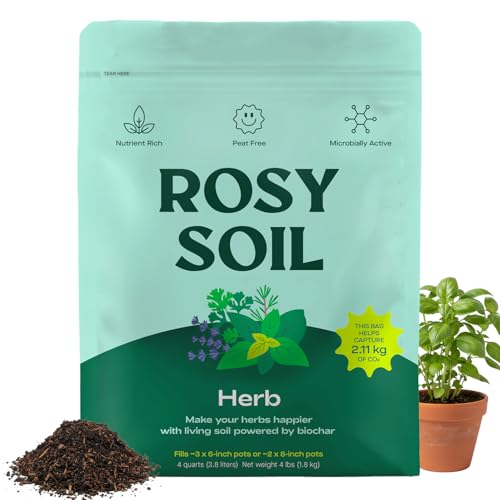
Rosy Soil Herb Mix – Organic Potting Mix for Herbs – Enriched with Biochar, Worm Castings for Root Development, Nutrient Uptake, and Strong Flavor – Fast Draining, Peat Free, Less Prone to Gnats – 4qt
Thriving Growth Formula: The Rosy Soil Herb Mix enhances the well-being of your herbs like basil, thyme, mint,…
As an affiliate, we earn on qualifying purchases.
As an affiliate, we earn on qualifying purchases.

Hydroponic Nutrients for Edible Plants, One Part Complete Liquid Plant Food for Hydroponic Systems, 8 oz (250mL)
Made for Hydroponic Growing – Formulated to support plant growth in hydroponic and water systems.
As an affiliate, we earn on qualifying purchases.
As an affiliate, we earn on qualifying purchases.