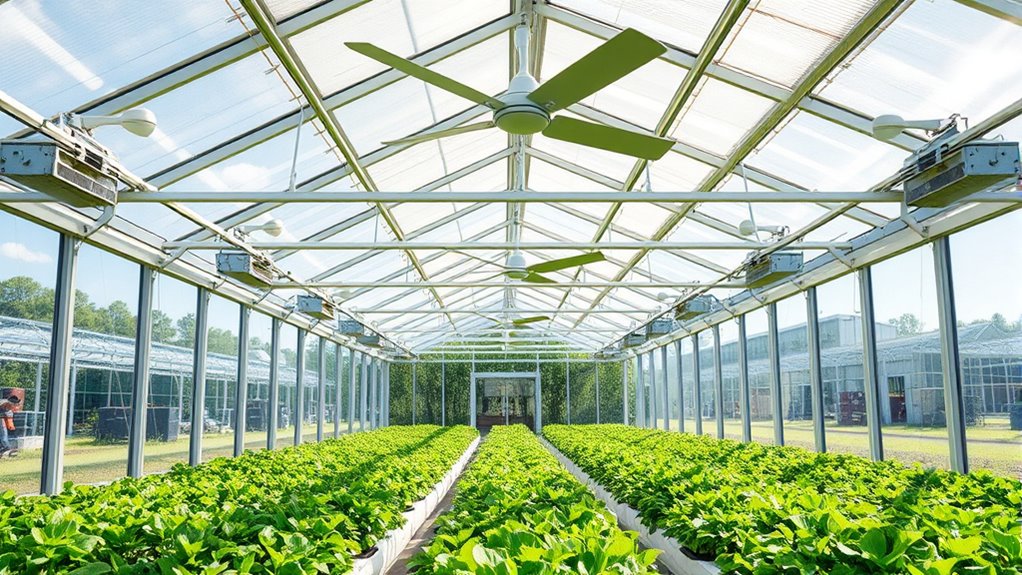

To keep your greenhouse hydroponics system cool during summer, use exhaust fans and roof vents to remove hot air and promote airflow. Implement shade systems to minimize solar heat gain, and consider misting and evaporative cooling to lower internal temperatures. Proper ventilation, combined with shading and cooling methods, creates a stable environment for your plants. If you want to learn more about optimizing your system during hot months, keep exploring these strategies.
Key Takeaways
- Install exhaust fans and roof vents to facilitate heat removal and ensure proper airflow inside the greenhouse.
- Use shading systems and reflective materials to minimize solar heat gain during peak summer hours.
- Incorporate evaporative cooling and misting systems to actively lower internal temperatures.
- Regulate airflow to prevent heat buildup and maintain consistent environmental conditions.
- Monitor temperature and humidity levels regularly to optimize ventilation and cooling system performance.
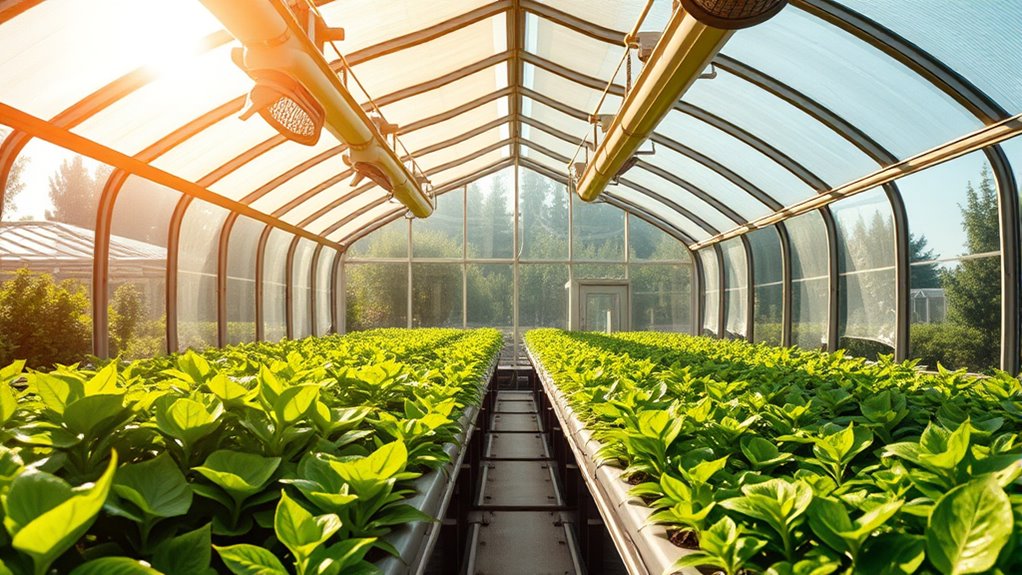
Have you ever wondered how modern farmers grow fresh produce efficiently year-round? One of the keys lies in mastering climate control within your greenhouse. During the scorching summer months, maintaining optimal conditions becomes more challenging but no less critical. Proper ventilation and cooling strategies are essential to keep temperatures in check and prevent heat stress on your plants. When you focus on climate control, you can create an environment that mimics ideal outdoor conditions, even in the hottest weather. This involves installing exhaust fans, roof vents, and shade systems that work together to regulate airflow and reduce internal heat buildup. By continuously exchanging warm air with cooler outside air, you prevent the greenhouse from becoming a furnace, helping your plants stay healthy and productive.
Nutrient management also plays a vital role in summer greenhouse hydroponics. As temperatures rise, plants tend to transpire more, which increases their nutrient uptake needs. Ensuring your nutrient solution is properly balanced and replenished is crucial to avoid deficiencies or toxicities. During hot weather, you might need to adjust the concentration of nutrients, particularly nitrogen, phosphorus, and potassium, to match the plants’ heightened demands. A well-managed nutrient system minimizes waste and maximizes growth, even when external conditions are less than ideal. Automated dosing systems can help you maintain consistent nutrient levels, while regular testing ensures you’re not over- or under-supplying essential elements. This precision in nutrient management supports vigorous growth, reduces the risk of disease, and enhances overall yield.
Integrating climate control with effective nutrient management creates a synergistic effect, allowing you to keep your greenhouse environment stable and predictable. When the temperature is kept within a suitable range, your plants can absorb nutrients more efficiently, leading to healthier roots and stronger stems. Conversely, well-managed nutrients can help your plants better tolerate temperature fluctuations. During summer, you should also consider shading techniques and misting systems to further assist cooling efforts, reducing the load on ventilation systems and conserving energy. Additionally, employing proper heat mitigation techniques such as evaporative cooling can significantly improve environmental stability. Monitoring both climate and nutrient levels regularly ensures that you respond swiftly to changing conditions, preventing issues before they escalate.
Ultimately, the success of summer greenhouse hydroponics hinges on your ability to balance climate control with nutrient management. By creating an environment that minimizes heat stress and provides optimal nutrition, you empower your plants to thrive year-round. This strategic approach allows you to produce high-quality, fresh produce regardless of external weather challenges, making your greenhouse a reliable source of healthy food all season long.

iLIVING 12" Wall Mounted Shutter Exhaust Fan, Automatic Shutter, with Thermostat and Variable Speed controller, 0.6A, 960 CFM, 1400 SQF Coverage Area Silver (ILG8SF12V-ST)
POWERFUL AIR VENTILATOR – 960 CFM, 115V, 0.6A, 1/20 Horse Power, 1650 RPM, Coverage up to 1400 square…
As an affiliate, we earn on qualifying purchases.
As an affiliate, we earn on qualifying purchases.
Frequently Asked Questions
How Can I Automate Greenhouse Ventilation Systems Effectively?
You can automate your greenhouse ventilation system effectively by implementing automation scheduling that adjusts vents and fans based on real-time conditions. Integrate sensors to monitor temperature, humidity, and CO₂ levels, allowing the system to respond automatically. This setup reduces manual effort, maintains ideal climate conditions, and improves plant health. Regularly update your automation parameters to adapt to seasonal changes, ensuring your greenhouse stays comfortable year-round.
What Are the Best Cooling Options for Small-Scale Hydroponic Greenhouses?
Did you know that small greenhouses can see temperatures rise by over 20°F on hot days? To keep your hydroponic system thriving, consider using shade cloths to block excess sunlight and install evaporative cooling systems, which use water’s natural cooling properties. These options are affordable and efficient, helping you maintain ideal temperatures without overcomplicating your setup. Stay cool and boost your crop yield with these simple strategies.
How Does Humidity Control Impact Plant Health During Summer?
Humidity control directly affects your plant health during summer. Using humidity sensors helps you monitor moisture levels precisely, preventing conditions that cause mold or dehydration. Misting systems can increase humidity when needed, promoting healthy growth. Conversely, reducing humidity prevents fungal diseases and leaf rot. By actively managing humidity with sensors and misting systems, you create an ideal environment that keeps your plants thriving and resilient against summer stress.
What Are Eco-Friendly Ventilation Strategies for Sustainable Greenhouses?
Imagine your greenhouse as a living, breathing organism that needs fresh air to thrive. Eco-friendly ventilation strategies like natural ventilation and wind-driven cooling act as its lungs, promoting sustainability. By harnessing outdoor breezes and designing vents smartly, you reduce energy use and carbon footprint. These methods create a healthy environment for your plants, ensuring they flourish while protecting the planet—making your greenhouse both productive and eco-conscious.
How Can I Monitor and Optimize Airflow in My Greenhouse?
To monitor and optimize airflow, you should use airflow sensors placed throughout your greenhouse to gather real-time data. Regularly review ventilation mapping to identify areas with poor airflow and adjust vents or fans accordingly. By actively tracking sensor data, you can fine-tune your ventilation system, ensuring consistent airflow that maintains ideal temperatures and humidity levels, ultimately creating a healthier environment for your plants and maximizing efficiency.

Kittmip 2 Pcs 3 in. or 4 in. Mushroom Vent Cap PVC Roof Vent Cap for Keep Out Leaves, Debris, Flying Insects, Animals Fits 3" or 4" Pipe Bolts onto Pipe(White)
Package Includes: you will receive 2 pieces of white mushroom vent caps specifically designed to fit both 3-inch…
As an affiliate, we earn on qualifying purchases.
As an affiliate, we earn on qualifying purchases.
Conclusion
By implementing effective ventilation and cooling strategies, you can keep your greenhouse hydroponic system thriving even during summer’s hottest days. Did you know that proper airflow can reduce internal temperatures by up to 10°C, markedly boosting plant health and yield? Stay proactive with your ventilation plans, and you’ll create a suitable environment that guarantees your crops grow strong and harvests remain abundant. Adaptability and smart cooling are key to a successful summer season.
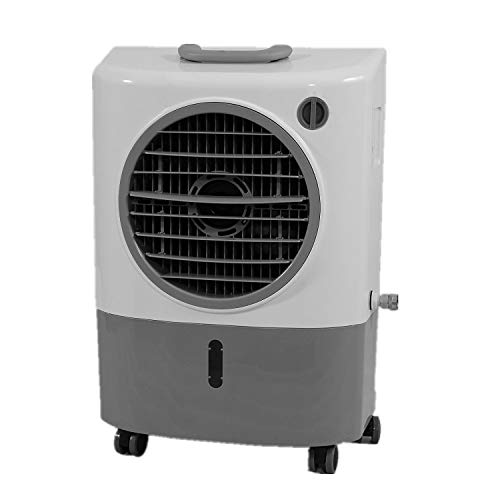
Portable Swamp Coolers – 1300 CFM MC18M Evaporative Air Cooler with 2-Speed Fan, 53.4 dB – 500 sq. ft. Coverage Evaporative Air Cooler Portable High Velocity Outdoor Cooling Fan by Hessaire – White
Experience Enhanced Cooling: Tackle insufficient cooling with the Hessaire 1,300 CFM evaporative air cooler outdoor fan. Its hi-density…
As an affiliate, we earn on qualifying purchases.
As an affiliate, we earn on qualifying purchases.

winemana 50% Shade Cloth for Garden- 10×20 FT Breathable Mesh Tarp for Vegetables & Plants, Outdoor Patio Sun Shade with Grommets – Chicken Coop, Dog Kennel Cover
50% Filtered Sunlight for Gentle Spring Protection: This shade cloth offers a 50% shade rate, which is ideal…
As an affiliate, we earn on qualifying purchases.
As an affiliate, we earn on qualifying purchases.