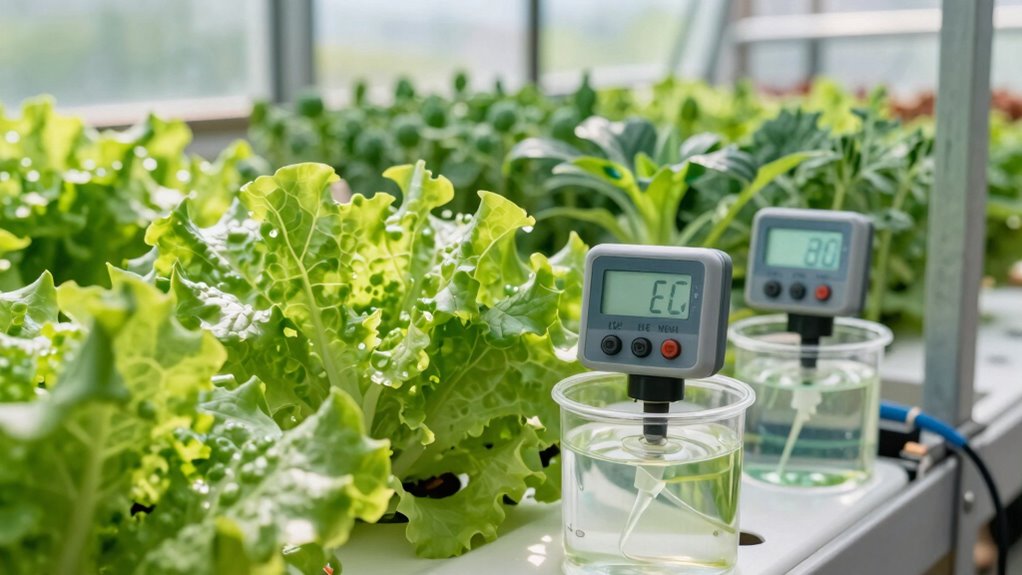

In hydroponics, EC, or electrical conductivity, measures how concentrated the nutrients are in your water solution, which is essential for healthy plant growth. Maintaining the right EC ensures your plants get enough nutrients without over or under-fertilizing, preventing deficiencies or damage. Changes in EC can signal system issues or adjustments needed at different growth stages. Understanding EC helps you optimize plant health and maximize yields—if you want to learn more, keep exploring how to perfect your hydroponic setup.

Get the little things that make your day delivered free with Prime
- Fast, free delivery on millions of items
- Prime Video, Amazon Music and more included
- Member-only deals all year
Key Takeaways
- EC measures the concentration of dissolved salts and nutrients in hydroponic water, indicating nutrient availability.
- Proper EC levels ensure plants receive balanced nutrients, promoting healthy growth and preventing deficiencies.
- Monitoring EC helps adjust nutrient solutions according to different growth stages, optimizing plant development.
- High or low EC readings can signal system imbalances, overfeeding, or nutrient depletion, aiding troubleshooting.
- Maintaining ideal EC levels is essential for maximizing yields and ensuring overall hydroponic system stability.

Electrical conductivity (EC) is a essential measurement in hydroponics, as it indicates the nutrient concentration in your solution. When you monitor EC levels, you’re fundamentally gauging how much dissolved salts and nutrients are present in your water. This measurement helps you maintain the proper nutrient balance, which is critical for healthy plant growth. If your EC is too low, your plants might experience deficiencies, leading to slow growth or poor yields. Conversely, if it’s too high, the excess salts can cause nutrient lockout or root damage. That’s why keeping EC within ideal ranges is key—you want enough nutrients to fuel your plants without overwhelming them.
Water quality plays a significant role in determining your EC levels. Not all water sources are created equal; some contain minerals, salts, or contaminants that naturally raise the baseline EC. If you’re using tap water, it’s a good idea to test its initial EC before adding nutrients. This way, you can adjust your nutrient solution accordingly, making sure your plants aren’t exposed to excessive salts right from the start. If your water quality is poor or has high mineral content, you might need to use filtration or switch to a different water source to keep your system steady. Understanding water quality and its impact and how it can influence EC levels is crucial for optimal hydroponic success.
Achieving the right nutrient balance involves regularly checking and adjusting your EC. Plants absorb nutrients based on their growth stage, so your target EC will vary whether you’re in vegetative growth or flowering. For instance, during vegetative stages, a slightly lower EC promotes healthy leaf and stem development. During flowering, increasing EC supports flower formation and fruit production. By keeping an eye on your EC, you ensure your plants get the nutrients they need precisely when they need them, avoiding deficiencies or toxicities.
Monitoring EC also helps you troubleshoot issues in your hydroponic system. If you notice slow growth, leaf discoloration, or other problems, checking EC can reveal whether nutrient levels are off. Sometimes, a sudden spike or drop in EC indicates system imbalances, like overfeeding or nutrient depletion. Adjusting your nutrient solution based on EC readings allows you to fine-tune your system, promoting healthier plants and higher yields.
As an affiliate, we earn on qualifying purchases.
Frequently Asked Questions
How Often Should I Measure EC in My Hydroponic System?
You should measure EC in your hydroponic system daily, especially during the initial stages and when adjusting nutrient levels. Regular measurement techniques like using a reliable EC meter help you monitor nutrient concentration and guarantee plants receive the right balance. Consistent checks prevent over- or under-fertilization, promoting healthy growth. Keep a log of your readings to track trends and make precise adjustments, optimizing your hydroponic setup.
Can EC Levels Vary Between Different Types of Plants?
Yes, EC levels can vary between different types of plants because each has unique nutrient uptake needs. You can observe these differences through careful EC measurement techniques, adjusting your system to meet specific plant demands. By understanding how plant nutrient uptake influences EC, you guarantee healthy growth and peak yields. Keep monitoring regularly, adapt your approach, and you’ll foster a thriving, vibrant garden tailored to each plant’s individual needs.
What Is the Ideal EC Range for Leafy Greens?
The ideal EC range for leafy greens is between 1.5 and 2.0. Maintaining this range guarantees the right nutrient balance, which promotes healthy growth and prevents nutrient lockout. You should regularly monitor and adjust the EC to support peak root health, as too high or too low levels can stress plants or hinder nutrient uptake. Staying within this range helps produce vibrant, nutritious greens efficiently.
How Does Temperature Affect EC Readings?
Temperature affects EC readings because it influences how nutrients dissolve and conduct electricity. When water gets warmer, EC readings tend to rise, while cooler temperatures can lower them. To guarantee accurate measurements, you should perform temperature calibration on your EC meter regularly. Remember, consistent temperature management helps optimize nutrient absorption, making sure your plants get the right nutrients at the right time, which is essential for healthy hydroponic growth.
Can High EC Levels Harm My Plants?
High EC levels can indeed harm your plants, as over-concentrated nutrients disrupt the delicate nutrient balance. Studies show that excessive nutrients can reduce root health, leading to stunted growth or root burn. You should regularly monitor and adjust EC levels to guarantee your plants receive ideal nutrients without stress. Maintaining proper nutrient balance keeps roots healthy, promoting vigorous growth and better yields.
As an affiliate, we earn on qualifying purchases.
Conclusion
Understanding EC in hydroponics isn’t just technical jargon — it’s the secret to healthier plants and better yields. When you keep your nutrient levels balanced, you’re actually tuning into the natural rhythm of plant growth, almost like a coincidence that everything falls into place. So, pay attention to your EC levels; they’re the subtle signals guiding your success. In the end, mastering EC could be the key to turning your hydroponic garden into a thriving, effortless oasis.
digital EC conductivity meter for hydroponics
As an affiliate, we earn on qualifying purchases.
As an affiliate, we earn on qualifying purchases.
hydroponic nutrient solution kit
As an affiliate, we earn on qualifying purchases.
As an affiliate, we earn on qualifying purchases.
Halloween Picks
halloween
As an affiliate, we earn on qualifying purchases.