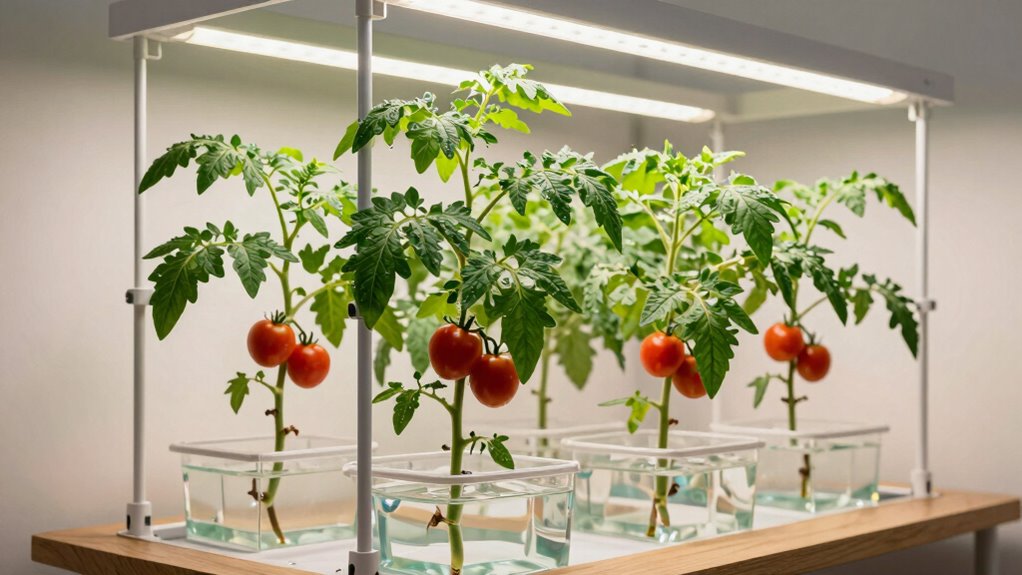

To grow compact hydroponic tomatoes indoors, you should use a nutrient solution tailored for tomatoes, maintaining proper pH and electrical conductivity, and regularly monitor these levels. Use LED grow lights with the right spectrum to support healthy growth and keep temperatures between 65-75°F with about 60% humidity. Practice pruning and pest control, and keep your system clean. Keep these tips in mind, and you’ll discover more ways to maximize your indoor tomato harvest.
Listen free for 30 days with Audible
Thousands of audiobooks and originals — cancel anytime.
As an affiliate, we earn on qualifying purchases.
Key Takeaways
- Use a compact hydroponic system like NFT or deep water culture designed for limited space.
- Provide full-spectrum LED grow lights for optimal photosynthesis and fruiting.
- Maintain temperatures of 65-75°F and humidity around 60% for healthy growth.
- Regularly monitor and adjust nutrient solutions to ensure proper pH and nutrient levels.
- Practice pruning and pest control to keep plants manageable and prevent issues.
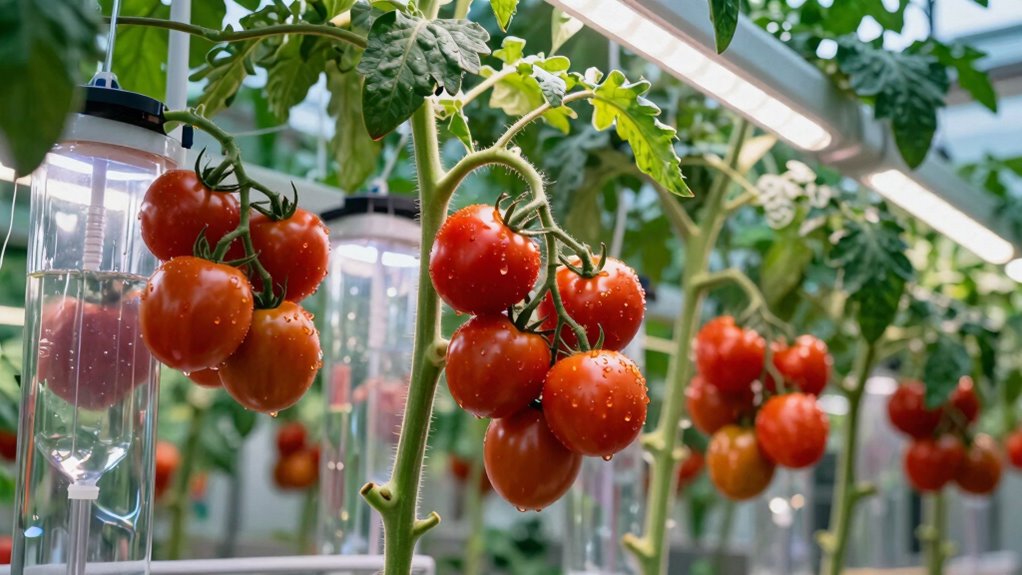
Another vital element in growing compact hydroponic tomatoes is providing the right nutrient solutions. Unlike soil gardening, where nutrients come from the soil itself, hydroponic systems rely entirely on nutrient solutions dissolved in water. To guarantee your plants grow strong and produce abundant fruit, you need to supply a balanced mix of macronutrients—nitrogen, phosphorus, and potassium—and micronutrients like calcium, magnesium, and trace minerals. Regularly monitor the pH level of your nutrient solution, aiming for a slightly acidic range of 5.5 to 6.5, which optimizes nutrient uptake. You should also regularly check the electrical conductivity (EC) to gauge nutrient concentration, adjusting as necessary to prevent deficiencies or toxic buildup. Using high-quality, pre-mixed nutrient solutions designed specifically for tomatoes simplifies this process and guarantees your plants receive all necessary nutrients. Maintaining proper nutrient balance is crucial for healthy growth and fruit development. Additionally, understanding the importance of color accuracy in your grow lights can help optimize photosynthesis and plant health indoors. Growing compact hydroponic tomatoes indoors isn’t just about plant care; it’s about creating the right environment. Your setup should include proper lighting—LED grow lights work well—to mimic sunlight, providing the energy needed for photosynthesis. Maintaining consistent temperatures between 65-75°F and humidity levels around 60% helps prevent stress and disease. Proper lighting spectrum is essential for healthy growth and fruit production. It’s also beneficial to understand the nutrient uptake process to ensure your plants absorb the nutrients effectively. To further enhance your plant health, regularly inspecting your system for potential pest issues can help prevent infestations and ensure a healthy crop. As your plants grow, pruning becomes essential to keep them manageable and promote air circulation. By keeping pests controlled and providing nutrient solutions tailored to your plants’ needs, you’ll cultivate healthy, productive tomato plants that thrive indoors. With careful attention to these details, you’ll harvest delicious, homegrown tomatoes all year long, enjoying the satisfaction of growing your own food in a compact, efficient system.
compact hydroponic tomato growing system
As an affiliate, we earn on qualifying purchases.
As an affiliate, we earn on qualifying purchases.
Frequently Asked Questions
What Is the Optimal Temperature for Indoor Hydroponic Tomato Growth?
You should keep the temperature between 65-75°F for ideal indoor hydroponic tomato growth. Consistent warmth encourages healthy plant support and development. Make sure your lighting requirements are met by providing enough light, about 12-16 hours daily, to promote flowering. Avoid temperature fluctuations that can stress your plants, hinder fruiting, and impact overall yield. Maintaining this temperature range creates an excellent environment for strong, productive tomato plants indoors.
How Often Should I Change the Nutrient Solution?
You should change your nutrient solution every two to three weeks to maintain ideal growth. Regularly check the pH balance, keeping it between 5.5 and 6.5, and monitor nutrient concentration levels to prevent deficiencies or toxicities. When you notice a decline in plant health or after this period, replace the solution to guarantee your tomatoes receive fresh, balanced nutrients, promoting healthy growth and fruit development.
Can I Grow Hydroponic Tomatoes Without Artificial Lighting?
You can grow hydroponic tomatoes without artificial lighting if you have ample natural sunlight. Guarantee the light intensity is strong enough—ideally, at least 6 hours of direct sunlight daily. Place your plants near south-facing windows or in a bright, well-lit room. Keep in mind that natural light varies with seasons, so you may need supplemental lighting during darker months to maintain healthy growth.
What Are Common Pests for Indoor Tomato Plants?
Common pests for indoor tomato plants include aphids, whiteflies, and spider mites. To prevent these pests, practice pest prevention by keeping your environment clean and monitoring plants regularly. Pest identification is key—look for discolored leaves, webbing, or small insects on your plants. If you spot pests early, act quickly with natural remedies or insecticidal soap to protect your tomatoes and guarantee a healthy indoor garden.
How Do I Prevent Diseases in Indoor Hydroponic Systems?
To prevent diseases in your indoor hydroponic system, focus on pathogen control by maintaining cleanliness and proper sanitation. Regularly disinfect all equipment and avoid overwatering to prevent mold and root rot. Guarantee good airflow and monitor nutrient levels to keep plants healthy. Disease prevention also involves inspecting plants frequently for early signs of issues, so you can act quickly and keep your tomato plants thriving in a clean, disease-free environment.
full spectrum LED grow lights for indoor plants
As an affiliate, we earn on qualifying purchases.
As an affiliate, we earn on qualifying purchases.
Conclusion
Growing hydroponic tomatoes indoors is rewarding and manageable. Imagine a small apartment where you tend to a thriving tomato plant, enjoying fresh, juicy fruits year-round. For example, Sarah started with a simple setup and now harvests weekly, proving that with proper care and the right system, you can enjoy bountiful tomatoes indoors. Keep experimenting, stay attentive to your plants’ needs, and you’ll soon reap the delicious benefits of your indoor hydroponic garden.
hydroponic nutrient solution for tomatoes
As an affiliate, we earn on qualifying purchases.
As an affiliate, we earn on qualifying purchases.
As an affiliate, we earn on qualifying purchases.
NFL season / tailgating Picks
team gear
As an affiliate, we earn on qualifying purchases.