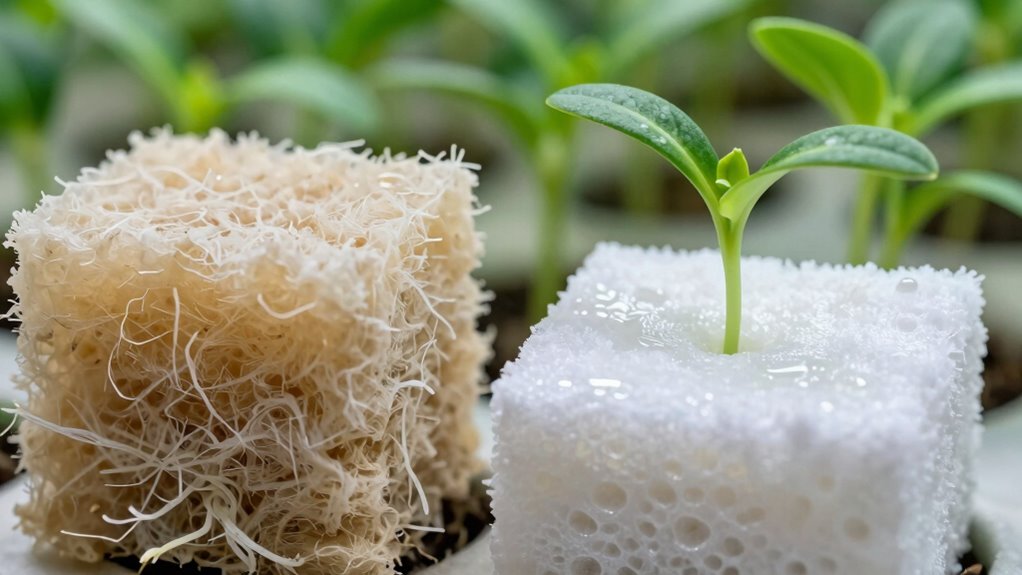

Coco coir and rockwool differ mainly in their material makeup and how they manage water and nutrients. Coco coir is organic, supports beneficial microbes, and has a natural, slightly acidic pH, making it more biological. Rockwool is inorganic, sterile, and neutral, providing stable support and precise nutrient control. If you want to understand how these differences affect plant growth and system choices, you’ll find more detail below.

Get the little things that make your day delivered free with Prime
- Fast, free delivery on millions of items
- Prime Video, Amazon Music and more included
- Member-only deals all year
Key Takeaways
- Coco coir is organic and nutrient-rich, while rockwool is inorganic and inert, affecting nutrient management.
- Coco coir supports biological activity, whereas rockwool provides a sterile environment.
- Coco coir has a slightly acidic pH, while rockwool is more neutral and often requires pH adjustment.
- Rockwool offers high water retention and stability, while coco coir balances moisture retention with oxygen flow.
- Coco coir is derived from natural fibers; rockwool is made from melted basalt and chalk, influencing their physical properties.
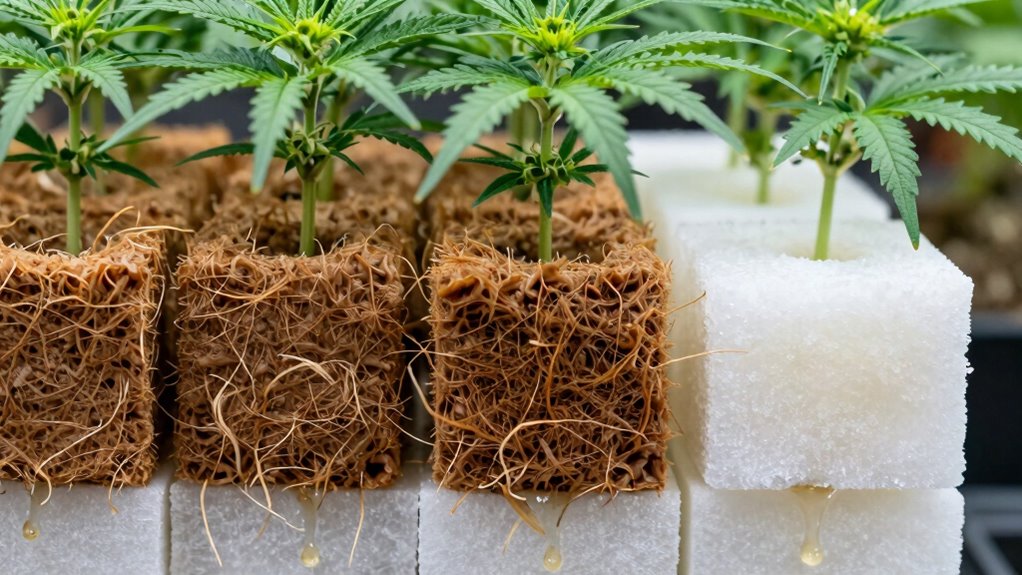
When it comes to hydroponic growing, choosing the right growing medium is essential, and coco coir and rockwool are two popular options. Both mediums influence how well your plants absorb nutrients and develop their roots, but they do so in different ways. Understanding these differences can help you optimize your setup for healthier, more vigorous plants.
Coco coir is a natural fiber derived from coconut husks. Its porous structure provides excellent oxygen flow to roots, which is crucial for nutrient absorption. Because of its organic origin, coco coir retains moisture well while still allowing excess water to drain, preventing root rot. This balance encourages steady nutrient uptake, ensuring your plants receive what they need without over-saturating the roots. The fibers also support healthy root development by offering a soft yet firm environment where roots can spread easily. As roots grow into the coco coir, they find a hospitable medium that promotes strong, extensive root systems, which are vital for overall plant vigor.
Coco coir offers excellent oxygen flow, moisture retention, and a supportive environment for strong, healthy root development.
Rockwool, on the other hand, is a synthetic material made by melting basalt and chalk, then spinning it into fibrous cubes or slabs. Its structure is highly porous, which means it holds a significant amount of water while maintaining good airflow. This high water retention ensures consistent moisture levels, making nutrient absorption more predictable. Because rockwool’s structure provides a stable environment, roots can grow extensively without the risk of drying out. Its inert nature means it won’t interfere with nutrient solutions, allowing you to finely control nutrient delivery. As roots penetrate rockwool, they encounter a firm, stable medium that supports robust root development, even in a nutrient-rich environment.
While coco coir naturally contains some nutrients and has a slightly acidic pH, rockwool is more neutral and often requires pre-treatment or pH adjustment. This difference affects how you manage nutrient solutions, but both mediums ultimately aim to maximize nutrient absorption and root expansion. Coco coir’s organic qualities promote biological activity, which can enhance nutrient availability over time, whereas rockwool provides a sterile environment that minimizes disease risk. Your choice between the two depends on your preferences for organic versus inert mediums, but both excel at supporting healthy root development and efficient nutrient uptake when used correctly.
hydroponic coco coir growing medium
As an affiliate, we earn on qualifying purchases.
As an affiliate, we earn on qualifying purchases.
Frequently Asked Questions
Which Medium Is More Environmentally Sustainable: Coco or Rockwool?
You’ll find coco more environmentally sustainable because it’s a renewable, organic material with organic certification, reducing environmental impact. It also offers better pH stability, helping you maintain ideal conditions without harmful additives. Rockwool, on the other hand, is non-renewable and produces waste that’s harder to recycle, making it less eco-friendly overall. Choosing coco supports sustainable practices and promotes healthier plant growth with fewer environmental concerns.
How Do Coco and Rockwool Differ in Nutrient Retention?
Oh, the joys of nutrient retention—coco happily holds onto nutrients longer thanks to its natural pH stability and superior moisture retention, making it a lush banquet for roots. Rockwool, meanwhile, is a bit more finicky, draining nutrients too quickly and requiring pH adjustments to keep things balanced. So, if you want a medium that keeps nutrients close and steady, coco’s your best friend.
Can Coco and Rockwool Be Reused Multiple Growing Cycles?
Yes, you can reuse coco and rockwool for multiple growing cycles. To do so, you need to guarantee good root aeration and maintain pH stability, which helps prevent disease and nutrient lockout. Rinse and sterilize the mediums thoroughly between cycles to eliminate pests or pathogens. Properly managing these factors extends their usability, making your hydroponic setup more sustainable and cost-effective while supporting healthy plant growth.
Which Medium Offers Better Pest Resistance?
Coco offers better pest resistance because it has natural pest resistant properties, helping protect your plants from common pests. Its organic compatibility also means it can be used with organic pest control methods, making it a more sustainable choice. Rockwool, on the other hand, is less resistant to pests and may require more careful monitoring. So, if pest resistance matters most, coco is the smarter, eco-friendly option for your hydroponic setup.
How Do Costs Compare Between Coco and Rockwool?
When comparing costs, you’ll find that coco tends to be more budget-friendly, offering a gentle advantage in price differences. The cost comparison shows coco’s affordability, making it appealing for growers watching expenses. Rockwool, while slightly pricier, offers benefits that might justify the extra investment. Overall, your choice depends on balancing initial costs with long-term gains, but coco generally provides a more economical option for most growers.
rockwool hydroponic starter cubes
As an affiliate, we earn on qualifying purchases.
As an affiliate, we earn on qualifying purchases.
Conclusion
Just like the contrasting paths of Apollo and Artemis, choosing between coco and Rockwool shapes your hydroponic journey. Coco offers a natural, flexible environment, while Rockwool provides stability and consistency. Both have their strengths—your choice depends on your goals and style. So, as you forge ahead, remember that your decision is the first step toward cultivating your own green empire, much like the legendary pursuits that inspire us to grow beyond limits.
organic coconut coir for hydroponics
As an affiliate, we earn on qualifying purchases.
As an affiliate, we earn on qualifying purchases.
As an affiliate, we earn on qualifying purchases.
Columbus Day / Indigenous Peoples' Day Picks
long weekend sales
As an affiliate, we earn on qualifying purchases.