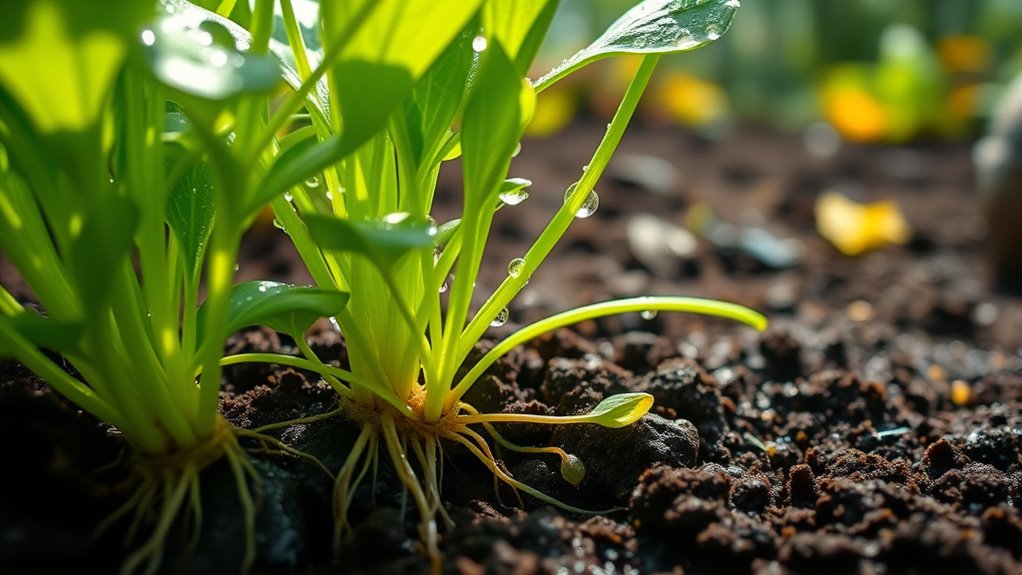

In the nitrogen cycle, you learn that plants can’t use atmospheric nitrogen directly. Instead, bacteria fix nitrogen gas into forms like ammonium or nitrate, which plants can absorb through their roots. These nutrients support plant growth and are recycled when plants and other organisms decay. Microbial activity keeps nitrogen available in ecosystems, ensuring healthy plant development. If you want to understand how this process keeps ecosystems balanced, there’s more to explore below.
Key Takeaways
- Nitrogen fixation by bacteria converts atmospheric N₂ into usable forms like ammonium and nitrate for plants.
- Plants absorb nitrogen mainly as nitrate (NO₃⁻) or ammonium (NH₄⁺) through their roots.
- Nitrogen is incorporated into plant tissues, supporting growth and development.
- Decomposers release nitrogen back into the soil during organic matter decay, maintaining nutrient cycles.
- Microbial activity ensures continuous nitrogen availability, crucial for healthy plant growth and ecosystem balance.
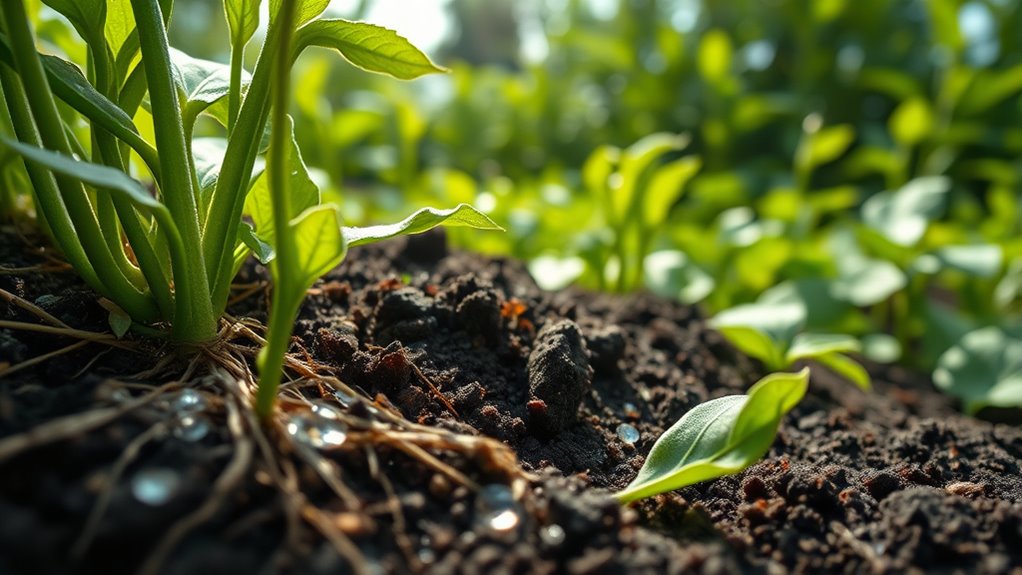
Have you ever wondered how nitrogen moves through the environment? It’s a fascinating process that involves multiple steps and different organisms working together. At its core, nitrogen is essential for life because it forms the building blocks of amino acids, proteins, and DNA. Despite its abundance in the atmosphere as nitrogen gas (N₂), most plants can’t use it in this form. Instead, they rely on a biological process called nitrogen fixation, which converts atmospheric nitrogen into a form they can absorb, such as ammonium (NH₄⁺) or nitrate (NO₃⁻). This process is primarily carried out by certain bacteria, either free-living in the soil or living symbiotically within the roots of leguminous plants. These bacteria have special enzymes that allow them to break the strong triple bond in N₂, transforming it into a more accessible form. This process not only supplies nitrogen directly to plants but also contributes to soil enrichment, increasing its fertility over time. Vetted Microbial activity is fundamental to maintaining a healthy nitrogen cycle, ensuring that nitrogen remains available for plant use.
Once nitrogen has been fixed, it becomes part of the soil’s nutrient pool, making it available for plant uptake. Plants absorb nitrogen mainly as nitrate or ammonium through their roots, integrating it into their tissues to support growth and development. As plants thrive, they use nitrogen to produce essential compounds, ensuring their survival and productivity. When plants die or shed leaves, decomposers like bacteria and fungi break down organic matter, releasing nitrogen back into the soil in forms that plants can reuse. This continuous cycle keeps the nitrogen moving through the environment, maintaining a balance that sustains ecosystems.
The process of nitrogen fixation and subsequent soil enrichment underscores how indispensable bacteria are in the nitrogen cycle. Without these microorganisms, most nitrogen would remain locked in the atmosphere, unavailable to plants and animals. This natural process highlights the importance of healthy soil ecosystems, where microbial activity promotes nutrient cycling. Additionally, human activities, such as the application of synthetic fertilizers, can augment natural nitrogen fixation, boosting crop yields but also posing environmental challenges like runoff and pollution. Understanding how nitrogen moves through the environment helps us appreciate the delicate balance that sustains plant growth and food production. Ultimately, nitrogen fixation acts as a crucial bridge, transforming inert atmospheric nitrogen into a form that plants can use, enriching the soil, and supporting life on Earth.

Xtreme Gardening AZOS – Beneficial Nitrogen-Fixing Bacteria for Plants & Trees – Natural Root Stimulator & Growth Promoter for Cloning, Seedlings & Transplants (6 oz)
BENEFICIAL NITROGEN-FIXING BACTERIA – Captures nitrogen from the air and converts it into a form plants can use…
As an affiliate, we earn on qualifying purchases.
As an affiliate, we earn on qualifying purchases.
Frequently Asked Questions
How Do Different Soil Types Affect Nitrogen Availability?
You might wonder how soil types influence nitrogen availability. Different soil compositions affect nutrient retention, which impacts how much nitrogen your plants can access. Sandy soils, with low nutrient retention, often lose nitrogen quickly, while clay soils retain nutrients longer, making nitrogen more available. Loamy soils balance both, providing ideal conditions. So, understanding your soil’s composition helps you manage nitrogen levels effectively, ensuring healthy plant growth.
Can Plants Absorb Nitrogen Directly From the Atmosphere?
You might think plants can absorb nitrogen directly from the atmosphere, but that’s not quite true. Atmospheric absorption of nitrogen gas (N₂) by plants is limited because their roots can’t take in it directly. Instead, certain bacteria convert nitrogen gas into usable forms through processes like nitrogen fixation. This allows plants to access nitrogen indirectly, highlighting the importance of soil microbes in making atmospheric nitrogen available for plant growth.
What Role Do Microbes Play in Nitrogen Fixation?
Microbes play a vital role in nitrogen fixation through microbial symbiosis, especially with certain plants. These microbes, like Rhizobium, house the nitrogenase enzyme that converts atmospheric nitrogen into ammonia. You benefit because this process makes nitrogen accessible for plant use, supporting growth. Without these microbes, plants would struggle to obtain sufficient nitrogen directly from the atmosphere, highlighting their essential role in the nitrogen cycle.
How Does Nitrogen Deficiency Impact Plant Growth?
Did you know that nitrogen deficiency causes up to 50% reduced crop yields? When your plants lack nitrogen, you’ll notice leaf yellowing and stunted growth. Without enough nitrogen, plants can’t produce essential proteins, impairing their development. This deficiency weakens their ability to photosynthesize effectively, leading to poor health and lower productivity. Ensuring proper nitrogen levels is vital for healthy, vigorous plants and ideal growth.
Are There Environmental Risks Associated With Nitrogen Fertilizers?
You should know that using nitrogen fertilizers can pose environmental risks, like environmental pollution from excess nitrogen. When you apply too much fertilizer, it often leads to fertilizer runoff, which contaminates water sources and harms ecosystems. This runoff can cause algal blooms and reduce oxygen in the water, affecting aquatic life. So, responsible fertilizer use is essential to minimize these environmental impacts and protect our natural resources.

True Organic Blood Meal – High-Nitrogen Organic Fertilizer for Rapid Vegetative Growth – 3lb Bag Covers 104 Sq. Ft.
Encourages Rapid Growth: True Organic Blood Meal is perfect for heavy feeders like corn, spinach, broccoli, and leafy…
As an affiliate, we earn on qualifying purchases.
As an affiliate, we earn on qualifying purchases.
Conclusion
Understanding the nitrogen cycle is like uncovering nature’s secret recipe, revealing how plants enthusiastically absorb and use nitrogen to thrive. By appreciating this delicate balance, you realize you’re part of a bigger picture—an intricate dance of life and renewal. When you nurture the earth, you’re tending to an essential thread in the web of life, ensuring that every leaf and flower continues to dance in harmony with nature’s unseen, powerful rhythm.

Soil Testing Kit 2-in-1 for pH & Nitrogen – 100 Pack in Resealable Pouches – Fast & Accurate Soil pH Tester for Garden, Lawn & Plants – Includes Spoon & Tube
𝐍𝐢𝐭𝐫𝐨𝐠𝐞𝐧 𝐓𝐞𝐬𝐭 𝐃𝐢𝐬𝐜𝐥𝐚𝐢𝐦𝐞𝐫 : Nitrogen test measures nitrate-nitrogen (NO₃⁻), the plant-available form found in soil; does not measure…
As an affiliate, we earn on qualifying purchases.
As an affiliate, we earn on qualifying purchases.
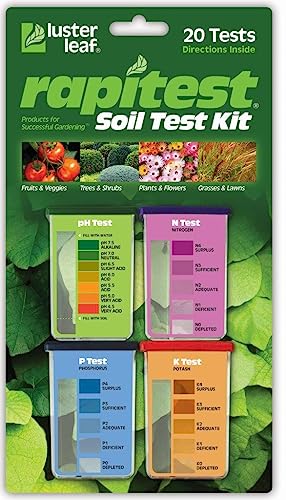
Rapitest Soil Test Kit for Gardens, Vegetables, Flowers and Lawns. USA designed and assembled soil tester completely, quickly and accurately measures/analyzes soil pH acidity and garden nutrients.
Quick, at home results for Soil pH, Nitrogen, Phosphorous and Potash Innovative and inexpensive soil test kit features…
As an affiliate, we earn on qualifying purchases.
As an affiliate, we earn on qualifying purchases.