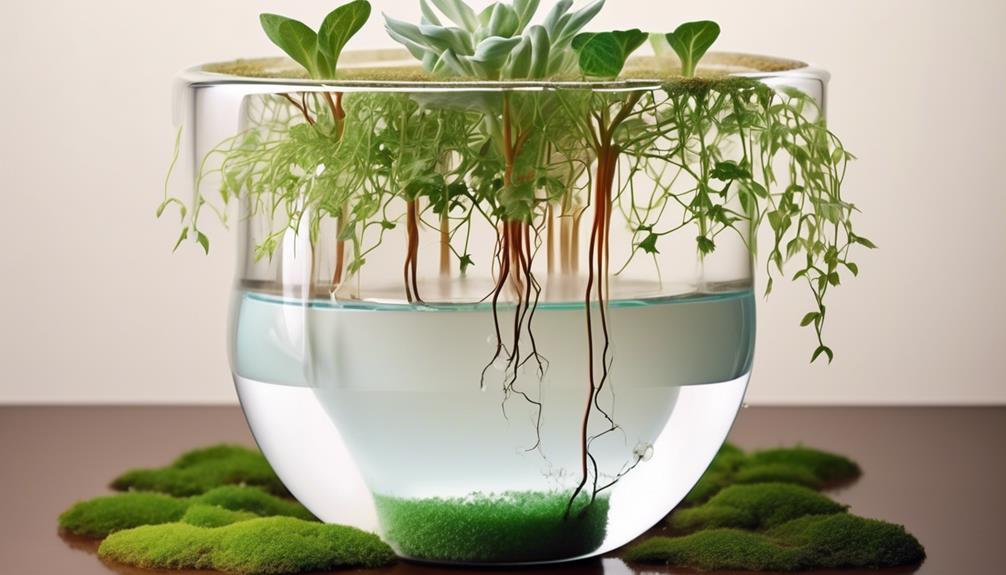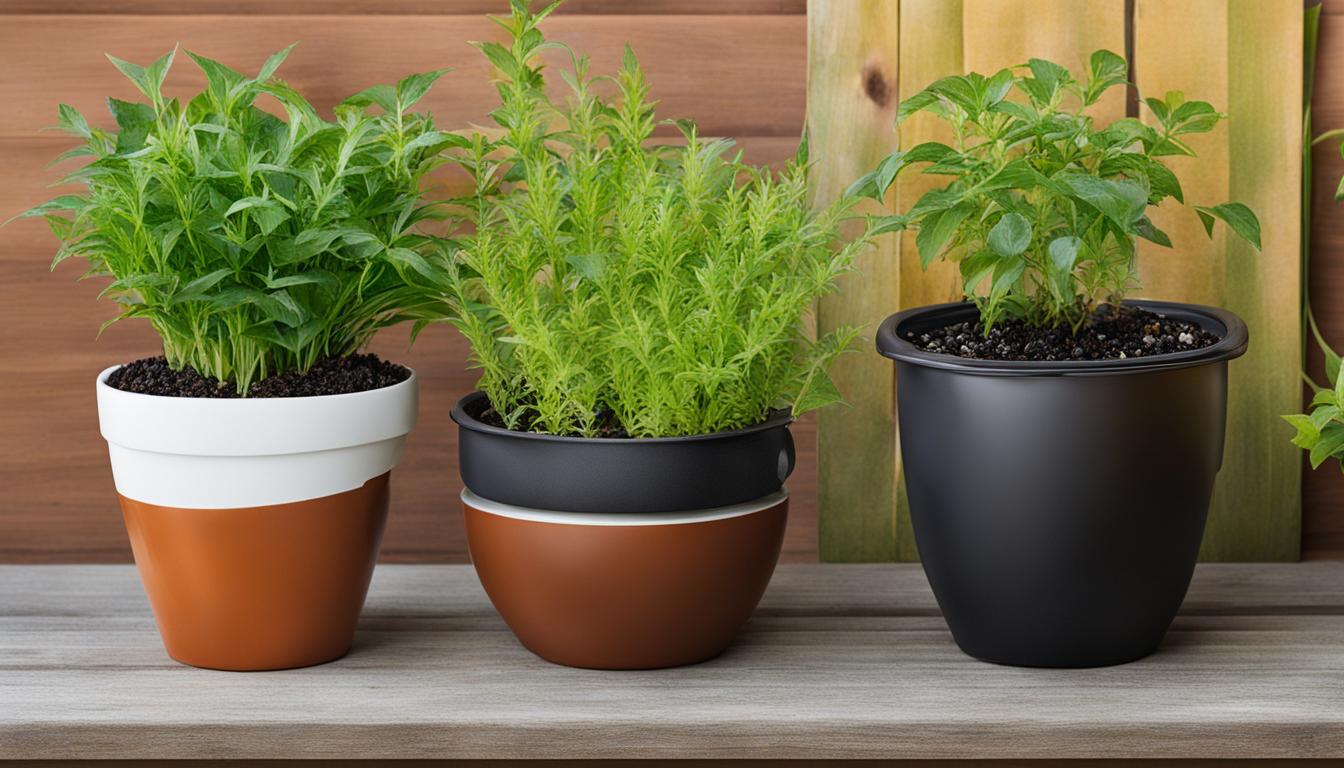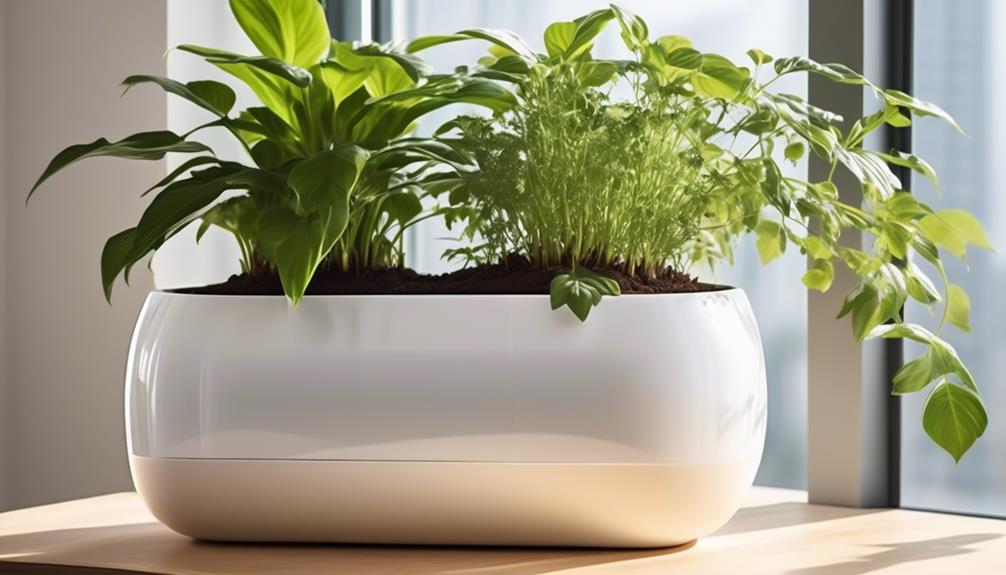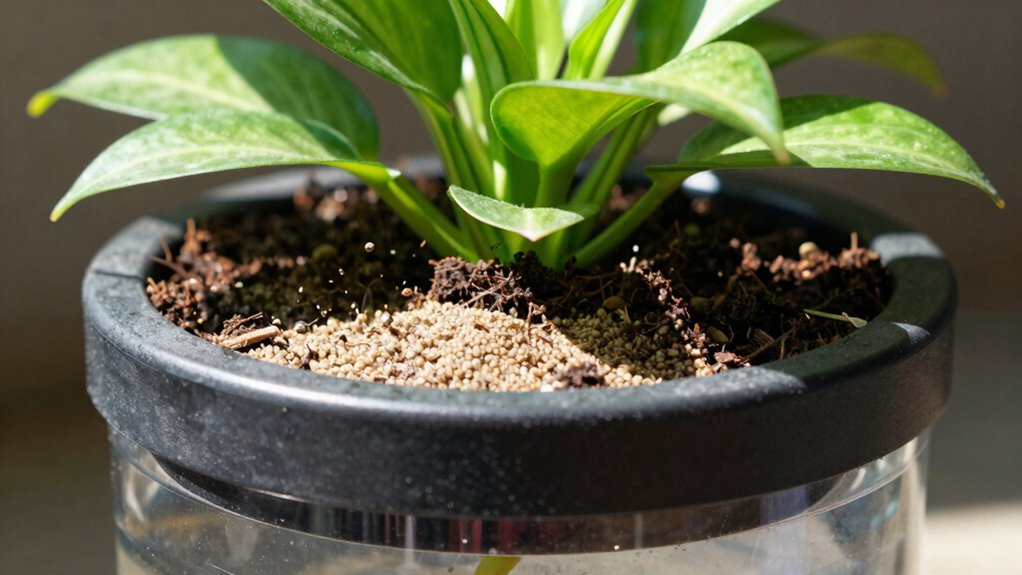
To prevent gnats in your self-watering containers, make sure you don’t overwater and avoid leaving standing water on the surface. Regularly remove fallen leaves and decaying plant material, and keep the soil surface dry by applying a layer of sand or gravel. Check drainage holes and improve them if needed to prevent excess moisture. Introducing natural predators like beneficial nematodes can help control pests. Keep your containers clean and properly maintained—you’ll discover more effective tips as you continue.
Key Takeaways
- Ensure proper drainage and avoid standing water in the container’s tray or reservoir.
- Use a layer of sand or gravel on top of the soil to block gnat egg-laying sites.
- Avoid overwatering and maintain dry soil surface to discourage gnat breeding.
- Regularly remove decaying plant material and fallen leaves from the container.
- Introduce natural predators like beneficial nematodes or predatory mites to control gnats.
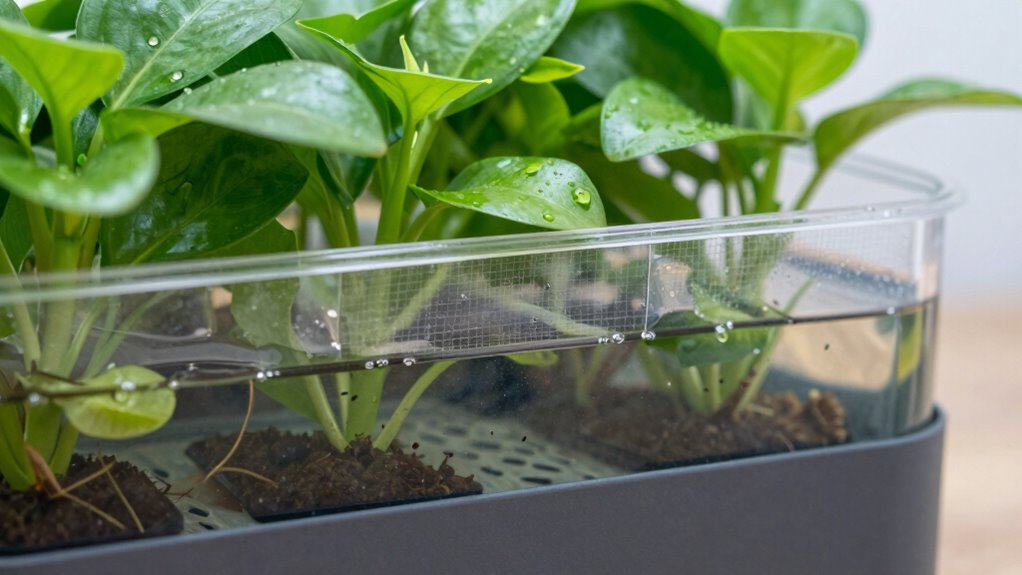
Self-watering containers are convenient for keeping your plants hydrated, but they can also attract gnats if not maintained properly. These tiny pests thrive in moist environments, especially when organic matter like compost or decaying plant material is present. To prevent gnats from becoming a problem, you need to pay attention to how you care for your containers, particularly regarding composting tips and pest control methods. Properly managing your compost can notably reduce gnat infestations. Avoid overloading your compost with damp, decomposing plant matter, which creates an ideal breeding ground for gnats. Instead, turn the compost regularly to aerate it and help excess moisture evaporate. Use dry, brown materials like shredded leaves or straw to balance the compost’s moisture levels, making the environment less inviting to gnats. Maintaining proper filtration/suction basics in your containers can also help control excess moisture and prevent pests.
When it comes to pest control methods, cleanliness is your best weapon. Remove any fallen leaves, dead plant material, or decaying roots from the soil surface frequently. Keep your self-watering containers free of standing water on the surface, as gnats lay their eggs in moist areas. You might also consider applying a layer of sand or gravel on top of the soil, which creates a barrier that prevents adult gnats from reaching the soil to lay eggs. Additionally, introducing natural predators like beneficial nematodes or predatory mites can help control gnat populations without harsh chemicals. These methods are eco-friendly and effective if used consistently.
Another important tip is to monitor your watering habits. Although self-watering containers are designed to maintain consistent moisture, overwatering can still occur. Ensure that your containers aren’t sitting in water or retaining excess moisture around the roots. Drainage is critical; if your container doesn’t have adequate drainage holes, consider adding some or switching to a different type of container. Correct watering practices help keep the soil from becoming overly damp, reducing the likelihood of gnat infestations.
self-watering container drainage system
As an affiliate, we earn on qualifying purchases.
As an affiliate, we earn on qualifying purchases.
Frequently Asked Questions
Can Gnats Harm My Plants Beyond Annoyance?
Yes, gnats can harm your plants beyond just being annoying. They can lay eggs in the soil, leading to root damage and affecting soil aeration. Over time, this weakens your plants and makes them more vulnerable to diseases. To minimize this, consider using gnat-resistant plants and improving soil aeration. Keeping the soil dry and well-drained also helps prevent gnat infestations and keeps your plants healthy.
Are Certain Plants More Prone to Gnat Infestations?
Certain plants act as magnets for gnats due to their susceptibility and the gnat attraction they create. You’ll find that overwatered or decaying plants, like ferns and orchids, are more prone to infestations. These plants offer a perfect breeding ground, turning your garden into a gnat playground. To keep gnats at bay, focus on well-draining soil and proper watering habits, especially with plants that are more susceptible to gnat attraction.
How Often Should I Replace the Water in Self-Watering Containers?
You should replace the water in your self-watering containers every 1 to 2 weeks to maintain water quality and prevent gnat infestations. Regular container cleaning is vital; scrub the container thoroughly to remove any algae or debris that attract gnats. Fresh water discourages breeding, so sticking to a routine guarantees your plants stay healthy and free from pesky pests. Consistent maintenance keeps your containers gnat-free and your plants thriving.
Do Natural Remedies Effectively Eliminate Gnats?
Are gnats a tiny tormentor invading your space? Natural remedies can be surprisingly effective if you act swiftly. Use natural repellents like neem oil or cinnamon to discourage them, and introduce beneficial insects such as predatory nematodes or ladybugs to control their population naturally. These methods work together, creating a balanced ecosystem that keeps gnats at bay without harmful chemicals, bringing peace back to your plants.
What Are the Signs of a Gnat Infestation?
You’ll notice tiny flying gnats around your plants and soil, which are clear signs of pest identification and infestation symptoms. You might see adult gnats hovering near the soil surface or landing on plants. The soil may appear damp with small larvae visible if you disturb it. These symptoms indicate a gnat infestation, so act quickly to prevent further damage and control their spread.
beneficial nematodes for pest control
As an affiliate, we earn on qualifying purchases.
As an affiliate, we earn on qualifying purchases.
Conclusion
To keep gnats at bay, regularly inspect and clean your self-watering containers, and avoid overwatering. Using a layer of sand or charcoal can also help prevent larvae from thriving. Did you know that studies show over 70% of indoor plant pests are caused by excess moisture? Staying vigilant and maintaining proper watering habits not only keeps gnats away but also promotes healthier plants. Keep these tips in mind for pest-free, thriving greenery!
garden sand or gravel for pest prevention
As an affiliate, we earn on qualifying purchases.
As an affiliate, we earn on qualifying purchases.
As an affiliate, we earn on qualifying purchases.