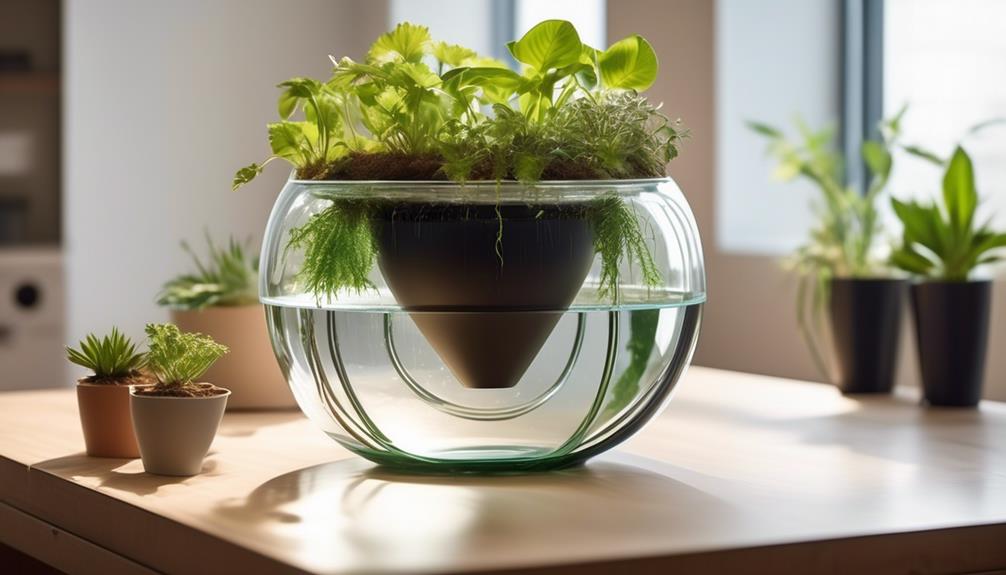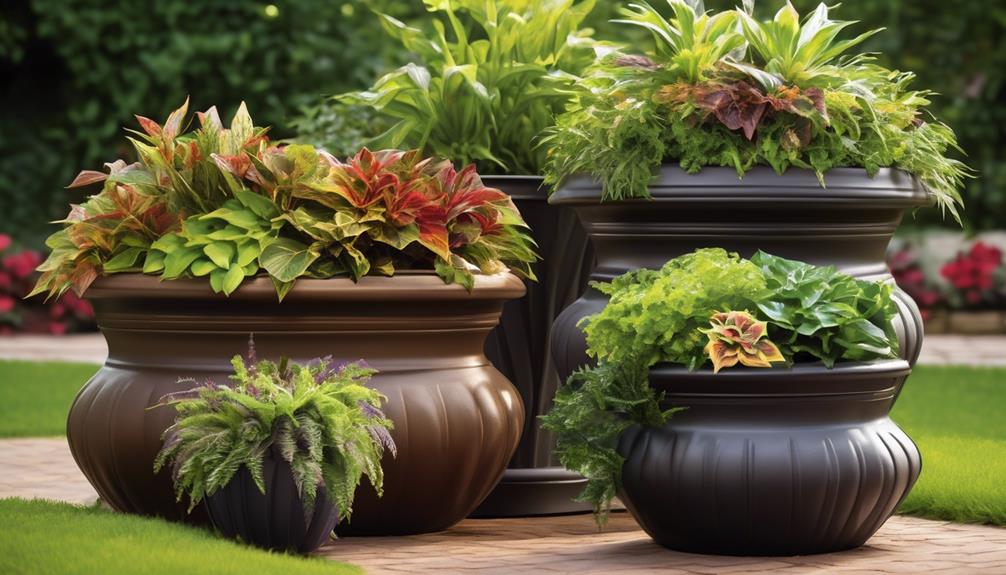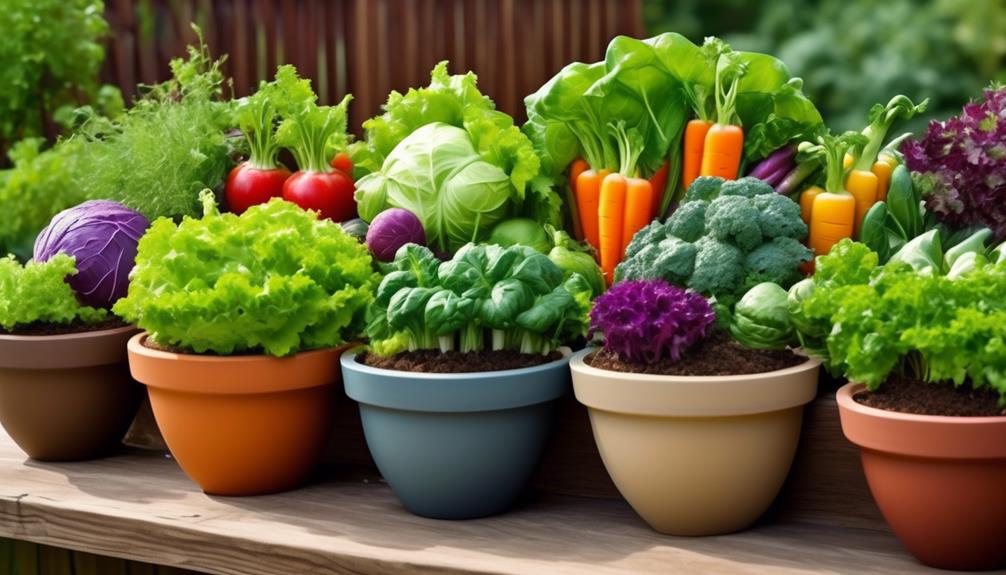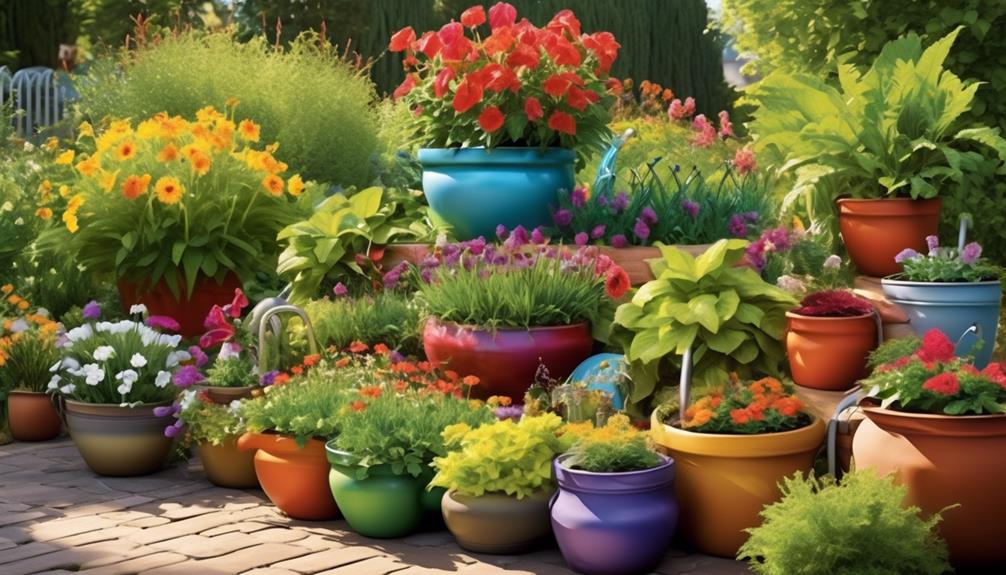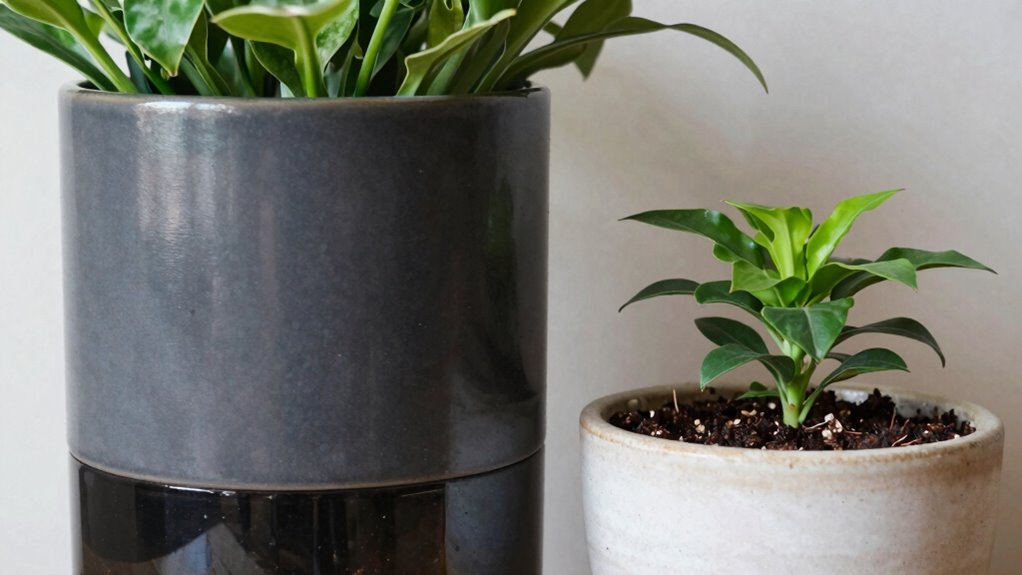

Tall self-watering pots have deeper reservoirs and a taller profile, allowing them to support larger plants with deep roots. They promote stronger root growth and help maintain consistent moisture levels, reducing how often you need to refill water. Shallow pots, on the other hand, are great for smaller plants, herbs, and succulents, offering easier portability. If you want to understand how these differences can benefit your indoor garden, keep going for more insights.

Get the little things that make your day delivered free — and shop member deals
- Fast, free delivery on millions of items
- Access to Prime Big Deal Days deals on October 6–7
- Prime Video, Amazon Music and more included
Key Takeaways
- Tall self-watering pots have a deeper reservoir and taller profile for larger plants and deep roots.
- Shallow self-watering pots have a low profile, suitable for small plants, herbs, and succulents.
- Tall pots promote deeper root growth and provide better moisture stability for vigorous plants.
- Shallow pots dry out faster, requiring more frequent watering despite self-watering features.
- Design differences affect soil volume, root space, and maintenance routines for optimal plant health.
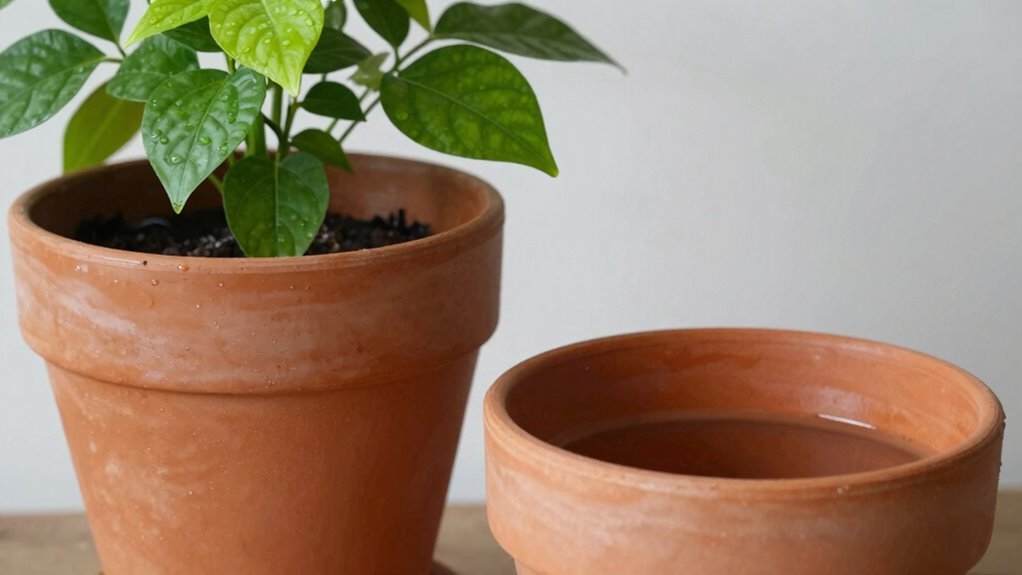
When choosing a self-watering pot, understanding the differences between tall and shallow designs is essential for ensuring your plants thrive. These variations considerably impact indoor gardening, affecting plant health and overall growth. Tall self-watering pots usually feature a deeper reservoir and a taller profile, which can be advantageous if you’re growing larger plants or species that prefer deeper root systems. The extra depth allows roots to spread out and access moisture over a longer period, reducing the frequency of watering and helping maintain consistent moisture levels. This stability is especially beneficial in indoor gardening setups, where fluctuating humidity and temperature can stress plants. For plant health, a tall design minimizes water stress and encourages stronger root development, leading to healthier, more vigorous plants.
Conversely, shallow self-watering pots are better suited for smaller plants, herbs, or succulents. Their low profile means less soil and fewer roots, which can be advantageous if you want to keep your indoor garden compact or if space is limited. These shallow designs are often easier to move around, allowing you to rearrange your indoor garden with minimal effort. They also typically dry out faster, which can be perfect for plants that dislike overly moist soil or require well-draining conditions. However, because of limited soil volume, shallow pots may need more frequent watering, even with a self-watering mechanism. Additionally, the size of the water reservoir** in these pots influences how often you need to refill them, impacting maintenance routines. Properly designing watering capacity can help optimize plant health and reduce maintenance. It’s also important to consider the root space available, as it directly affects plant growth and stability in either pot type. Moreover, understanding how soil moisture levels are maintained can help ensure your plants receive consistent hydration. Maintaining an appropriate balance between water reservoir size and soil moisture retention** is crucial for optimal plant health in both shallow and tall pots.
As an affiliate, we earn on qualifying purchases.
Frequently Asked Questions
How Do Tall Self-Watering Pots Affect Plant Root Development?
Tall self-watering pots encourage deeper root growth because their design promotes increased root depth. As water absorbs gradually from the reservoir, roots naturally extend downward to access it, leading to healthier, stronger roots. You’ll notice your plants develop a more extensive root system, which improves stability and nutrient uptake. This setup guarantees consistent moisture, reducing the need for frequent watering and supporting ideal root development over time.
Are Tall Pots Suitable for All Plant Types?
Tall self-watering pots aren’t suitable for all plant types, especially those with shallow root systems, as they encourage deeper root growth. You’ll find they excel with plants needing increased root depth and benefit from their drainage efficiency, which prevents waterlogging. However, for small or surface-rooting plants, shallow pots are more appropriate. Always consider your plant’s specific needs to guarantee healthy growth and avoid potential issues.
Do Shallow Self-Watering Pots Require More Frequent Water Refills?
Shallow self-watering pots generally need more frequent water refills because their smaller soil volume dries out faster, affecting watering consistency. You might notice less soil aeration since the limited depth restricts airflow, which can impact root health. To keep your plants happy, check these pots often and refill the water reservoir as needed, especially during hot weather or when watering small, delicate plants.
How Does Pot Height Influence Watering Efficiency?
Pot height considerably influences watering efficiency by affecting soil moisture levels and watering consistency. Taller self-watering pots provide a greater reservoir of water, ensuring consistent moisture delivery to the plant roots. This reduces the frequency of refills and minimizes dry spots, leading to healthier plants. Shallow pots may dry out faster, requiring more frequent watering, while taller ones maintain steady soil moisture, making your watering routine more efficient.
Can Tall Self-Watering Pots Be Used Indoors Effectively?
Yes, you can use tall self-watering pots indoors effectively. They help maintain consistent soil moisture, which is great for indoor plants, especially in dry environments with low humidity. Plus, their height adds aesthetic appeal, making your space look modern and organized. Just make certain they fit your space and light conditions, and you’ll enjoy healthy plants with minimal fuss. These pots are a smart choice for indoor gardening enthusiasts.
small self-watering pots for herbs
As an affiliate, we earn on qualifying purchases.
As an affiliate, we earn on qualifying purchases.
Conclusion
While tall self-watering pots provide deeper roots and better stability, shallow ones are easier to move and perfect for smaller spaces. Both types keep your plants consistently hydrated, but their differences highlight how your plant’s needs and your lifestyle shape your choice. Whether you prefer the height and stability of a tall pot or the convenience of a shallow one, understanding these contrasts helps you select the best fit. After all, it’s not just about size—it’s about what your plants truly need.
deep reservoir self-watering planters
As an affiliate, we earn on qualifying purchases.
As an affiliate, we earn on qualifying purchases.
shallow self-watering succulent pots
As an affiliate, we earn on qualifying purchases.
As an affiliate, we earn on qualifying purchases.
NFL season / tailgating Picks
team gear
As an affiliate, we earn on qualifying purchases.