
To refresh old potting mix without full repotting, start by removing the top crusted soil to improve airflow and water access. Gently loosen the surface and mix in high-quality compost, about 10-20%, to add nutrients and boost microbial life. Incorporate perlite or coarse sand for drainage and adjust watering to keep moisture balanced. Thoroughly mix amendments, water lightly, and monitor plant response—there’s more useful tips in the details to help your plants thrive.
Key Takeaways
- Remove the top layer of old, crusted soil to improve air and water access.
- Mix high-quality compost into the existing soil to replenish nutrients and microbial life.
- Incorporate perlite or coarse sand for better drainage and aeration.
- Gently water the soil to settle amendments and monitor moisture levels regularly.
- Stir the soil thoroughly to ensure even distribution of nutrients and amendments.
Over time, potting mix can lose its importance, becoming compacted and depleted of nutrients, which can hinder plant growth. Fortunately, you don’t always need to repot your plants to give them a fresh start. Instead, you can refresh the existing mix by adding compost and improving moisture management. Compost not only supplies essential nutrients but also enriches the microbial life, creating a healthier environment for your plants. This simple process keeps your plants healthy without the stress and effort of a full repot.
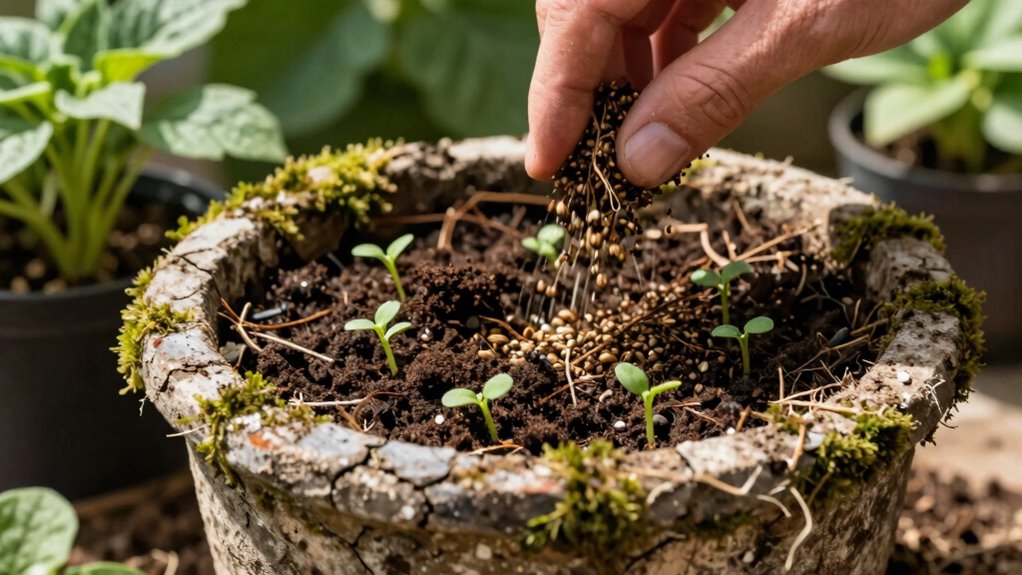
Start by removing any top layer of old, crusted soil. This layer often becomes dry and compacted, blocking air and water from reaching the roots. Once removed, gently loosen the surface with your fingers or a small tool. Now, it’s time to introduce compost addition. Mix in high-quality compost to replenish nutrients and improve the soil’s structure. Compost not only supplies essential nutrients but also enriches the microbial life, creating a healthier environment for your plants. Be careful not to overdo it; adding about 10-20% compost by volume is sufficient to rejuvenate the mix without overwhelming the roots.
Remove old, crusted soil and mix in 10-20% compost to revitalize and nourish your plants.
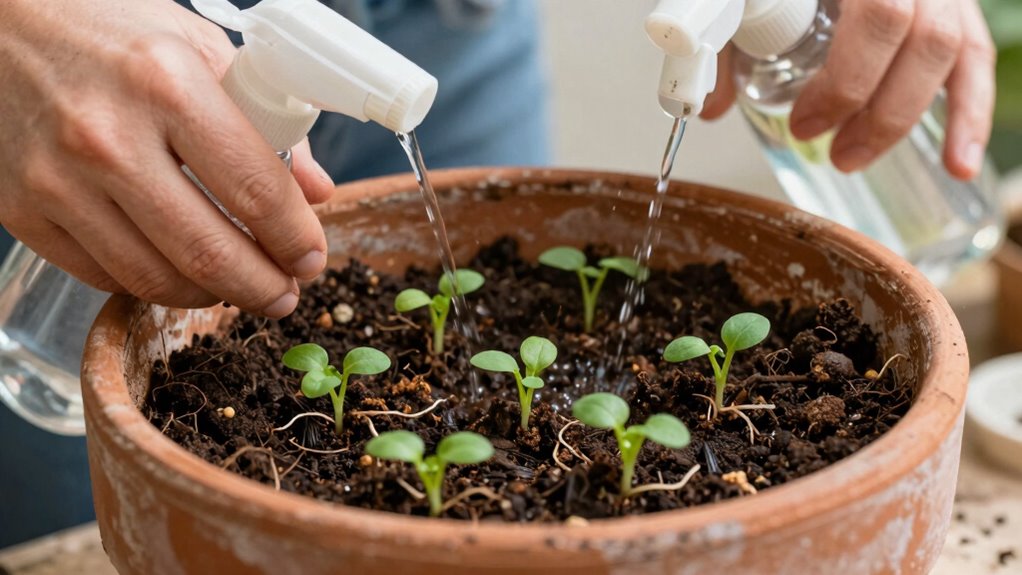
Next, focus on moisture management. Old potting mix tends to retain too much water or drain too quickly, both of which can stress your plants. To balance this, incorporate a small amount of perlite or coarse sand, which helps improve aeration and drainage. If the mix feels too dry, water gradually to allow the soil to absorb moisture evenly. If it’s too soggy, add more dry material like the aforementioned amendments or fresh, dry soil. The goal is to create a consistent, well-draining environment that holds enough moisture for healthy root function without becoming waterlogged. Understanding the soil composition can help you determine the best amendments to use for your specific plants, while awareness of fandom and community trends can inform your plant choices and care routines based on popular or emerging preferences.
As you mix everything together, guarantee the compost and amendments are evenly distributed. This even distribution ensures your plant’s roots will benefit from the enhanced nutrients and improved moisture conditions. Additionally, selecting the right soil amendments can significantly boost your plant’s health. Incorporating nutrient-rich compost can further enhance the microbial activity and overall vitality of your soil. It’s also beneficial to consider the plant’s specific needs, as different species may require tailored adjustments to their soil environment. Afterward, give the pot a gentle water to settle the soil and check the moisture level. Your plant should have enough moisture to thrive without sitting in excess water, which can lead to root rot.
Finally, keep an eye on your plant over the following days. Adjust watering as needed, especially if the mix feels too dry or too moist. Regularly monitoring and tweaking these conditions will help your plant establish a strong root system and grow vigorously. With a few simple steps—adding compost, managing moisture, and mixing thoroughly—you can give your old potting mix a new lease on life, supporting healthy growth without the need for complete repot.
high-quality compost for potted plants
As an affiliate, we earn on qualifying purchases.
As an affiliate, we earn on qualifying purchases.
Frequently Asked Questions
How Often Should I Refresh My Potting Mix?
You should rejuvenate your potting mix every 6 to 12 months. During this time, you can adjust soil pH if needed and enrich the mix with organic matter like compost or worm castings. This process helps maintain healthy nutrients, improves drainage, and promotes plant growth. Regularly rejuvenating your mix ensures your plants stay healthy, prevents soil compaction, and keeps pests and diseases at bay without the need for full repotting.
Can I Reuse Old Potting Mix for Edible Plants?
Can you reuse old potting mix for edible plants? Absolutely, but you should soil sterilization first to kill pests and diseases. Think of it as giving your soil a clean slate, preventing pest prevention issues later. Mix in fresh compost or organic matter to boost nutrients. Reusing soil can be sustainable and economical, just guarantee it’s safe for your edible plants by properly sterilizing and revitalizing it before planting.
What Are Signs My Potting Mix Needs Refreshing?
You’ll notice your potting mix needs revitalizing if your plants show slow growth, yellowing leaves, or poor drainage. Soil contamination or nutrient depletion can cause these issues, making it harder for plants to thrive. When you see these signs, it’s time to refresh the mix by adding fresh compost or fertilizer, aerating the soil, and removing any mold or pests. This helps restore essential nutrients and reduces contamination risks.
Is It Safe to Add Fertilizers During Refresh?
Yes, you can add fertilizers during a refresh, but guarantee fertilizer compatibility and maintain nutrient balance. For example, if your plant needs a nitrogen boost, choose a balanced fertilizer with equal parts nitrogen, phosphorus, and potassium. Adding too much or incompatible fertilizers can harm your plant. Always read labels carefully, and apply sparingly until you see how your plant responds. This way, you keep your plant healthy without risking over-fertilization.
How Long Does Refreshed Potting Mix Last?
Refreshed potting mix typically lasts about one to two years, depending on usage and care. To prolong its effectiveness, you should perform soil sterilization to eliminate pests and disease. Adding organic amendments like compost or worm castings can boost nutrients and improve soil structure. Regularly monitoring plant health and reapplying organic amendments helps maintain a healthy growing environment, ensuring your refreshed mix stays productive for an extended period.
As an affiliate, we earn on qualifying purchases.
Conclusion
By gently renewing your potting mix, you give your plants a fresh start without the upheaval of a full repot. Think of it as a subtle dance—replacing the old with the new, softly and thoughtfully. With a little care, your plants can thrive quietly, soaking up the revitalized blend. This gentle touch allows your garden to flourish naturally, turning a simple refresh into a harmonious renewal that keeps your green friends happy and healthy.
As an affiliate, we earn on qualifying purchases.
As an affiliate, we earn on qualifying purchases.