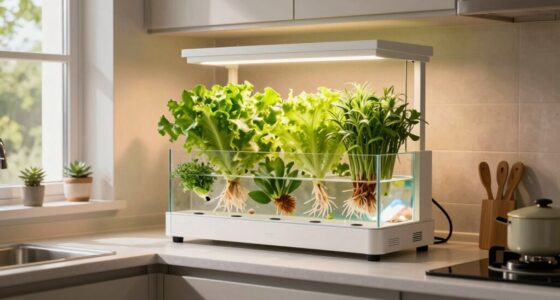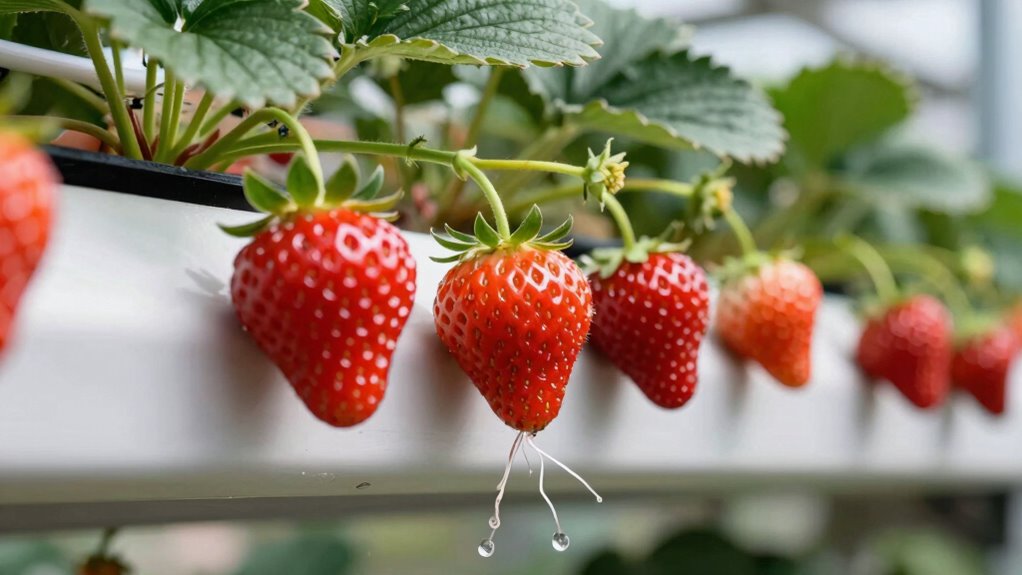

Growing hydroponic strawberries indoors can be tricky because you need to carefully manage pests, nutrients, and environmental conditions. Without natural predators, pests like spider mites and fungus gnats can spread quickly, making regular inspection crucial. You also must balance humidity, temperature, and airflow to prevent issues like mold or plant stress. Plus, monitoring nutrient levels is essential to avoid deficiencies or root burn. If you want to master these challenges, there’s much more to reflect on for success.
Listen free for 30 days with Audible
Thousands of audiobooks and originals — cancel anytime.
As an affiliate, we earn on qualifying purchases.
Key Takeaways
- Indoor environments lack natural predators, increasing the risk of pest infestations.
- Maintaining optimal humidity and temperature is challenging but crucial to prevent mold, pests, and plant stress.
- Proper nutrient solution management requires careful monitoring of pH and EC levels to avoid deficiencies and root damage.
- Consistent environmental control and sanitation are essential to prevent rapid pest spread and disease.
- Balancing airflow, humidity, and nutrients demands ongoing vigilance and precise adjustments.
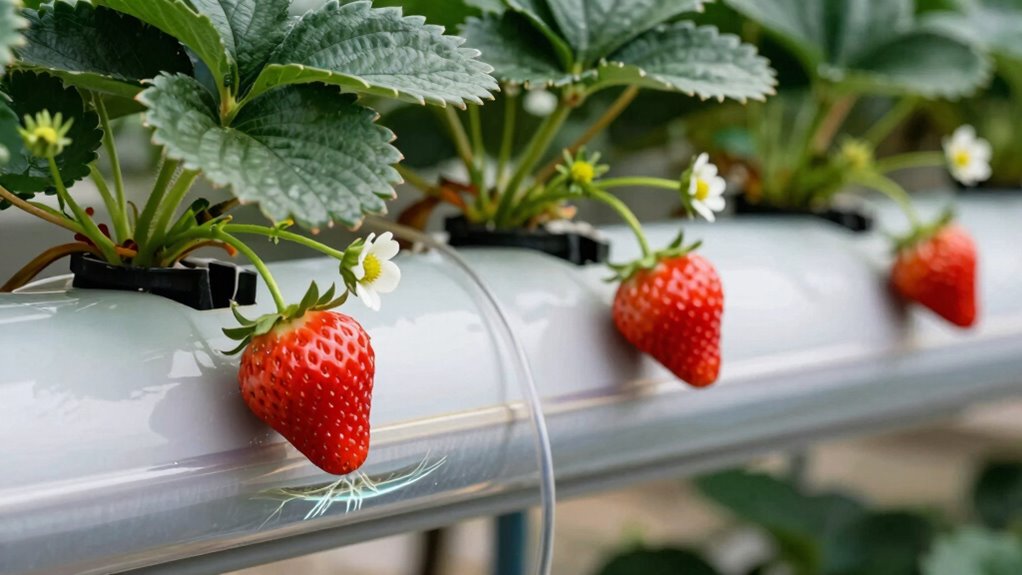
Growing strawberries indoors through hydroponics offers a convenient way to enjoy fresh, juicy fruit year-round, regardless of outdoor weather conditions. However, cultivating these berries indoors isn’t as simple as setting up a system and waiting for them to flourish. One of the biggest challenges you’ll face is managing pests. Unlike outdoor gardens, where natural predators and environmental factors help keep pests in check, an indoor environment can sometimes become a haven for spider mites, aphids, and fungus gnats. Without proper pest management, these pests can quickly spread and damage your plants, reducing fruit quality and yield. To prevent this, you need to stay vigilant, regularly inspecting your plants, and maintaining cleanliness in your grow area. Using organic pest control methods or introducing beneficial insects can help keep pest populations under control without harming your plants or contaminating your nutrient solutions. It’s also important to understand that pest management in an indoor setting requires a proactive approach, since the enclosed space can facilitate rapid pest outbreaks. Additionally, maintaining optimal environmental conditions such as humidity and temperature can significantly reduce pest issues and improve plant health. Proper airflow and ventilation are also crucial to prevent excess moisture buildup that attracts pests and diseases. Implementing climate control techniques can further help stabilize these conditions and prevent pest infestations. Regular cleaning and sanitation of your grow space are essential to minimize the chances of pest eggs or spores harboring in neglected corners.
Speaking of nutrient solutions, providing your hydroponic strawberries with the right nutrients is critical but tricky. Unlike soil, where nutrients are naturally present and released slowly, hydroponic systems depend entirely on you to supply a balanced mix of nutrients dissolved in water. If your nutrient solutions lack essential elements like nitrogen, phosphorus, or potassium, your plants may struggle to grow, produce fewer berries, or develop poor flavor. Conversely, overfeeding with too many nutrients can cause root burn or nutrient lockout, stunting growth and inviting diseases. Achieving the perfect balance takes knowledge and constant adjustment, especially since strawberries have specific needs during different growth stages. You’ll need to monitor your nutrient solutions regularly, ensuring they’re at the correct pH and EC levels, and replace or refresh them as needed. Regular testing of nutrient solution quality can help prevent deficiencies or imbalances that might otherwise go unnoticed until they impact your crop. Properly managing these aspects can also help prevent issues caused by excess moisture, which is another common challenge in indoor cultivation.
Indoor environments also pose unique challenges related to humidity and temperature control, which influence pest populations and nutrient uptake. High humidity can encourage mold and fungal issues, while low humidity can stress your plants and make them more susceptible to pests. Temperature fluctuations can affect how your strawberries absorb nutrients, so maintaining a stable climate is essential. These factors, combined with the need for precise pest management and carefully formulated nutrient solutions, make growing strawberries indoors a delicate balancing act. Success requires patience, attention to detail, and a willingness to adapt. But with the right approach to pest control and nutrient management, you can enjoy healthy, productive hydroponic strawberries even in the smallest indoor spaces.
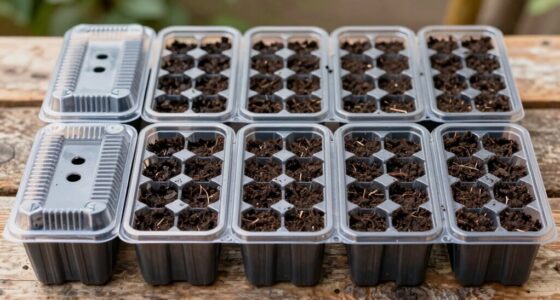
indoor hydroponic strawberry grow kit
As an affiliate, we earn on qualifying purchases.
As an affiliate, we earn on qualifying purchases.
Frequently Asked Questions
How Much Does It Cost to Set up a Hydroponic Strawberry System Indoors?
Setting up a hydroponic strawberry system indoors typically costs between $200 and $1,000, depending on your chosen setup. Your cost analysis should include equipment essentials like grow lights, a reservoir, pumps, and containers. Basic systems with DIY components are cheaper, while more advanced setups with automated controls and premium lighting increase costs. Factor in ongoing expenses like nutrients and electricity to get a complete picture of your investment.
Can Hydroponic Strawberries Be Grown Year-Round Indoors?
Yes, you can grow hydroponic strawberries indoors year-round. To do this successfully, you need proper indoor lighting that mimics sunlight and consistent nutrient management to support healthy growth. You’ll want to guarantee your setup provides enough light duration and intensity, along with balanced nutrients, especially during flowering and fruiting. Regular monitoring and adjustments help keep your strawberries thriving indoors throughout the year, regardless of external seasons.
What Are Common Pests Specific to Indoor Hydroponic Strawberries?
Pests like spider mites, aphids, and fungus gnats are common troublemakers in your indoor hydroponic strawberry garden. You need to master pest identification quickly, as these tiny invaders can spread like wildfire. Organic treatments—such as neem oil or insecticidal soap—are your first line of defense, helping you keep your strawberries healthy without harsh chemicals. Staying vigilant guarantees your crop stays pest-free and thriving indoors.
How Do I Prevent Mold and Fungal Issues Indoors?
To prevent mold and fungal issues indoors, you should guarantee good air circulation around your hydroponic strawberries by using fans or ventilation systems. Keep humidity levels in check, ideally between 50-60%, to discourage fungal growth. Regularly clean your setup and remove any dead or decaying plant material. Monitoring humidity and maintaining proper airflow help create an environment that’s less hospitable to mold and fungi, keeping your strawberries healthy.
What Is the Average Yield per Plant Indoors?
On average, a hydroponic strawberry plant indoors yields about 1 to 1.5 pounds per season. You’ll want to explore soil alternatives like coconut coir and focus on precise nutrient management to maximize growth. Proper lighting, temperature control, and preventing mold are key. With ideal conditions, your plants can produce consistent, high-quality berries, making indoor hydroponic setups both rewarding and efficient.
pest control for hydroponic strawberries
As an affiliate, we earn on qualifying purchases.
As an affiliate, we earn on qualifying purchases.
Conclusion
Growing hydroponic strawberries indoors can be rewarding, but it’s not without its challenges. You’ll need to carefully manage light, nutrients, and environment to keep your plants healthy. Did you know that indoor hydroponic systems can produce up to 30% more fruit than traditional soil methods? With a bit of patience and attention, you can enjoy fresh, juicy strawberries year-round. Just stay vigilant, and you’ll master the art of indoor hydroponic strawberry growing.
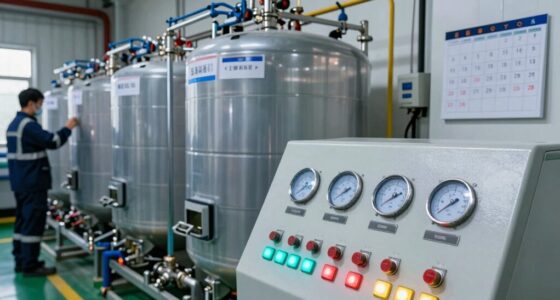
hydroponic nutrient solution monitor
As an affiliate, we earn on qualifying purchases.
As an affiliate, we earn on qualifying purchases.
indoor climate control for hydroponics
As an affiliate, we earn on qualifying purchases.
As an affiliate, we earn on qualifying purchases.
Fall Picks
fall essentials
As an affiliate, we earn on qualifying purchases.