To monitor water level changes in your hydroponic reservoir, regularly check sensor data and perform visual inspections to confirm accuracy. Keep track of fluctuations caused by evaporation, plant uptake, or leaks, and log these changes over time. Calibrate your sensors frequently to avoid drift and verify sensor readings against physical water levels. Consistent maintenance and observation help detect issues early, ensuring reliable operation. If you keep at it, you’ll gain a clearer understanding of your system’s water dynamics.
Key Takeaways
- Regularly monitor sensor readings alongside visual water level checks for accuracy.
- Track water level fluctuations over time to identify trends or leaks.
- Calibrate sensors periodically to ensure precise water level measurements.
- Observe changes caused by evaporation, plant uptake, or system leaks.
- Maintain logs of water levels and maintenance activities for accurate trend analysis.
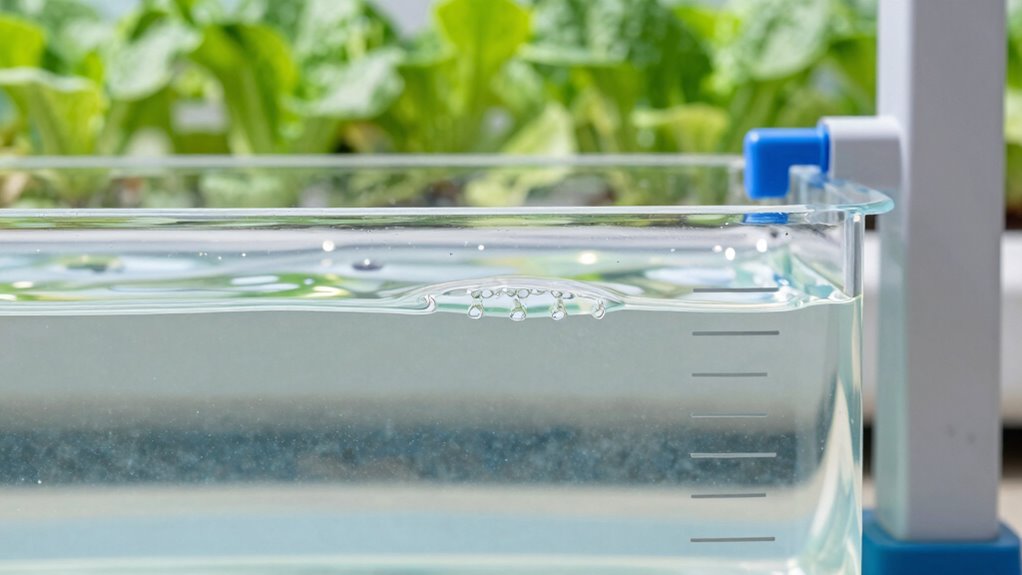
Have you ever wondered how to accurately monitor water levels in your hydroponic reservoir? Keeping track of water levels is essential for healthy plant growth and system efficiency. To do this effectively, you need to understand the importance of sensor calibration and reservoir maintenance. Proper sensor calibration ensures your water level readings are precise, preventing overflows or dry-out conditions that can harm your plants. Over time, sensors can drift from their original calibration, so regular adjustments are necessary to maintain accuracy. Check the manufacturer’s instructions or use known reference points, like empty or full reservoir levels, to recalibrate your sensors periodically. This simple step can save you from costly mistakes and help you maintain a stable environment for your crops. Regularly verifying sensor accuracy and understanding how to correct drift is key to reliable monitoring.
Reservoir maintenance is equally important in reading water level changes accurately. Regularly inspecting your reservoir for buildup, algae, or debris helps guarantee sensors function correctly. Sediment or algae can interfere with sensor readings or cause false alarms, so cleaning your reservoir and sensor surfaces frequently is essential. Maintaining a clean reservoir also reduces the risk of clogging or damage to your system, which could lead to inaccurate water level measurements. When performing maintenance, verify the physical water level against sensor readings to identify any discrepancies. If you notice inconsistencies, it’s a sign to recalibrate your sensors or check for potential issues like sensor misplacement or damage.
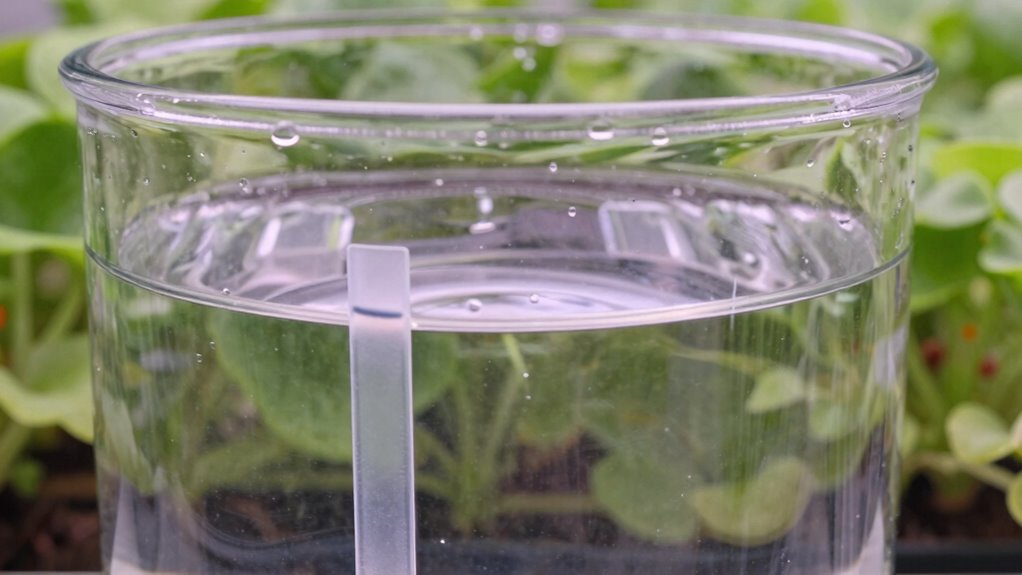
Understanding how water levels fluctuate in your reservoir is essential. Changes may occur due to evaporation, plant uptake, or system leaks. Monitoring these variations over time allows you to anticipate when to refill or troubleshoot problems. Use a combination of visual checks and sensor data for an all-encompassing view. If your sensors include alarms or digital readouts, familiarize yourself with their operation, so you can respond promptly to any abnormal changes. Keep detailed logs of water levels and maintenance activities to track trends and identify patterns. This proactive approach helps prevent emergencies, such as running dry during peak growth periods, which can stunt plant development. Recognizing the impact of sensor drift and performing regular calibration helps ensure accurate readings and system reliability.

DECHOUS 4Pcs Water Level Indicator, Plants Water Shortage Reminder Water Level Gauge Potted Plants Water Meter Reminder Water Level Display Indicator for Indoor Plants, 9in/180ml
Accurate Water Level Indicator: Our 4Pcs Water Level Indicator is specifically designed to accurately measure the water level…
As an affiliate, we earn on qualifying purchases.
As an affiliate, we earn on qualifying purchases.
Frequently Asked Questions
What Are the Common Causes of Sudden Water Level Drops?
Sudden water level drops often happen due to reservoir evaporation, especially during hot weather or low humidity, which causes rapid water loss. Pump malfunctions also contribute, such as leaks or failure to circulate water properly, leading to quick level drops. Regularly inspecting your pump and monitoring environmental conditions helps prevent these issues. Addressing evaporation and pump problems promptly guarantees your hydroponic system stays balanced and avoids water shortages.
How Often Should I Check Water Levels in My Reservoir?
You should check water levels in your reservoir daily to guarantee proper reservoir maintenance and prevent issues that could impact water quality. Regular monitoring helps you catch sudden drops early, allowing timely adjustments. Consistent checks also help you maintain ideal water levels, which promotes healthy plant growth and system efficiency. Keep a routine, especially during peak growth periods or hot weather, to safeguard your hydroponic system’s success.
Can Water Level Fluctuations Indicate Nutrient Imbalances?
Ever wonder if water level fluctuations hint at nutrient issues? They can, signaling nutrient deficiency or pH imbalance. When levels drop unexpectedly, it might mean plants are absorbing more nutrients or there’s a leak. Conversely, rising levels could indicate overfeeding or poor absorption. Regularly monitor water levels and test nutrient concentrations to catch imbalances early, ensuring your hydroponic system stays healthy and productive.
What Tools Are Best for Precise Water Level Measurement?
You should use a reliable water level sensor, like a float switch or ultrasonic sensor, for precise measurements. Guarantee sensor calibration regularly to maintain measurement accuracy, preventing errors that could affect your nutrient delivery. Opt for digital sensors with high resolution for better precision. Regular calibration and choosing high-quality tools help you monitor water levels effectively, avoiding fluctuations that might signal issues in your hydroponic system.
How Does Temperature Affect Water Level Readings?
Temperature effects can cause water level readings to fluctuate, as water expands when warm and contracts when cold. This variation can lead to inaccurate measurements if sensors aren’t properly calibrated for temperature changes. To maintain accuracy, you should regularly calibrate your sensors considering temperature effects, ensuring they account for water expansion or contraction. Proper calibration helps you get precise water level readings, even as temperature fluctuates throughout your hydroponic system.
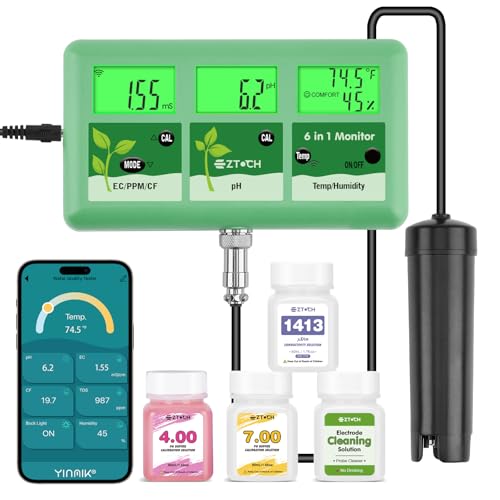
EZTOCH pH EC Continuous Monitor for Hydroponic, 6 in 1 WiFi EC PPM CF pH Meter, Digital pH TDS Temp Humidity Conductivity Monitor for DWC Hydroponic System, Aeroponic Gardening, Aquaponic
6-IN-1 Smart Continuous Monitoring: The EZTOCH pH EC hydroponic monitor lets you say goodbye to complicated multi-device monitoring….
As an affiliate, we earn on qualifying purchases.
As an affiliate, we earn on qualifying purchases.
Conclusion
By mastering how to read water levels in your hydroponic reservoir, you open the silent language of growth and patience. Each fluctuation symbolizes a promise—of nourishment, of life’s delicate balance, and your dedication. When you trust these subtle changes, you’re nurturing more than plants; you’re cultivating resilience and harmony. Let each rise and fall remind you that, just like nature, your garden thrives on attentive care and unwavering hope.
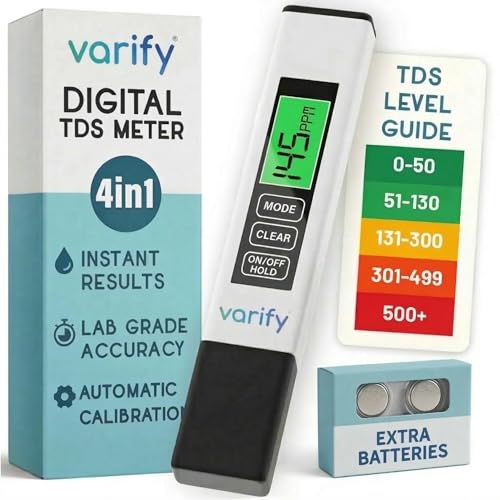
Instant 4-in-1 TDS Meter Digital Water Tester for Drinking Water | Accurate 0–9990 PPM EC & Temp Readings | Ideal for RO Systems, Aquariums, Pools – Built for Professionals, Easy for Anyone
4-IN-1 WATER TESTING METER – Measures Total Dissolved Solids (TDS), Electrical Conductivity (EC), and temperature in °C/°F. Compact…
As an affiliate, we earn on qualifying purchases.
As an affiliate, we earn on qualifying purchases.

TAGVO Hydration Bladder Cleaning Kit, 6 in 1 Water Bladder Cleaner Set – 3 Brushes, Collapsible Hanger, 12 Cleaning Tablets & Carry Pouch, Water Reservoir Backpack Cleaning Tools
【6-in-1 Cleaning Kit for Water Bladder】This hydration bladder cleaning kit includes: 1 long-handle bladder brush, 1 small bite…
As an affiliate, we earn on qualifying purchases.
As an affiliate, we earn on qualifying purchases.