The best rose care products depend on whether your priority is feeding, pest control, or disease prevention. I rank Bonide Captain Jack’s Rose Rx 4-in-1 Neem Oil Spray as the best overall for its combined insect and disease-control focus, while Dr. Earth Total Advantage Rose & Flower Fertilizer stands out for gardeners seeking a dedicated fertilizer. For simpler feeding, Jobe’s Rose Fertilizer Spikes offer a low-mess format. The main tradeoff is choosing a targeted product for a specific problem versus a broader routine that may involve separate treatments. Read on for how all 11 options compare and which one fits your roses.

Get the little things that make your day delivered free with Prime
- Fast, free delivery on millions of items
- Prime Video, Amazon Music and more included
- Member-only deals all year
Key Takeaways
- Rose Rx 4-in-1 Neem Oil Spray earns the lead because it combines insect and disease-control functions; it is not a substitute for fertilizer.
- Rose Rx 16 oz and 32 oz share the same product concept, so the practical difference is package size rather than a distinct treatment role.
- Fertilizers vary more by delivery format than headline purpose: spikes and granules suit slower, less frequent routines, while water-soluble food calls for mixing and repeat application.
- BioAdvanced offers separate treatment paths: the concentrate and all-in-one granules address different routines, while its insect-killer spray is the more focused choice for insect problems.
- Organic and conventional choices are not interchangeable: Jobe’s Organics and Dr. Earth focus on feeding, while disease and insect products serve a different job.

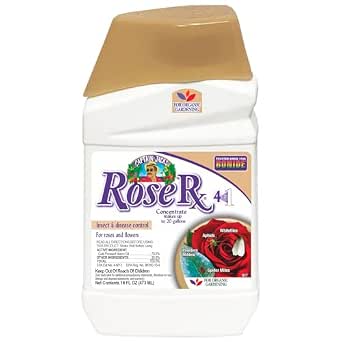


| rose care product | Brand | Form | Model number |
|---|---|---|---|
| Bonide Captain Jack’s Rose Rx | Bonide | Ready-to-use spray | 820 |
| Captain Jack’s Rose Rx 4-in-1 | Bonide | Ready-to-mix concentrate | 817 |
| Farmer’s Secret Rose Booster F | Farmer’s Secret | Liquid | FSRose |
| BioAdvanced Disease Control Co | BioAdvanced | — | — |
| BioAdvanced All-in-One Rose an | BioAdvanced | — | 701116E |
| Dr. Earth Total Advantage Rose | Dr. Earth | Granules | DR EARTH – 702P |
| Great Big Roses Fertilizer Boo | Great Big Plants | Liquid concentrate | — |
| Jobe’s Rose Fertilizer Spikes | Jobe’s | Sticks | 4102 |
| Miracle-Gro Water Soluble Rose | Miracle-Gro | Powder | 2000221 |
| BioAdvanced Rose & Flower Inse | BioAdvanced | Spray | — |
| Jobe’s Organics Granular Rose | Jobe’s Organics | Granules | 09426 |
More Details on Our Top Picks
Bonide Captain Jack’s Rose Rx 4-in-1 Neem Oil Insect and Disease Control Spray, 32 oz
I’d choose this ready-to-use neem spray when convenience matters more than stretching a concentrate. It combines insect, mite, nematode, and disease control in one bottle, so rose growers can address several listed problems without mixing a batch. Compared with the 16-ounce Captain Jack’s Rose Rx concentrate, this version is simpler to apply but gives up the concentrate’s stated coverage of up to 20 gallons. Its cold-pressed neem oil and organic-gardening approval may suit gardeners seeking that approach, and its listed uses extend beyond roses to other indoor and outdoor plants. The tradeoff is ongoing maintenance: the label calls for repeat applications, and ready-to-use convenience can mean going through the bottle faster across a large garden. I’d pick it for targeted, straightforward care, not bulk spraying.
Pros:- Combines listed insect, mite, nematode, and disease control
- Ready to spray without measuring or mixing
- Cold-pressed neem oil is approved for organic gardening
- Can be used on a range of indoor and outdoor plants
Cons:- Requires repeat applications as directed on the label
- Does not offer the concentrate’s stated coverage of up to 20 gallons
Best for: Rose gardeners with a small collection of plants who want a premixed neem option for indoor or outdoor use.
Not ideal for: Growers treating many roses or a large garden who would benefit from the diluted coverage of the 16-ounce concentrate.
- Brand:Bonide
- Volume:32 fl oz
- Form:Ready-to-use spray
- Active ingredient:Cold-pressed neem oil
- Uses:Fungicide, insecticide, miticide, and nematicide
- Application:Foliar spray or soil drench
- Model number:820
Our verdict“Choose this bottle for convenient, small-scale neem treatment; choose Captain Jack’s 16-ounce concentrate when broad coverage matters more.”
Captain Jack’s Rose Rx 4-in-1 Insect & Disease Control (16 oz)
For gardeners treating a broad rose bed, I’d favor this concentrated neem formula over Bonide’s 32-ounce ready-to-use spray. One 16-ounce bottle makes up to 20 gallons, giving it a clear coverage advantage when repeated applications are part of the routine. It offers the same four listed categories of protection—insect, fungal disease, mite, and nematode control—using cold-pressed neem oil approved for organic gardening. That flexibility also suits mixed plantings, from roses to vegetables and houseplants. The catch is hands-on preparation: you must measure and mix it with water, then follow the label’s reapplication directions, listed as every 7–10 days for optimal control. Compared with the ready-to-use version, this is less convenient for a quick spot treatment but better suited to regular, larger batches.
Pros:- One bottle makes up to 20 gallons when mixed
- Combines four listed types of insect and disease protection
- Cold-pressed neem oil is approved for organic gardening
- Listed for use on roses and a range of other plants
Cons:- Must be diluted with water before use
- The description calls for reapplication every 7–10 days for optimal control
Best for: Rose growers with multiple beds or mixed plantings who are comfortable measuring concentrate to prepare spray or drench.
Not ideal for: Gardeners seeking an immediate, premixed treatment or those who do not want to manage dilution and frequent reapplication.
- Brand:Bonide
- Size:16 oz
- Form:Ready-to-mix concentrate
- Model number:817
- Coverage:Up to 20 gallons when mixed
- Active ingredient:Cold-pressed neem oil
- Application:Foliar spray or soil drench
- Listed reapplication interval:Every 7–10 days for optimal control
Our verdict“Pick this concentrate for regular coverage across a sizable rose garden, and choose the 32-ounce ready-to-use spray for simpler spot treatments.”
Farmer’s Secret Rose Booster Fertilizer, 8 oz
This pick is for rose growers who want a rose-specific liquid feed and don’t mind adding a weekly task during the growing season. Its mixing direction—two teaspoons per gallon—makes a small bottle go further than its size suggests, while the stated use across rose varieties and life stages keeps the routine straightforward. Unlike BioAdvanced All-in-One Rose and Flower Care Granules, it focuses on fertilizer rather than combining feeding with insect and disease control. That narrower purpose can appeal to gardeners who prefer to handle rose nutrition separately. The main limitation is the product information: it does not identify specific nutrients or ingredients, so I can’t compare its nutrient profile with other fertilizers such as Dr. Earth Total Advantage Rose & Flower Fertilizer. It also requires dilution and regular application.
Pros:- Formulated for all rose varieties throughout their life cycle
- Two teaspoons makes one gallon of diluted solution
- Provides a stated weekly feeding routine for the growing season
Cons:- Requires measuring and dilution before application
- Product details do not specify its ingredients or nutrient analysis
- Weekly use adds a recurring task during the growing season
Best for: Rose gardeners who prefer a concentrated, rose-specific liquid feed and are willing to mix it weekly during the growing season.
Not ideal for: Buyers who want a clearly listed nutrient profile, a low-maintenance feeding schedule, or fertilizer bundled with pest and disease control.
- Brand:Farmer’s Secret
- Model number:FSRose
- Unit count:7.98 fluid ounces
- Form:Liquid
- Target species:Roses
- Mixing ratio:2 teaspoons per 1 gallon
- Application frequency:Weekly during the growing season
Our verdict“Choose Farmer’s Secret for a concentrated weekly rose-feeding routine, but look elsewhere if nutrient details or bundled pest control are priorities.”
BioAdvanced Disease Control Concentrate for Roses, Flowers & Shrubs, 32 oz
I’d select this concentrate when the main concern is listed plant diseases rather than a combination of pests and feeding. Its systemic fungicide targets diseases including black spot and powdery mildew, and the 32-ounce bottle makes up to 42 gallons of spray. Once dry, the stated rainproof protection lasts up to two weeks, which can mean fewer repeat treatments than Captain Jack’s 16-ounce Rose Rx concentrate, whose guidance calls for reapplication every 7–10 days for optimal control. The difference is scope: this is a disease-control product, not the four-in-one insect, mite, nematode, and disease treatment offered by Rose Rx. It also requires dilution, and houseplants must be treated outdoors. State shipping restrictions may rule it out for some buyers, so check availability before choosing it.
Pros:- Targets listed diseases including black spot and powdery mildew
- One 32-ounce container makes up to 42 gallons of spray
- Rainproof protection lasts up to two weeks once dry
- Listed for roses and a range of other ornamental plants
Cons:- Controls diseases rather than combining fungicide with insect control
- Houseplants must be treated outdoors
- Unavailable for sale or shipment in some states
Best for: Rose growers seeking a concentrated systemic fungicide for listed diseases on outdoor ornamental plants.
Not ideal for: Gardeners who need insect control in the same product, cannot treat houseplants outdoors, or live in a restricted shipping area.
- Brand:BioAdvanced
- Product type:Systemic fungicide concentrate
- Volume:32 fluid ounces
- Active ingredient:Tebuconazole 2.9%
- Coverage:Makes up to 42 gallons of spray
- Protection duration:Up to 2 weeks once dry
- Target plants:Roses, flowers, trees, shrubs, vines, and houseplants treated outdoors
- Restrictions:Not for sale or shipment to New York; no shipment to Alaska or Hawaii
Our verdict“Choose this for concentrated, longer-lasting listed disease control on outdoor roses; choose Captain Jack’s Rose Rx if you also need insect and mite control.”
BioAdvanced All-in-One Rose and Flower Care Granules, 4 lb
For gardeners who want feeding and listed pest and disease protection in one application, these systemic granules offer a different routine from both spray concentrates in this roundup. They combine fertilizer, insect control, and disease control, and the rain-resistant formula is stated to protect for up to six weeks. Because application does not involve spraying or mixing, this format may suit rose beds where repeated foliar treatments feel like too much work. Compared with BioAdvanced Disease Control Concentrate, it covers more functions but is not a fungicide-only choice; compared with Captain Jack’s neem concentrate, it avoids spray preparation but contains acephate and tebuconazole. Those active ingredients and the listed state restrictions make it a less fitting choice for gardeners seeking neem-based or more narrowly targeted care. Check local rules before buying.
Pros:- Combines fertilizer, insect control, and disease control
- Granules require no spraying
- Rain-resistant protection is stated to last up to six weeks
- Provides a longer interval between applications than the Rose Rx concentrate’s stated schedule
Cons:- Contains acephate and tebuconazole
- Not for sale in New York, and Florida restrictions apply
- Combines several functions, so it is less suited to buyers seeking disease control alone
Best for: Rose gardeners who want a no-spray application combining fertilizer with listed insect and disease control for up to six weeks.
Not ideal for: Gardeners seeking neem-based treatment, a fungicide-only product, or an option available without the listed state restrictions.
- Brand:BioAdvanced
- Product form:Granules
- Weight:4 lb
- Functions:Fertilizer, insect control, and disease control
- Protection duration:Up to 6 weeks
- Active ingredients:1.50% acephate; 0.48% tebuconazole
- Model number:701116E
- Restrictions:Not for sale in New York; Florida restrictions apply
Our verdict“Choose these granules for a low-spray, multi-function rose-care routine, but skip them if you want neem-based care or live where restrictions apply.”
Dr. Earth Total Advantage Rose & Flower Fertilizer 4 lb
For rose growers who want a certified-organic granular feed that also suits the rest of a flower garden, Dr. Earth is the most flexible choice in this group. Its blend includes minerals, proteins, humic acids, and trace elements, aiming to support soil as well as blooms. Compared with Jobe’s Rose Fertilizer Spikes, it can serve more plant types, though it takes more care to apply than simply placing a pre-measured spike. The 4-pound bag is a practical size for a modest garden, but larger beds may need multiple bags. The listed 1:1 mixing ratio may also take some interpretation for new gardeners, so I’d favor it for buyers comfortable following fertilizer directions and checking the product label.
Pros:- Certified organic and Non-GMO Project Verified blend
- Suitable for roses and a broad range of flowering plants
- Includes humic acids, trace elements, and multi-minerals
- Granular form avoids the repeated dilution required by liquid feeds
Cons:- The 4-pound bag may be insufficient for larger gardens
- The stated 1:1 mixing ratio may be unclear to novice users
Best for: Rose gardeners who want an organic granular fertilizer they can also use on flowering shrubs, annuals, and perennials.
Not ideal for: New gardeners who want simple, unambiguous application directions, or owners of large rose beds who need more product at once.
- Brand:Dr. Earth
- Model number:DR EARTH – 702P
- Package size:4 lb (64 oz)
- Form:Granules
- Mixing ratio:1:1
- Target plants:Roses, flowers, flowering trees, shrubs, annuals, and perennials
Our verdict“Choose Dr. Earth for an organic, multi-plant granular feed; choose Jobe’s spikes instead if you want a simpler, rose-specific application.”
Great Big Roses Fertilizer Booster for Roses and Flower Gardens, 32 fl oz
Great Big Roses is a liquid soil-conditioning booster, not a standalone replacement for a regular fertilizer program. Its living compost ecology, humic acids, kelp, and trace minerals are intended to support soil and root development, which makes it a different kind of pick from Miracle-Gro Water Soluble Rose Plant Food, a direct-feed powder used on a frequent schedule. One bottle makes 8 gallons of solution, and the directions call for 4 ounces per gallon, but you’ll need to dilute it and apply it repeatedly during the growing season. It also calls for an existing fertilizer, adding another step rather than simplifying rose care. I’d choose it for gardeners who want a supplementary soil treatment across several plant types, not for anyone seeking a single-product feeding routine.
Pros:- Includes living compost ecology, humic acids, kelp, and trace minerals
- Can be used on roses, flowers, hydrangeas, citrus, and perennials
- One 32-ounce bottle makes 8 gallons of solution
- Designed to support soil conditioning and root development
Cons:- Must be used alongside an existing fertilizer
- Requires dilution and repeat applications during the growing season
- The pour-around-plant directions add work compared with ready-to-use products
Best for: Gardeners already using a fertilizer who want a diluted soil-conditioning supplement for roses and other flowering plants.
Not ideal for: Rose growers seeking a standalone fertilizer or a low-effort option without recurring mixing and applications.
- Brand:Great Big Plants
- Form:Liquid concentrate
- Volume:32 fl oz
- Coverage:Makes 8 gallons
- Mixing ratio:4 oz per gallon of water
- Recommended frequency:Twice monthly during the growing season; monthly thereafter
- Target plants:Roses, flowers, hydrangeas, citrus, and perennials
Our verdict“Pick Great Big Roses as a supplementary soil treatment if you are willing to mix and reapply it alongside your regular fertilizer.”
Jobe’s Rose Fertilizer Spikes, 10 Count (Pack of 2)
Jobe’s stands out for gardeners who want to feed roses without measuring powder or carrying a watering can from plant to plant. Its pre-measured spikes go directly into the soil, placing nutrients near the roots and avoiding the surface application used by granular options such as Dr. Earth Total Advantage. That convenience comes with a narrower fit: these spikes target roses, while Dr. Earth and Great Big Roses Booster can also serve other garden plants. The slow-release format suits buyers who prefer a direct, low-mess routine, but it offers less flexibility than a soluble feed that can be adjusted and applied through water. I’d choose this pack for established rose plantings where simple placement matters more than multi-purpose use.
Pros:- Pre-measured spikes simplify application
- Slow-release format provides ongoing nourishment
- Placed in the soil near rose roots rather than scattered on the surface
- Pack includes 20 spikes in a resealable, waterproof pouch
Cons:- Designed for roses, so it is less versatile for mixed gardens
- Requires inserting spikes into soil around each plant
- Does not offer the water-based application flexibility of soluble plant food
Best for: Rose owners with established plants who want a pre-measured, low-mess feeding method without mixing fertilizer into water.
Not ideal for: Gardeners feeding mixed flower beds who want one product for several plant types, or those who prefer to adjust feeding through watering.
- Brand:Jobe’s
- Model number:4102
- Pack quantity:20 spikes
- Item weight:2.4 lb
- Form:Sticks
- Application method:Insert into soil
- Target species:Roses
Our verdict“Choose Jobe’s spikes for straightforward, low-mess feeding of rose plants, but select Dr. Earth if you need a product for a wider range of flowers.”
Miracle-Gro Water Soluble Rose Plant Food, 1.5 lb
For gardeners who want a water-soluble rose feed that can be applied with familiar watering equipment, Miracle-Gro is the most direct option here. The powder feeds through water and can go into a watering can or garden feeder, giving it a faster, more adjustable routine than Jobe’s slow-release spikes. That flexibility means more upkeep: the label calls for feeding every 7 to 14 days, and each application requires mixing. The package covers approximately 600 square feet when used as directed, which helps buyers gauge its fit for a garden bed. Unlike Dr. Earth Total Advantage, this is targeted to roses rather than a broad selection of flowering plants. I’d choose it for rose growers who value frequent, water-based feeding and are willing to keep to the schedule.
Pros:- Water-soluble powder feeds roses through irrigation
- Can be applied with a watering can or Miracle-Gro Garden Feeder
- Suitable for all types of roses
- Package covers approximately 600 square feet when used as directed
Cons:- Requires reapplication every 7 to 14 days
- Must be mixed with water before each application
- Rose-specific use is less versatile than Dr. Earth’s multi-plant fertilizer
Best for: Rose gardeners who already water with a can or garden feeder and want a soluble feed they can apply on a regular schedule.
Not ideal for: Busy growers who want slow-release feeding, dislike repeated mixing, or need one fertilizer for a variety of garden plants.
- Brand:Miracle-Gro
- Model number:2000221
- Package weight:1.5 lb
- Form:Powder
- Coverage:Approximately 600 sq. ft.
- Feeding frequency:Every 7 to 14 days
- Outdoor mixing ratio:1.5 tbsp per 1.5 gal of water
- Application method:Watering can or garden feeder
Our verdict“Choose Miracle-Gro if you want a water-based rose feed and can keep up with frequent applications; pick Jobe’s spikes for a less repetitive routine.”
BioAdvanced Rose & Flower Insect Killer Spray, 24 oz
Unlike the fertilizers elsewhere in this roundup, BioAdvanced addresses a specific rose-care problem: listed insect pests. The ready-to-use spray kills more than 100 listed pests on contact, including aphids and Japanese beetles, and offers protection for up to 14 days. That makes it a more direct choice for an active insect problem than a general feeding product such as Miracle-Gro Water Soluble Rose Plant Food, which supplies nutrients but is not an insect treatment. The tradeoff is equally clear: it contains cyfluthrin, and its protection applies only to listed insects for a limited period. It is not a treatment for rose diseases, so buyers seeking broader insect-and-disease care should compare it with the roundup’s Rose Rx products. I’d choose it when quick, ready-to-spray insect control is the priority.
Pros:- Ready-to-use spray avoids concentrate dilution
- Kills more than 100 listed insect pests on contact
- Protection lasts up to 14 days
- Suitable for roses, flowers, shrubs, and vegetable gardens
Cons:- Contains the insecticide cyfluthrin
- Protection is limited to listed insects and lasts up to 14 days
- Does not provide the combined insect-and-disease focus of Rose Rx products
Best for: Gardeners who need a ready-to-use spray for listed insect pests on roses, flowers, shrubs, or vegetable gardens.
Not ideal for: Buyers seeking fertilizer, disease control, or an insect treatment without cyfluthrin.
- Brand:BioAdvanced
- Volume:24 fl oz
- Form:Spray
- Active ingredient:Cyfluthrin 0.003%
- EPA registration number:92564-18
- Protection duration:Up to 14 days
- Application:Ready to use
Our verdict“Choose BioAdvanced for quick, ready-to-use control of listed insect pests, not as a substitute for rose fertilizer or disease treatment.”
Jobe’s Organics Granular Rose Fertilizer, 4 lb
Jobe’s Organics Granular Rose Fertilizer is a straightforward pick for gardeners who want a rose-focused feed without synthetic ingredients. Its 3-4-3 NPK blend supplies balanced nutrients for flowering and foliage, while the OMRI listing may appeal to gardeners following organic practices. Unlike Jobe’s Rose Fertilizer Spikes, these granules let you distribute the feed across beds or around individual shrubs, but they take more hands-on measuring and spreading. The recommended six-week schedule also means more repeat work than a single application product may require. At four pounds, the bag suits several shrubs better than a tiny booster, though it can be messy if scattered too heavily. Choose it for routine organic feeding, not for insect or disease control.
Pros:- OMRI-listed organic blend with no synthetic chemicals
- 3-4-3 formula is designed for roses and other flowering shrubs
- Granules can be spread across beds or around individual plants
- Four-pound package supports repeat applications across multiple shrubs
Cons:- Requires reapplication about every six weeks during the blooming season
- Granules may be messy or lead to overapplication if spread carelessly
Best for: Rose gardeners who want an OMRI-listed granular fertilizer for several shrubs and are comfortable reapplying it during the blooming season.
Not ideal for: Gardeners seeking a low-maintenance, one-step feeding method or a product that also controls pests and diseases.
- Brand:Jobe’s Organics
- Model number:09426
- Package weight:4 lb
- Form:Granules
- NPK ratio:3-4-3
- Target plants:Roses, hydrangeas, hibiscus, azaleas, and other flowering shrubs
- Application frequency:Every 6 weeks during the blooming season, or as needed
- Organic listing:OMRI listed
Our verdict“Choose this for repeat organic feeding of rose beds; choose Jobe’s Rose Fertilizer Spikes instead if you prefer a more contained application.”

How We Picked
I compared the 11 products by the job they do for roses: nutrition, insect management, disease control, or a combination. I gave more weight to clear usefulness within a routine, practical application formats, and how well each option matches a common buyer need than to broad claims alone. Products with distinct functions are not treated as direct substitutes: a fertilizer cannot take the place of an insect or disease treatment.
The ranking favors useful versatility first, then dependable fit for a specific task and ease of choosing an application method. That puts Rose Rx 4-in-1 at the top for shoppers seeking one product aimed at multiple issues, while dedicated fertilizers and targeted sprays rank higher for buyers with narrower needs. I also accounted for format tradeoffs—mixing, measuring, placement, and package size—so a strong choice for one gardener does not automatically rank as the best for everyone.
Factors to Consider When Choosing Best Rose Care Products
Rose care is a set of separate decisions, not a single product category. I would start by identifying the problem or routine you need to support, then match the product’s purpose and application method to the way you garden.
Start With the Problem, Not the Label
Decide whether your roses need feeding or help with insects or disease before choosing a product. A general-purpose-sounding name does not mean a product performs every kind of care. Fertilizers supply plant nutrients, while sprays and other treatments target particular pests or diseases. A combination product can reduce the number of separate purchases, but it may include functions you do not need. Avoid applying multiple products simply because each claims a different benefit; check labels for compatible uses and directions. If the problem is unclear, identify the symptoms before selecting a treatment.
Match the Format to Your Routine
Application format affects how much attention a product asks of you. Spikes and granules can fit gardeners who prefer to place or spread a product rather than mix it, while water-soluble foods and concentrates require measuring and preparation. Ready-to-use sprays remove mixing but still require careful coverage and label-directed timing. Consider how many plants you have and whether you can reach all sides of them. A convenient format can make regular care easier, but it does not excuse skipped directions. Choose the method you can repeat accurately.
Separate Feeding From Pest and Disease Control
Healthy feeding habits and problem treatments address different needs, so plan for them separately even when a product combines some functions. More fertilizer is not a remedy for insect damage or leaf disease, and unnecessary treatment can add work without addressing the cause. Check the label to see what the product is intended to control and what it does not cover. Keep a simple record of applications so you do not accidentally repeat a treatment too soon. If you are choosing a combination formula for convenience, confirm that its stated uses match the issue affecting your roses.
Choose a Feeding Approach You Can Maintain
Rose fertilizers differ in ingredients, release style, and application routine, so the right choice depends on your gardening habits as well as the plant. Granular products and spikes avoid repeated mixing, while soluble food calls for a measured dose in water. Organic formulas may appeal to gardeners who prefer that approach, but the label still determines application rate and frequency. Do not assume that a stronger dose will produce more flowers; follow directions and account for any other fertilizer already in use. When comparing packages, look at how they fit your number of plants and intended routine, not just the package weight.
Know When Paying for Versatility Makes Sense
A product with more than one stated function can be useful when you routinely manage several rose problems, but extra functions are not automatically extra value. If you only need fertilizer, a dedicated food may be a more direct choice. If you have a specific insect issue, a targeted insect-control product may suit that task better than a broad routine product. Consider the time saved by fewer separate applications alongside the risk of buying functions you will not use. Compare package size with how many roses you maintain, since a larger container may be inconvenient for a small garden. The best fit is the one whose purpose, format, and quantity match your real workload.
Frequently Asked Questions
Can I use a rose fertilizer and an insect or disease spray together?
They serve different purposes, but that does not mean they should be mixed or applied at the same time. Check both labels for instructions about timing, plant safety, and compatibility before combining treatments. When directions are unclear, apply products separately rather than making an unapproved mixture. Keep track of what you apply so you do not repeat a treatment too soon. A fertilizer will not replace a treatment for a confirmed pest or disease problem.
Should I buy the 16-ounce or 32-ounce Rose Rx spray?
The two listings share the Rose Rx 4-in-1 product concept, so choose based on how many roses you care for and how often you expect to use it. A smaller container can be easier to store and makes sense for a few plants or occasional use. A larger size may suit a bigger planting, provided you can use and store it according to the label. Check the directions and coverage details on the exact package before deciding. Do not choose a larger container solely because it appears to offer more product.
Are fertilizer spikes easier to use than granular rose food?
Spikes avoid spreading loose material across the soil, while granules can be easier to distribute around multiple plants or a larger bed. The better format depends on your garden layout and how precisely you want to place fertilizer. Spikes may be less convenient when you have many plants close together, while granules require care to apply evenly and follow the package directions. Neither format eliminates the need to water or maintain a consistent feeding routine when the label calls for it. Choose the one that suits your number of roses and available time.
Is an all-in-one rose product enough for a full care routine?
Not necessarily. A combination product may address more than one treatment need, but it does not automatically provide the nutrients in a dedicated fertilizer. Check its listed uses and ingredients against the care your roses need. If your main concern is feeding, a rose fertilizer may be more relevant; if you are managing insects or disease, select a product labeled for that issue. Avoid adding products without a clear purpose, and follow each label’s directions.
How should a beginner choose between organic fertilizer and soluble plant food?
Start with the application method you are more likely to follow correctly. Granular organic fertilizer is spread around plants, while soluble food requires measuring and mixing with water. Read the label for feeding frequency and amounts, then consider whether that routine fits your garden schedule. Organic labeling does not remove the need to apply the product as directed, and soluble products are not automatically harder to use. For a first purchase, favor clear directions and a format that suits the number of roses you have.
Conclusion
My best overall pick is Bonide Captain Jack’s Rose Rx 4-in-1 Neem Oil Spray for shoppers who want a combined insect and disease-control option. For best value in a dedicated feeding routine, compare Jobe’s Rose Fertilizer Spikes with Jobe’s Organics Granular Rose Fertilizer and choose the format that fits your garden. Dr. Earth Total Advantage is my best premium-style fertilizer choice for buyers who want a dedicated rose and flower food rather than a treatment spray. Beginners may find the Jobe’s spikes straightforward to place, while gardeners with a specific insect problem should look at BioAdvanced Rose & Flower Insect Killer Spray. If the issue is uncertain, identify it before buying; a fertilizer, insect killer, and disease treatment are not interchangeable.