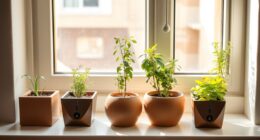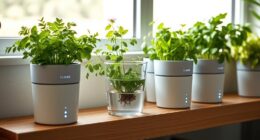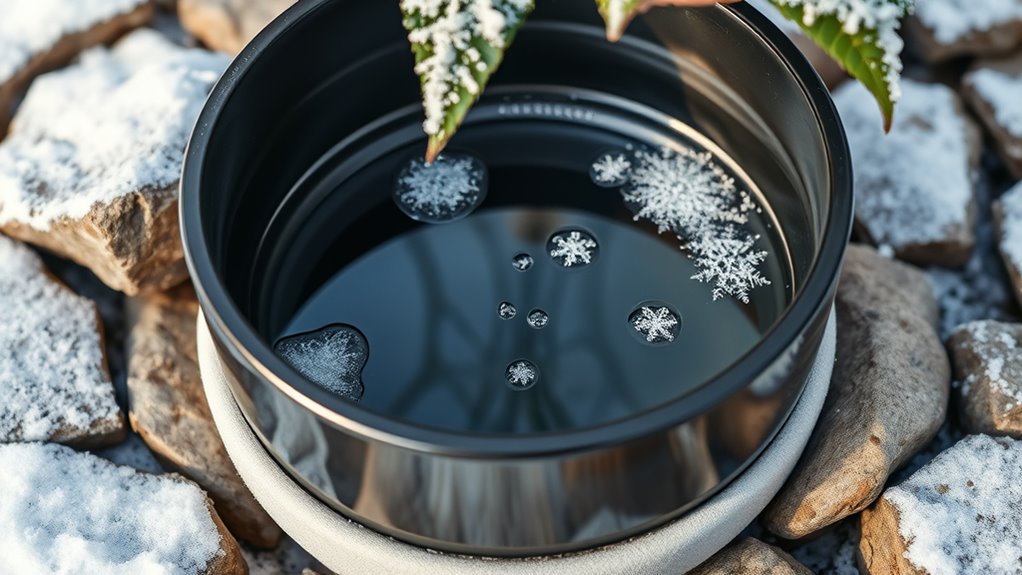
To prevent your self-watering pots from freezing and cracking, insulate them with bubble wrap, foam, or blankets, and elevate them off the ground to reduce cold transfer. Shelter your pots in a garage or under an awning, and use gravel at the bottom for drainage. Cover the soil with mulch or straw for extra warmth. If you’d like to discover more tips for winter-proofing your containers, keep exploring further steps.
Key Takeaways
- Insulate pots with bubble wrap, foam, or blankets to slow heat loss and prevent cracking caused by freezing water.
- Elevate pots on risers or bricks to avoid cold ground contact and reduce frost transfer.
- Ensure proper drainage with unblocked holes and gravel to prevent water pooling and freezing damage.
- Move pots to sheltered areas like garages or under awnings to protect from harsh winds and temperature fluctuations.
- Cover pot tops with mulch or straw and monitor weather to provide extra insulation and prevent cracks during cold spells.
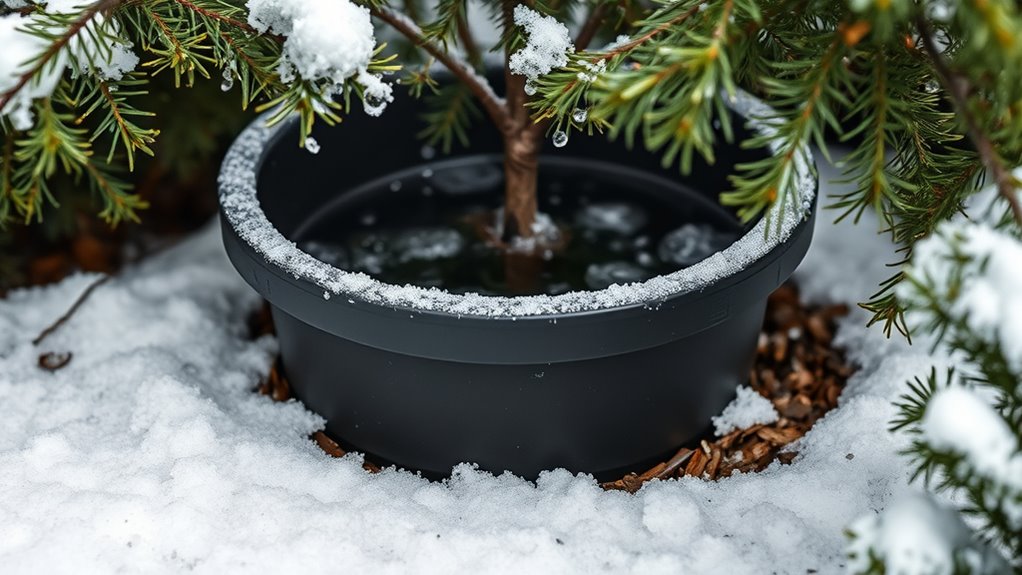
As winter approaches, it’s essential to adjust your self-watering pots to guarantee your plants stay healthy and thrive despite the cold temperatures. Freezing temperatures can cause water inside the pots to expand, which often leads to cracks and damage. To prevent this, you need to implement effective insulation methods. Wrapping your pots with materials like bubble wrap, foam insulation, or even old blankets can create a thermal barrier that slows down heat loss. You might also consider elevating your pots off the ground using risers or bricks, as cold ground can transfer frost to the base of your containers. Covering the top of your self-watering pots with mulch or straw adds an extra layer of insulation, helping to maintain a more stable root temperature. Recognizing recurring patterns in nature can also help in planning your winter care strategies more effectively.
Beyond insulation, drainage solutions play a key role in winter care. Proper drainage prevents water from accumulating and freezing at the bottom of the pots, a common cause of cracks. Ensure your self-watering pots have adequate drainage holes and that these are not blocked. If necessary, add gravel or small stones at the bottom of the pots to improve drainage and prevent water from pooling. When watering during winter, cut back on frequency, and be cautious not to over-saturate the soil, which can lead to excess water that freezes and causes damage. Using well-draining soil mixes designed for cold weather can also help manage moisture levels effectively.
You should also consider moving your self-watering pots to sheltered locations such as a garage, porch, or under an awning during the coldest months. This reduces exposure to harsh winds and fluctuating temperatures, further protecting your plants and the pots themselves. If moving the pots isn’t feasible, creating windbreaks around them with shields or fencing can help minimize cold drafts. Additionally, monitoring weather forecasts allows you to prepare for severe cold snaps by applying more insulation or temporarily bringing your pots indoors.
Frequently Asked Questions
Can Self-Watering Pots Be Used Indoors During Winter?
Yes, you can use self-watering pots indoors during winter. Make sure to place them away from direct indoor heating sources, which can cause the water to evaporate quickly. Position your plants in spots with consistent, moderate temperatures and good light. This helps prevent freezing and cracking of the pots. Regularly check the water levels and adjust placement if you notice temperature fluctuations, ensuring your plants stay healthy all winter long.
What Materials Are Best for Winter-Proof Self-Watering Pots?
Did you know that ceramic and terracotta pots can crack up to 20% more than plastic in freezing conditions? For winter-proof self-watering pots, opt for durable materials like thick plastic or composite resin, which resist cracking better. Use insulation techniques such as wrapping pots with bubble wrap or foam to prevent freezing. These choices help protect your plants and extend the life of your self-watering containers during cold weather.
How Often Should I Check for Ice Buildup in Winter?
You should check your self-watering pots daily during freezing temperatures for ice formation, especially if you notice fluctuating weather. Ice buildup can lead to frost damage, so remove any ice as soon as you see it. Regular checks help prevent cracks caused by expanding ice. By staying vigilant, you safeguard your plants and ensure your self-watering system stays functional throughout winter.
Are There Specific Plants That Tolerate Winter in Self-Watering Pots?
You should choose winter hardy, frost-tolerant plants for your self-watering pots. Plants like sedum, succulents, and certain herbs can survive cold temperatures, making them ideal for winter. These plants are resilient and can withstand frost, ensuring your pots stay healthy through winter months. Be sure to check your specific plant’s winter hardiness zone and provide extra insulation if temperatures drop markedly.
What Are Eco-Friendly Ways to Prevent Freezing in Self-Watering Systems?
To eco-friendly safeguard against freezing in your self-watering systems, you can use mulch insulation around the pots to retain warmth naturally. Additionally, place solar covers over the pots during cold nights to reflect sunlight and insulate them. These methods are sustainable, cost-effective, and help protect your plants without harmful chemicals. Combining mulch insulation and solar covers ensures your self-watering pots stay frost-free throughout winter.
Conclusion
As winter’s chill approaches, remember that even the sturdiest self-watering pots can falter if left unprotected—a reminder of Daedalus’s caution in crafting wings that must be carefully maintained. By taking these simple steps, you safeguard your plants and honor the delicate balance between nature and nurture. Stay vigilant, and like Icarus, avoid overreach; your garden’s resilience depends on your mindful care through the cold months.