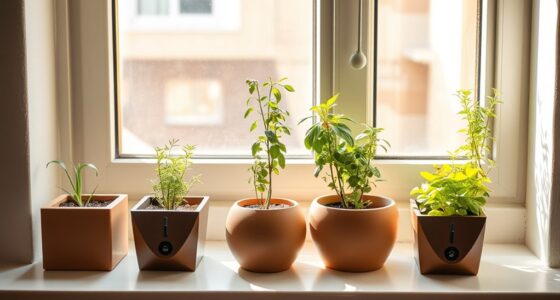
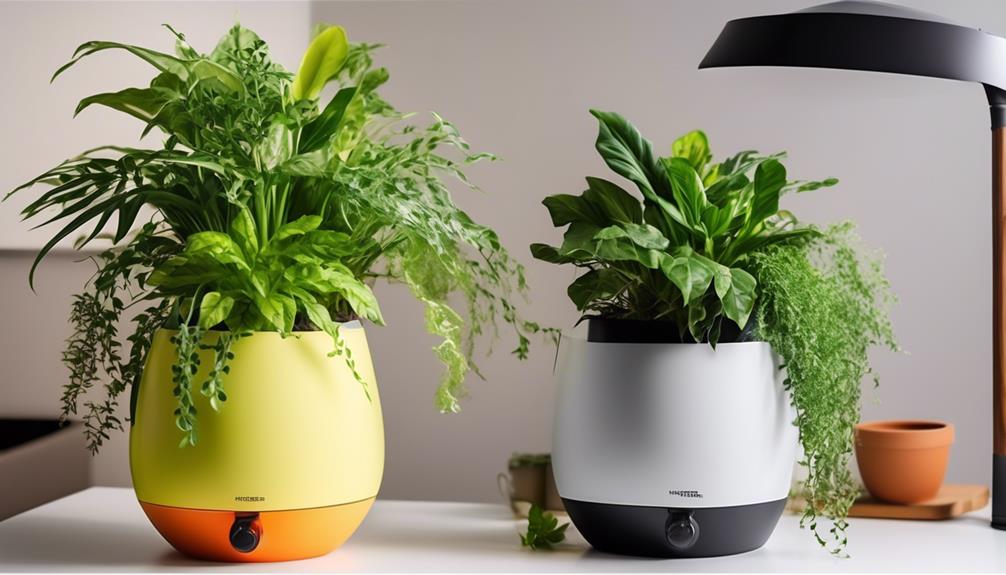
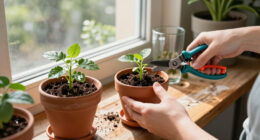
If your self-watering pot stays too wet, it’s likely caused by poor drainage, a clogged or damaged wicking system, or using the wrong soil mix. Blocked drainage holes prevent excess water from escaping, while malfunctioning wicks fail to distribute moisture evenly. Heavy or dense soils retain too much water, increasing the risk of root rot. Keep these issues in mind, and you’ll discover more ways to keep your plants healthy and happy.

Get the little things that make your day delivered free with Prime
- Fast, free delivery on millions of items
- Prime Video, Amazon Music and more included
- Member-only deals all year
Key Takeaways
- Blocked or insufficient drainage holes prevent excess water from escaping the pot.
- Damaged or clogged wicks fail to distribute water evenly, causing saturation.
- Heavy, dense soils with high clay content retain too much moisture.
- Overfilling the reservoir or improper level adjustments lead to constant soil saturation.
- Malfunctioning drainage components or poor soil structure hinder proper water drainage.

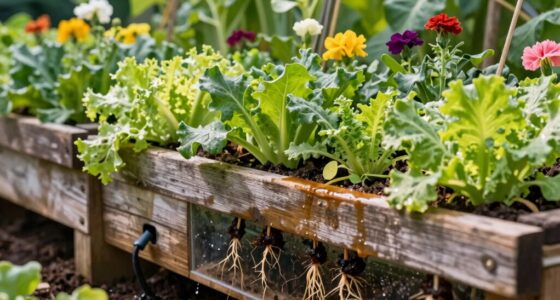
Self-watering pots are designed to provide consistent moisture, but sometimes the soil remains too wet, which can harm your plants. When this happens, the risk of root rot increases considerably. Root rot occurs when roots sit in overly saturated soil for too long, depriving them of oxygen and allowing harmful fungi to thrive. This condition can quickly weaken or kill your plant if not addressed promptly. One common cause of persistent excess moisture is drainage issues within the pot. If the drainage system isn’t functioning properly, water can pool at the bottom, saturating the soil above and creating an environment conducive to root rot.
Overwatering in self-watering pots can lead to root rot if drainage issues prevent excess water from escaping.
Many self-watering pots rely on a water reservoir and a wicking system to deliver moisture gradually. However, if the wicks are damaged, clogged, or improperly placed, they may not distribute water evenly or quickly enough, leading to pockets of overly wet soil. Additionally, if the pot lacks sufficient drainage holes or if those holes are blocked by debris, excess water cannot escape, creating a soggy environment that promotes root rot. It’s essential to regularly check that these drainage points are clear and unobstructed.
Another common issue stems from the soil composition itself. Using soil that retains too much water or doesn’t drain well can cause the soil to stay wet longer than intended. Heavy, dense soils or those with high clay content can impede proper drainage, especially when combined with a self-watering system that supplies water consistently. When the soil remains saturated for extended periods, the roots can suffocate, leading to rot and decay. To prevent this, you should use a well-draining soil mix tailored for container gardening, which allows excess water to flow freely while still retaining enough moisture for healthy roots.
Overwatering is also a factor to think about. Even with a self-watering pot, if you add too much water or forget to adjust the reservoir level, the soil can become overly saturated. Remember, the self-watering system is meant to maintain a steady moisture level, not to keep the soil constantly soaked. Monitoring the water level in the reservoir and adjusting accordingly can help prevent overwatering. Conversely, if the reservoir runs dry too quickly, the plant may dry out, but excess water in the system can cause the roots to sit in waterlogged conditions, fostering root rot.
self-watering pot drainage system
As an affiliate, we earn on qualifying purchases.
As an affiliate, we earn on qualifying purchases.
Frequently Asked Questions
Can Overwatering Be Caused by Faulty Self-Watering Mechanisms?
Yes, faulty mechanisms can cause overwatering in self-watering pots. If the device’s valve or float is damaged or stuck, it may release too much water, leading to inconsistent watering. These malfunctions prevent proper regulation of moisture, causing the soil to stay overly wet. Regularly checking and maintaining your self-watering system helps guarantee it functions correctly, avoiding overwatering caused by faulty mechanisms.
Do Plant Types Affect Soil Moisture Levels in Self-Watering Pots?
Think of your self-watering pot as a busy restaurant, where each plant is a different dish. Plant diversity influences soil moisture levels because some plants, like succulents, need less water, while others, like ferns, thrive in moist soil. Your watering frequency should match each plant’s needs; otherwise, the soil stays too wet or too dry. Understanding these differences helps you maintain the perfect balance for every plant.
How Does Pot Placement Influence Soil Moisture Retention?
Your pot placement greatly influences soil moisture retention. If you position it where drainage issues occur, excess water can accumulate, keeping the soil too wet. Additionally, placing your pot in areas with limited sunlight exposure slows evaporation, causing moisture to linger. To maintain ideal moisture, guarantee proper drainage and move your pot to a spot with adequate sunlight, which helps regulate soil moisture levels naturally.
Are There Specific Soil Mixes That Prevent Over-Saturation?
Imagine you’re using a cactus mix in your self-watering pot. This soil composition enhances drainage efficiency, preventing over-saturation. Opt for mixes with coarse sand, perlite, or pumice, as they improve airflow and water flow. These components help water move quickly through the soil, reducing the risk of soggy roots. By choosing a well-draining mix, you guarantee your plant’s roots stay healthy and avoid root rot.
Can Environmental Humidity Impact Soil Wetness in Self-Watering Pots?
Yes, environmental humidity can impact soil wetness in self-watering pots. When humidity levels are high, atmospheric moisture adds to the soil’s moisture content, making it stay wetter longer. This excess moisture can lead to over-saturation, especially if the pot’s watering system isn’t adjusted for the humidity. You should monitor humidity levels and consider adjusting watering schedules or using well-draining soil mixes to prevent waterlogging.
wicking system for self-watering pots
As an affiliate, we earn on qualifying purchases.
As an affiliate, we earn on qualifying purchases.
Conclusion
If your self-watering pots keep the soil too wet, it’s likely due to overfilling or a faulty wicking system. While it might seem harmless, consistently overly moist soil can lead to root rot and plant health issues. By adjusting your watering habits and inspecting the system, you can prevent this problem. Remember, a well-balanced moisture level is key to thriving plants—trusting your observation and making small tweaks makes all the difference.
well-draining potting soil for containers
As an affiliate, we earn on qualifying purchases.
As an affiliate, we earn on qualifying purchases.
As an affiliate, we earn on qualifying purchases.
Columbus Day / Indigenous Peoples' Day Picks
long weekend sales
As an affiliate, we earn on qualifying purchases.