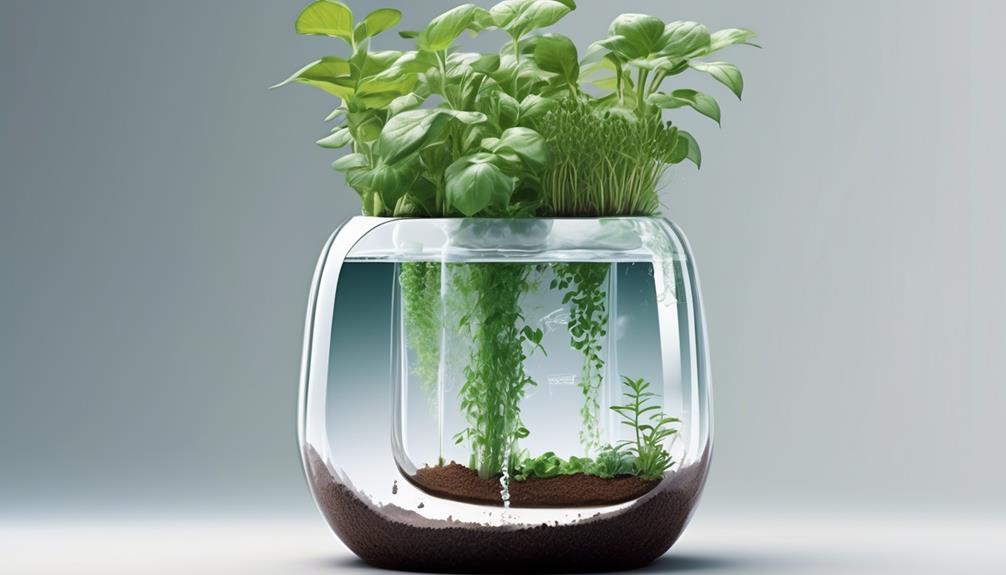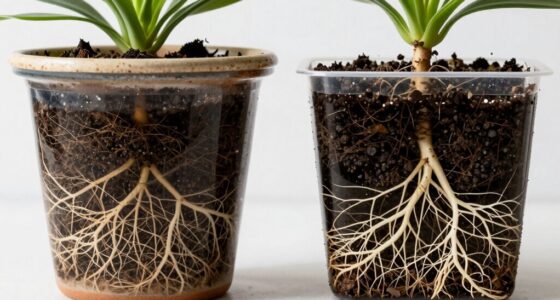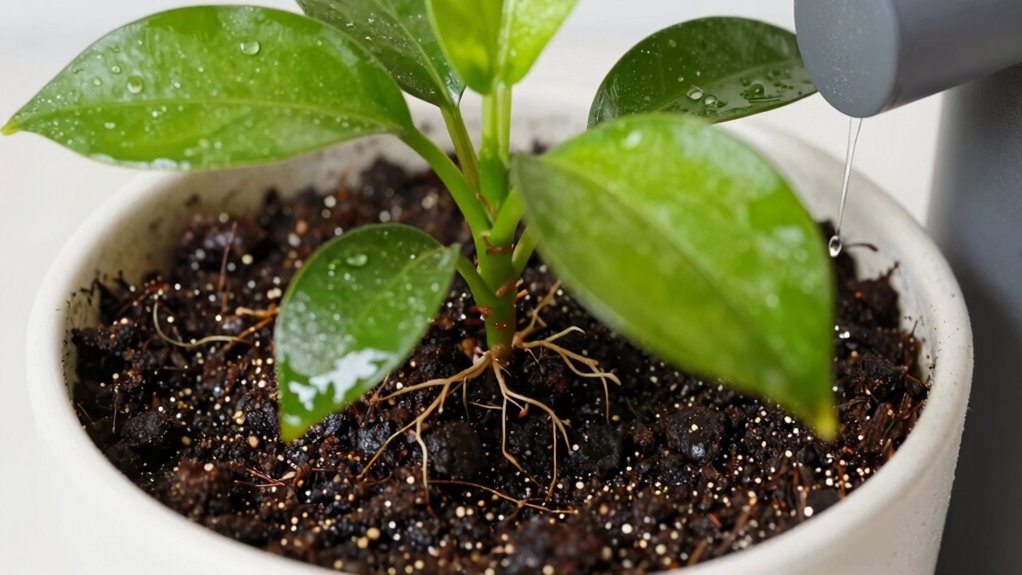

To prevent salt crust on your self-watering mixes, use low-mineral or filtered water to reduce mineral deposits. Water deeply and less frequently to help flush out accumulated salts, ensuring excess drains freely. Regularly flush the system with pure water and maintain proper drainage to carry salts away from roots. Avoid over-fertilizing with salts-based fertilizers, and choose high-quality, well-draining mixes. Keep these tips in mind, and you’ll find more detailed strategies to keep salt buildup at bay.

Get the little things that make your day delivered free with Prime
- Fast, free delivery on millions of items
- Prime Video, Amazon Music and more included
- Member-only deals all year
Key Takeaways
- Use low-mineral-content water, such as filtered or distilled, for watering and flushing the system.
- Water deeply and infrequently to prevent surface evaporation and salt accumulation.
- Regularly flush the system with pure water to wash away accumulated salts.
- Ensure proper drainage to prevent waterlogging and salt concentration at the surface.
- Choose high-quality, well-draining soil mixes designed to minimize salt buildup.
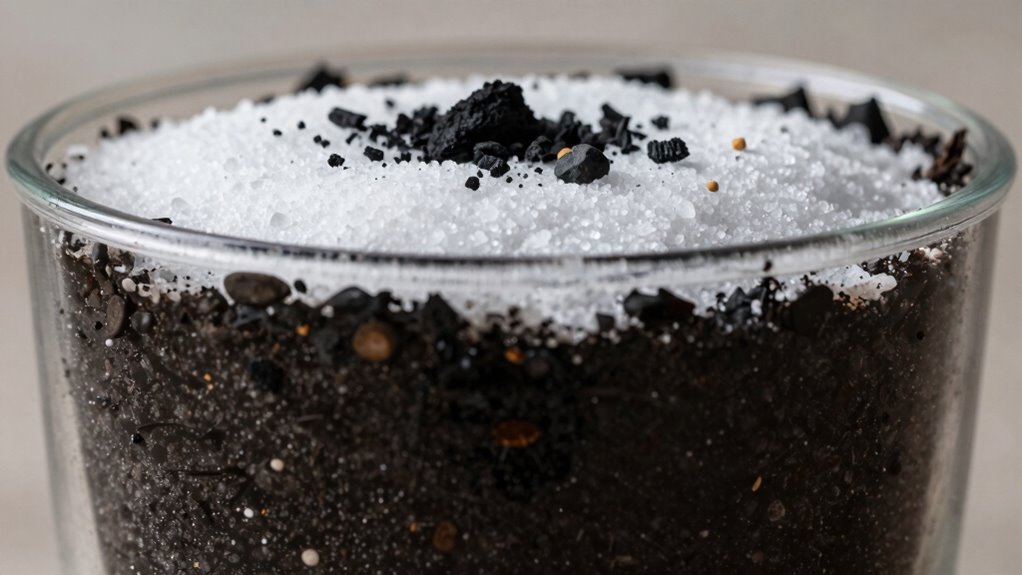
Salt crusts can form on self-watering mixes when mineral salts accumulate on the surface, disrupting plant health and water absorption. This buildup often appears as a white, crusty layer that can hinder your plant’s ability to take in water and nutrients effectively. To prevent this, you need to understand how salt accumulation happens and how it relates to plant nutrition and watering frequency. When you overwater or use hard water with high mineral content, salts are left behind as the water evaporates. Over time, these salts concentrate at the surface, creating the crust. This not only affects water absorption but can also lead to nutrient imbalances, as excess salts can interfere with the plant’s ability to absorb essential nutrients.
Salt buildup on self-watering mixes can hinder water and nutrient absorption, affecting plant health.
One of the most effective ways to prevent salt crust formation is to carefully manage your watering frequency. If you water too often, you provide excess moisture that promotes salt buildup at the surface. Conversely, infrequent watering can cause salts to concentrate as water evaporates, leaving residues behind. Striking a balance is key. You should water only when the top layer of the mix feels dry, ensuring consistent moisture without over-saturating the soil. This helps dilute accumulated salts and reduces the chances of crust formation. Additionally, consider watering deeply but less frequently, allowing water to reach the roots and flush out excess salts from the mix’s lower layers.
Another essential step involves monitoring your plant nutrition. Use water with low mineral content, such as filtered or distilled water, especially if you notice salt buildup. This minimizes the introduction of new salts into the soil. Regularly flushing your self-watering system with pure water can also help wash away accumulated salts, preventing crust formation altogether. When you do this, make sure to allow the excess water to drain freely, so salts are carried away from the root zone rather than re-depositing on the surface.
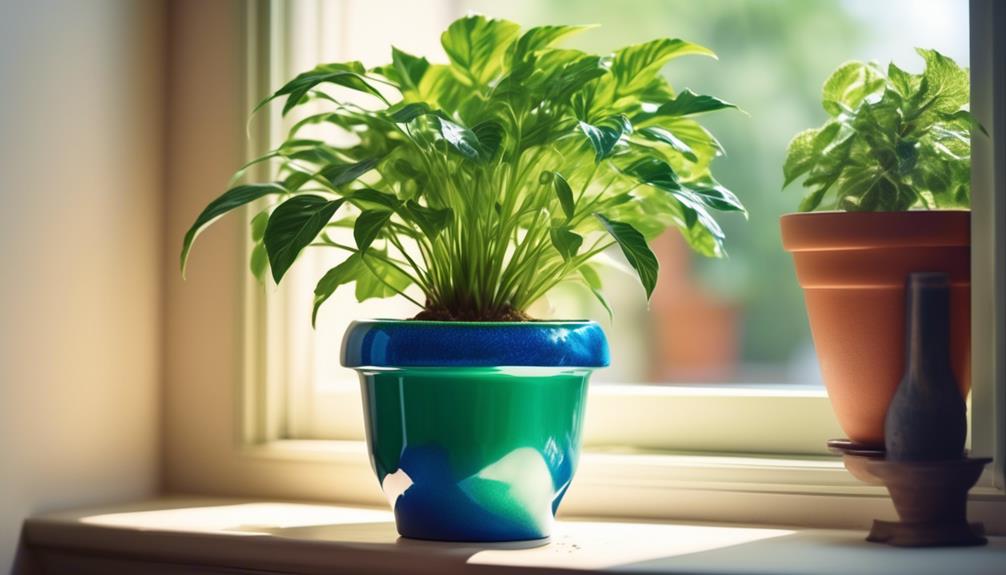
Furthermore, consider the type of self-watering mix you use. Some mixes are more prone to salt buildup due to their composition. Choosing a high-quality, well-draining mix designed for container plants reduces the risk of salt accumulation. Maintaining proper plant nutrition means providing balanced fertilization, avoiding excessive use of salts-based fertilizers that can accelerate crust formation. With these steps—adjusting watering frequency, managing plant nutrition, and using appropriate mixes—you can keep your self-watering system free of salt crusts, ensuring your plants stay healthy and thriving.
filtered water for potted plants
As an affiliate, we earn on qualifying purchases.
As an affiliate, we earn on qualifying purchases.
Frequently Asked Questions
Can Salt Crust Damage Plant Roots?
Yes, salt accumulation can damage plant roots. When salts build up on the soil surface, they can create a crust that hampers water absorption and causes root damage over time. This salt crust can lead to dehydration and stress for your plants, weakening their roots. To prevent this, regularly flush your soil to wash away excess salts and maintain healthy root growth, ensuring your plants stay strong and vibrant.
Is It Safe to Water More Frequently to Prevent Crust?
Yes, increasing your watering frequency can help prevent crust formation, but do so carefully. Water more often enough to keep the mix moist without overwatering, which can lead to other issues. Consistent, moderate watering maintains proper moisture levels, reducing salt buildup and crust formation. Use your finger or a moisture meter to monitor soil moisture, ensuring crust prevention while avoiding root problems caused by overly wet conditions.
Do Certain Plants Tolerate Salt Crust Better?
Some plants tolerate salt crust better due to their higher salt tolerance and resilience. You’ll find that succulents and certain herbs, like rosemary and thyme, handle salt buildup more effectively. To support plant resilience, choose species known for their salt tolerance, and avoid overwatering, which can worsen salt crust issues. By selecting hardy plants and maintaining proper watering habits, you can reduce salt crust formation and promote healthier growth.
How Does Soil pH Influence Salt Buildup?
Think of soil pH as the Shakespearean act that shapes your plant’s fate. When soil becomes too alkaline, salt buildup accelerates, leading to crusts on your self-watering mixes. Conversely, a balanced pH maintains soil acidity that helps prevent excess salt accumulation. Keep your soil’s pH in the ideal range, around 6.0 to 7.0, to promote healthy salt leaching and avoid crust formation, ensuring your plants thrive.
Are There Natural Additives That Reduce Salt Crust Formation?
You can use natural additives like organic solutions or mineral amendments to reduce salt crust formation. Organic solutions, such as compost teas or liquid seaweed, help improve soil health and prevent salt buildup. Mineral amendments like gypsum can also break down excess salts. These natural options promote healthy plant growth while minimizing salt crust, ensuring your self-watering mixes stay moist and balanced without the crusting issues.
self-watering planter with drainage
As an affiliate, we earn on qualifying purchases.
As an affiliate, we earn on qualifying purchases.
Conclusion
By preventing salt crusts, you nurture healthier plants and enjoy vibrant growth. Yet, ignoring this issue might seem minor—until it slowly stifles your garden’s potential. Like a delicate balance, caring for your self-watering mix requires attention to detail, because neglecting small problems can lead to larger setbacks. So, stay vigilant and proactive; what seems insignificant today can be the difference between thriving greenery and a withered mess tomorrow.
As an affiliate, we earn on qualifying purchases.
plant fertilizer with low salt content
As an affiliate, we earn on qualifying purchases.
As an affiliate, we earn on qualifying purchases.
Halloween Picks
halloween
As an affiliate, we earn on qualifying purchases.