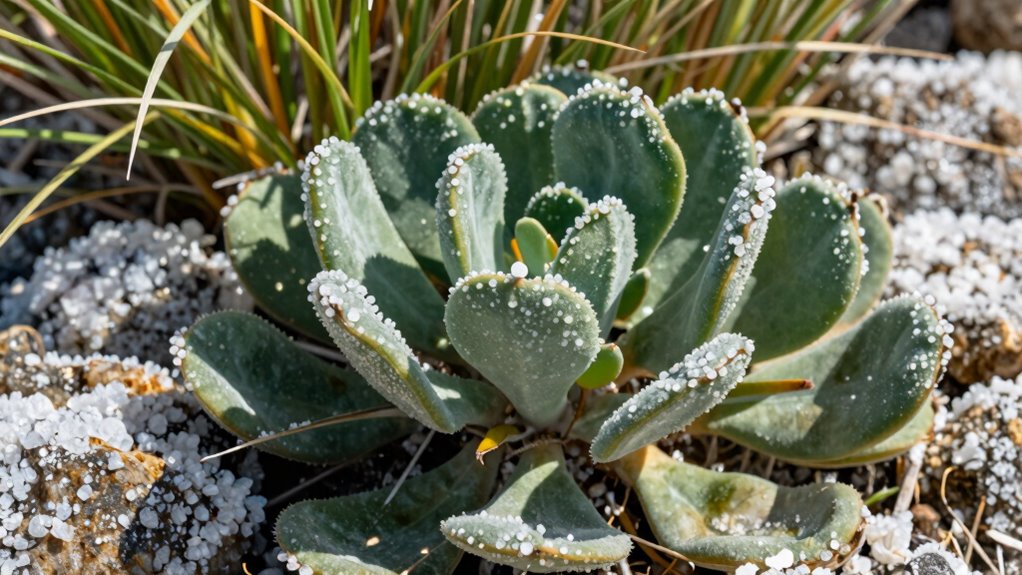

Plants in coastal environments use various tactics to handle high salt levels. They develop specialized root structures and active systems to pump out or sequester salt, preventing damage. They also produce osmolytes like proline to maintain cell stability and build thicker, waxy cuticles to reduce water loss and salt entry. Additionally, they activate antioxidant enzymes to combat oxidative stress. Want to understand how these adaptations work in detail? Keep exploring to discover more.
Key Takeaways
- Plants develop specialized root systems and active salt pumps to exclude or remove excess salt from tissues.
- They produce osmolytes like proline and glycine betaine to maintain cellular osmotic balance under high salinity.
- Morphological adaptations, such as thicker cuticles and modified root architecture, reduce water loss and salt entry.
- Salt glands and vacuolar sequestration help excrete or compartmentalize excess salt, preventing toxicity.
- Enhanced antioxidant defenses mitigate oxidative damage caused by salt-induced reactive oxygen species.
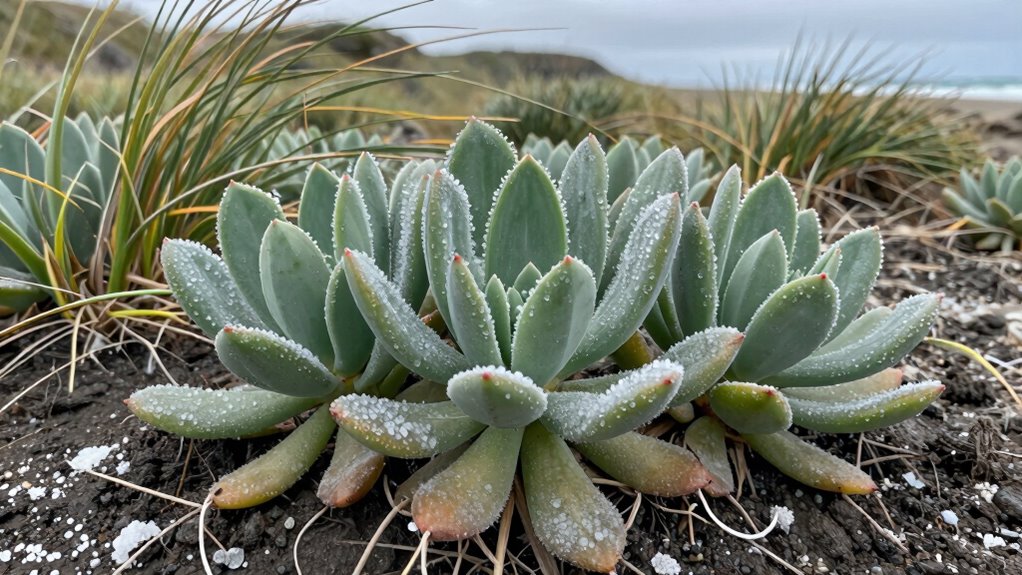
Have you ever wondered how plants survive in salty soils? Coastal environments are challenging for most plants because high salt concentrations can interfere with their growth and development. Yet, some plants thrive in these conditions by employing salt tolerance mechanisms and adaptive plant responses. These strategies enable them to manage excessive salt levels and continue to grow despite the stress.
One key way plants handle salt stress is through salt exclusion. They develop specialized root structures or transport systems that prevent salt from entering their tissues. For example, some plants actively pump salt ions out of their roots or sequester them into vacuoles within their cells. This prevents toxic salt buildup in the cytoplasm, protecting essential cellular functions. In addition, many plants produce compatible solutes—small organic molecules like proline and glycine betaine—that help maintain cell turgor and enzyme function even when external salinity is high. These osmolytes act as osmoprotectants, balancing the osmotic pressure without disrupting cellular processes. Understanding salt tolerance is crucial for developing crops that can thrive in saline soils. Furthermore, research into plant salt management techniques offers promising avenues for improving agricultural productivity in coastal areas.
Plants prevent salt buildup by pumping ions out, sequestering them, and producing osmolytes like proline and glycine betaine.
Adaptive plant responses also include modifications in their physiology and morphology. Some plants develop thicker, waxier cuticles to reduce water loss and limit salt entry. Others might alter their root architecture, extending roots deeper or spreading them wider to access freshwater sources and dilute salt concentrations around their root zone. These physical changes are part of their broader stress response, allowing them to optimize water uptake and minimize salt damage. Additionally, some plants can activate salt glands that excrete excess salt, further aiding their survival in coastal environments.
Furthermore, plants activate antioxidant systems to combat oxidative stress caused by salt-induced reactive oxygen species. Enzymes like superoxide dismutase and catalase increase in activity, helping neutralize harmful molecules. This response preserves cellular integrity and supports continued metabolic activity under stressful conditions. Recognizing these adaptive mechanisms is essential for advancing salt-tolerant crops and improving agricultural resilience.

JRK Super Salt Tolerant Grass Seed Mix – 3 lbs
Salt Tolerant
As an affiliate, we earn on qualifying purchases.
As an affiliate, we earn on qualifying purchases.
Frequently Asked Questions
How Do Plants Detect Salt Levels in Their Environment?
You might not realize it, but plants detect salt levels using specialized ion sensors in their roots. When salt ions, like sodium and chloride, enter the roots, these sensors identify the increased ion concentration. This triggers signal transduction pathways, which relay messages to the plant’s cells, activating responses to manage salt stress. Fundamentally, these mechanisms help plants sense and react swiftly to changing salt conditions in their environment.
Can Salt Stress Affect Plant Reproductive Processes?
Salt stress can cause significant reproductive challenges in plants, such as reduced flowering and seed production. You might notice floral reproductive adaptations like altered flowering time or increased salt tolerance in reproductive organs. These changes help plants survive in salty environments by minimizing salt-induced reproductive challenges, ensuring successful reproduction despite high salinity. Understanding these adaptations highlights how plants evolve mechanisms to maintain reproductive success under salt stress conditions.
Are There Specific Genes Responsible for Salt Tolerance?
A stitch in time saves nine, and in plant biology, this means certain genes drive salt tolerance. You’ll find specific genes responsible for genetic mechanisms that activate tolerance pathways, helping plants survive salty conditions. These genes regulate ion transport, osmolyte production, and stress signaling. By understanding and possibly manipulating these genes, scientists aim to develop crops resilient to salt stress, ensuring food security in coastal and arid regions.
How Quickly Can Plants Adapt to Increased Salinity?
You might notice plants adapt to increased salinity over weeks or months. They do this by managing salt accumulation through osmotic adjustment, which helps maintain water balance. This process involves producing solutes to counteract osmotic stress, allowing plants to survive in salty conditions. While some species adapt quickly, others take longer, depending on their genetic makeup and environmental factors influencing their ability to regulate salt and water levels effectively.
Do Salt-Tolerant Plants Require Special Nutrients?
Salt-tolerant plants don’t necessarily need special nutrients, but their survival depends on nutrient interactions within salty soils. You might consider soil amendments to improve nutrient availability, ensuring these plants get what they need to thrive. Think of it as tuning a delicate instrument; adjusting the soil conditions helps the plants perform better. Proper management supports their resilience, so they can flourish even amidst the salty challenge of coastal environments.

Woohome Miniature Root Vine Vegetation Train Root Model Scene Plant Stems for DIY Model Military Scene Railway Fairy Garden Diorama Scenery Landscape
Model scenery leaves is perfect for your plastic railway, miniature bases, terrain or dioramas patterns to add realistic…
As an affiliate, we earn on qualifying purchases.
As an affiliate, we earn on qualifying purchases.
Conclusion
You now understand how plants adapt to salt stress in coastal environments, employing mechanisms like ion regulation and osmotic adjustment. Imagine a salt-tolerant mangrove thriving in harsh conditions, filtering out excess salt through specialized roots. This resilience not only benefits the plant but also sustains coastal ecosystems. Recognizing these strategies can help you appreciate nature’s ingenuity and guide efforts to cultivate resilient crops in salinity-affected areas, ensuring ecological balance and food security.

Abiotic Stresses, Biostimulants and Plant Activity
As an affiliate, we earn on qualifying purchases.
As an affiliate, we earn on qualifying purchases.

Airmax Ultra Pondweed Defense Aquatic Weed & Plant Killer, Easy Spray Application to Clean & Clear Large Pond & Lake Water, Liquid Treatment Control Concentrate, Fish Safe, 1 Quart
Broad Spectrum Pondweed Control — Herbicide works on submerged, floating, and emergent weeds. Controls watermilfoil, hydrilla, naiad, coontail,…
As an affiliate, we earn on qualifying purchases.
As an affiliate, we earn on qualifying purchases.