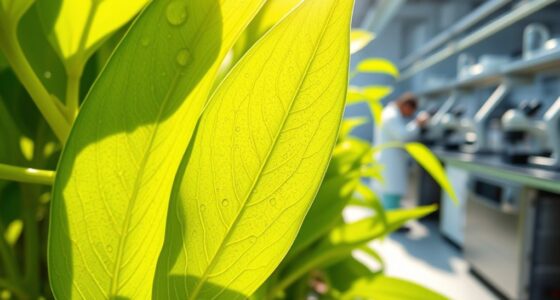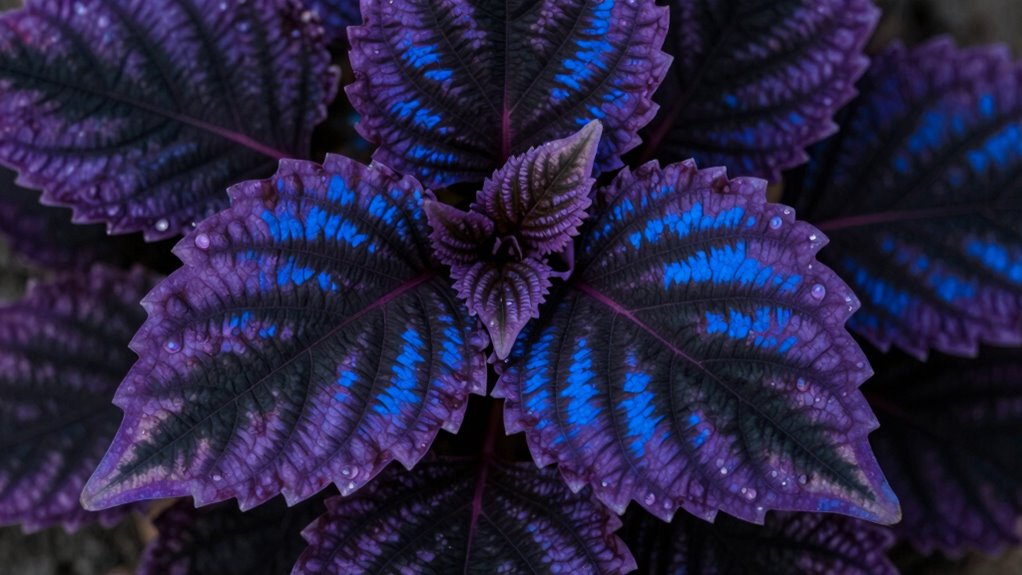

You’ll see purple, blue, and black foliage because of specific plant pigments working together. When chlorophyll breaks down, anthocyanins and carotenoids become more visible, creating purple, blue, or yellow hues. Anthocyanins absorb green and yellow light, reflecting red and blue, which gives leaves those vibrant or dark shades. Dense pigment layers can even turn foliage black by blocking most light. To uncover how environmental factors influence these colors, keep exploring.

Get the little things that make your day delivered free with Prime
- Fast, free delivery on millions of items
- Prime Video, Amazon Music and more included
- Member-only deals all year
Key Takeaways
- Purple and blue foliage result from anthocyanins reflecting red and blue light after chlorophyll degrades.
- Blue hues are primarily due to anthocyanins absorbing green/yellow wavelengths and reflecting blue light.
- Black foliage forms through dense layering of pigments that absorb most light, creating a dark appearance.
- Environmental stressors like cold or sunlight increase anthocyanin production, intensifying purple and blue colors.
- Variations in pigment concentration and type influence the intensity and darkness of foliage colors.
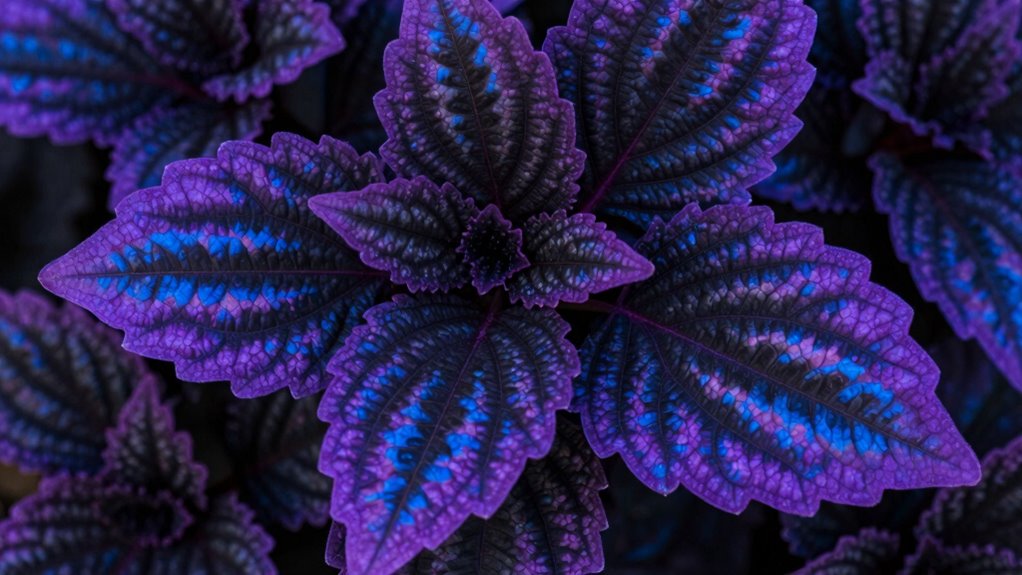
Plants display a stunning variety of foliage colors, which result from specific pigments that absorb and reflect different wavelengths of light. When it comes to purple, blue, and black leaves, these colors stem from a complex interplay of pigments that influence how plants absorb light. One key process involved is chlorophyll breakdown, where chlorophyll — the primary pigment responsible for green hues — degrades under certain conditions. This breakdown reveals other pigments, like anthocyanins and carotenoids, which can produce vibrant purple and blue shades. As chlorophyll diminishes, the plant’s light absorption properties change, allowing different wavelengths to be reflected and creating striking foliage colors. Additionally, the light absorption properties of these pigments are crucial in determining the vibrant or dark coloration of the foliage. In plants with purple or blue leaves, anthocyanins are the standout pigments. These compounds are responsible for absorbing specific light wavelengths, especially in the green and yellow parts of the spectrum. When chlorophyll degrades or decreases in concentration, anthocyanins become more prominent, giving the foliage a rich purple or blue appearance. The light absorption properties of anthocyanins make them excellent at reflecting red and blue light, which is why you see such vivid hues. These pigments not only contribute to striking colors but also protect the plant from UV damage and help reduce water loss, especially during stress conditions. Environmental factors like cold temperatures or intense sunlight can intensify the presence of anthocyanins, further deepening the purple or blue tones. The presence of anthocyanins can be intensified by environmental factors like cold temperatures or intense sunlight, further deepening the purple or blue tones. Moreover, the pigment concentration within the leaves determines how dark or vibrant the coloration appears, especially in black foliage. When a plant produces an abundance of these pigments, it can absorb a broad spectrum of light, reflecting very little and appearing black or very dark. This dense pigment layering effectively blocks most light from passing through, giving the leaves their dark, almost opaque look. The light absorption properties of these pigments are highly efficient, allowing the plant to conserve energy and protect itself from excessive sunlight. Some plants also produce dark pigments as a form of camouflage or to deter herbivores, using their black foliage as a visual warning or to blend into shadowed environments. Interestingly, the type of pigment produced can vary based on environmental stressors, influencing the depth and hue of the foliage color.
Products Worth Considering

EGO POWER+ 21 Cordless Electric Lawn Mower Kit, Self-Propelled

Greenworks 48V (24V x 2) 21-inch Self-Propelled Lawn Mower, Battery Kit

Husqvarna 120 Mark III Gas Chainsaw, 38-cc, 2-Cycle X-Torq Engine, 16 Inch Bar
As an affiliate, we earn on qualifying purchases.
Frequently Asked Questions
How Do Environmental Factors Influence Pigment Production in Plants?
Environmental factors markedly influence pigment biosynthesis in plants. When you experience environmental stress like high light, drought, or cold, your plant increases pigment production to protect itself. These stresses trigger pathways that enhance the synthesis of anthocyanins and other pigments, resulting in more vibrant purple, blue, or black foliage. Fundamentally, stress signals activate pigment biosynthesis, helping your plant adapt and defend against environmental challenges.
Can Plant Pigments Change Color Throughout the Plant’s Lifespan?
You might think plant pigments stay the same, but genetic variations and pigment stability often cause color changes throughout a plant’s life. As the plant matures, shifts in gene expression can alter pigment composition, leading to different hues. Environmental stress or aging can break down pigments or change their stability, making leaves appear more vibrant or faded over time. So, yes, plant colors can definitely evolve during their lifespan.
Are There Any Health Benefits Associated With Purple, Blue, or Black Foliage?
You might find that purple, blue, and black foliage offers health benefits like improved nutrition and medicinal properties. These colorful pigments contain antioxidants, which can help reduce inflammation and combat oxidative stress. Consuming plants with these hues may support your immune system and overall health. Additionally, some pigments have traditional medicinal uses, aiding digestion or soothing ailments. Incorporating such plants into your diet can boost your well-being naturally.
How Do Pigments Affect a Plant’s Ability to Photosynthesize?
Pigments are like tiny solar panels, capturing specific light wavelengths. They influence a plant’s photosynthesis efficiency by absorbing certain light colors and reflecting others. Pigment chemistry determines how well a plant converts light into energy, especially with purple, blue, or black foliage. These pigments can either enhance or limit photosynthesis, affecting growth and survival depending on how effectively they absorb sunlight for energy production.
Do All Plants Produce the Same Types of Pigments for Purple, Blue, and Black Colors?
Not all plants produce the same pigments for purple, blue, and black colors. You see, pigment biosynthesis varies among species, leading to distinct color variations. Some plants create anthocyanins for purple hues, while others produce delphinidin-based pigments for blue shades. Black foliage often results from high concentrations of combined pigments. So, your plant’s color depends on its unique pigment biosynthesis pathway, influencing the gorgeous diversity you observe in nature.
Conclusion
As you observe the vibrant hues in foliage, it’s no coincidence that nature’s palette reflects both beauty and resilience. Just like how different pigments blend to create stunning colors, your own experiences and challenges shape your unique identity. Embrace these moments, knowing they’re part of a larger, intricate design. Sometimes, the most unexpected combinations reveal the deepest truths—reminding you that growth often comes from life’s colorful surprises.