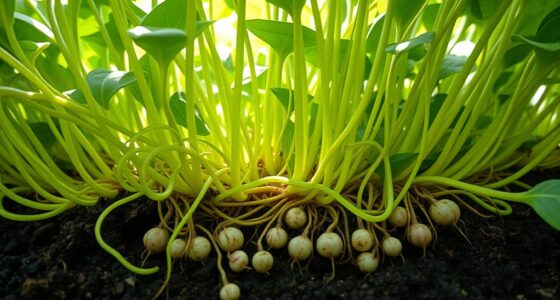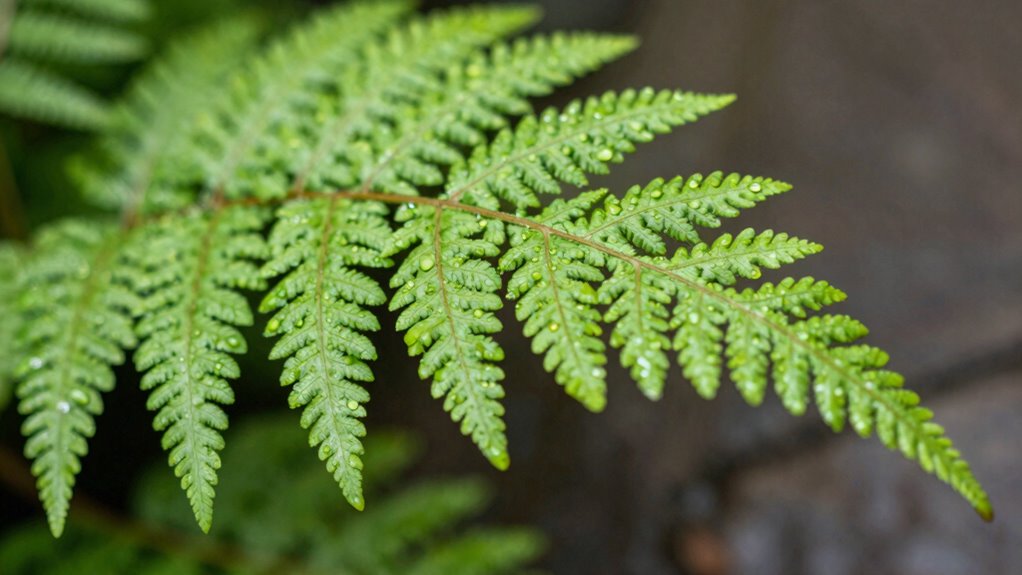

Plants move water upward through a process driven by physical forces, not pumps. Water enters roots through tiny root hairs, increasing surface area for absorption. It travels through xylem vessels via cohesion and adhesion, which help maintain a continuous water column. Transpiration, or water vapor loss through stomata, creates a negative pressure that pulls water upward. If you explore further, you’ll discover how these natural forces work together to keep plants thriving.

Get the little things that make your day delivered free — and shop member deals
- Fast, free delivery on millions of items
- Access to Prime Big Deal Days deals on October 6–7
- Prime Video, Amazon Music and more included
Key Takeaways
- Water moves through roots via diffusion driven by water potential differences.
- Xylem vessels act as channels for upward water transport without mechanical pumps.
- Transpiration creates negative pressure, pulling water upward through cohesion and adhesion.
- Water molecules stick together and to xylem walls, maintaining a continuous column.
- Physical forces like tension and pressure gradients enable water movement throughout the plant.
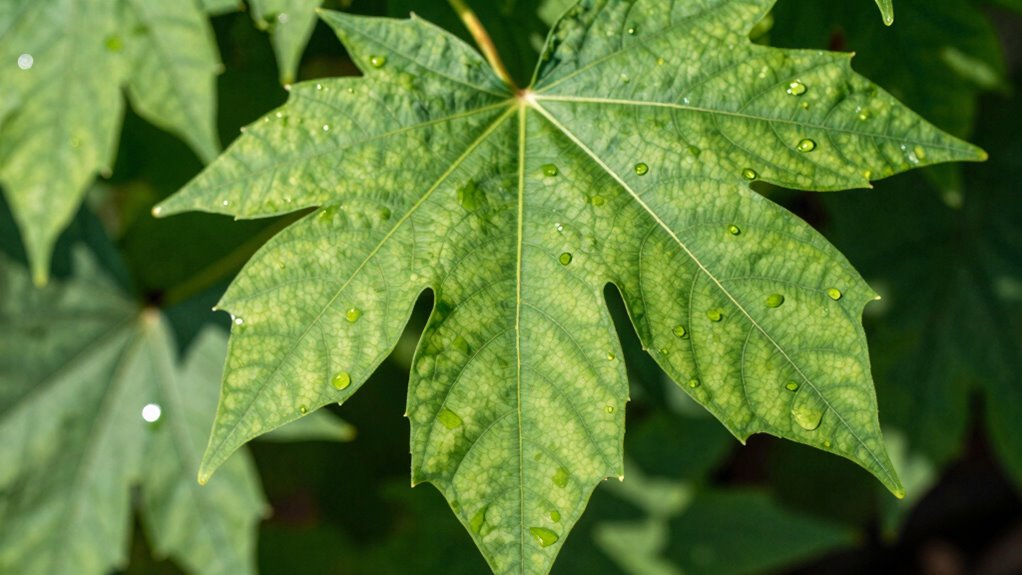
Plants move water through a fascinating process that involves several specialized structures. When you look at a plant, you might wonder how water travels from the roots all the way up to the leaves without a pump like your heart. The answer lies in nature’s clever design, primarily through the transpiration process and the way roots absorb water to support plant nutrient uptake. As water moves through the plant, it performs multiple roles—delivering essential nutrients, maintaining cell rigidity, and cooling the plant.
Plants transport water upward through natural processes like transpiration, relying on structural adaptations without pumps.
The journey begins at the roots, where tiny root hairs extend into the soil. These hairs greatly increase the surface area for water absorption, allowing the plant to efficiently take in water along with dissolved minerals. This process, known as plant nutrient uptake, is driven by differences in water potential between the soil and the plant’s roots. Water naturally moves from an area of higher potential in the soil to a lower potential inside the roots. Once inside, water travels upward through specialized channels called xylem vessels, which act like tiny pipelines. This movement isn’t powered by pumps but relies on physical forces and pressure gradients within the plant.
As water ascends through the xylem, it’s pulled upward by the transpiration process. Transpiration is fundamentally the evaporation of water from tiny pores called stomata, mostly located on the underside of leaves. When water vapor exits these pores, it creates a negative pressure—or tension—in the xylem vessels. This tension acts like a continuous column of water being pulled upward, much like how a straw works when you suck on it. The cohesion of water molecules, thanks to hydrogen bonding, ensures that the column remains intact despite the pull. Adhesion between water molecules and the walls of the xylem vessels also helps support this upward movement. Additionally, the physical properties of water enable this process to occur efficiently without mechanical assistance.
This entire process is a remarkable natural phenomenon that doesn’t require any mechanical pumping. Instead, it relies on the physical properties of water and the plant’s structural adaptations. The transpiration process not only facilitates water movement but also plays a crucial role in transporting nutrients dissolved in water. As water moves upward, it carries essential minerals from the soil to different parts of the plant, supporting growth and development. So, by harnessing physical forces and biological structures, plants efficiently move water without the need for a pump, ensuring their survival and vitality in a wide range of environments.
As an affiliate, we earn on qualifying purchases.
Frequently Asked Questions
Do All Plants Use the Same Water Transport Mechanism?
Not all plants use the same water transport mechanism. You’ll notice that some rely heavily on soil absorption, pulling water through roots, while others manage water vapor loss more efficiently. Certain plants have adaptations like thick cuticles or specialized tissues to minimize water vapor loss, especially in dry environments. These variations help different plants survive in their unique habitats, demonstrating that water transport methods can differ widely among species.
How Does Water Reach the Tallest Trees?
You might wonder how water reaches the tallest trees. It’s driven by cohesion tension, where water molecules stick together and pull upward through tiny xylem vessels. Capillary action also helps, allowing water to move against gravity in small spaces. As water evaporates from leaves, it creates a negative pressure that pulls more water upward, enabling even the highest branches to stay hydrated without a pump.
Can Plants Survive Without Water Movement?
You might wonder if plants can survive without water movement. Without it, water retention drops, and nutrient absorption becomes difficult, threatening their survival. Water moves through tiny openings called stomata, helping plants stay hydrated and gather essential nutrients from the soil. Without active water movement, plants struggle to maintain their health, weaken, and eventually die. So, water movement is crucial for their growth and overall well-being.
What Roles Do Roots Play in Water Movement?
Imagine roots as the plant’s secret water highways. They generate root pressure, pushing water upward, and use capillary action, where tiny tubes draw water through small spaces, like a straw. These processes work together to move water from the soil to the leaves, ensuring the plant stays hydrated and healthy. Without roots performing these roles, water wouldn’t reach the plant’s essential parts efficiently, risking dehydration and decay.
How Does Water Movement Affect Plant Growth?
Water movement directly impacts your plant’s growth by influencing transpiration efficiency and overall health. When water moves effectively through the plant, it supports nutrient uptake and cell expansion. You can improve growth by applying water conservation strategies, such as mulching or watering early in the morning, to maximize efficiency. Better water management helps your plant grow stronger, healthier, and more resilient, ensuring ideal development and productivity.
As an affiliate, we earn on qualifying purchases.
Conclusion
So, next time you marvel at a tall tree or a lush garden, remember that plants are like tiny, ancient printers, pulling water up without a single pump. Thanks to clever tricks like capillary action and transpiration, they keep themselves alive and thriving—even without a Tesla coil! It’s pretty amazing how nature’s own “Wi-Fi” system works silently, bringing water from roots to leaves faster than you can say “Hyrule.”
transpiration and water movement in plants book
As an affiliate, we earn on qualifying purchases.
As an affiliate, we earn on qualifying purchases.
plant water uptake demonstration kit
As an affiliate, we earn on qualifying purchases.
As an affiliate, we earn on qualifying purchases.
Fall Picks
fall essentials
As an affiliate, we earn on qualifying purchases.