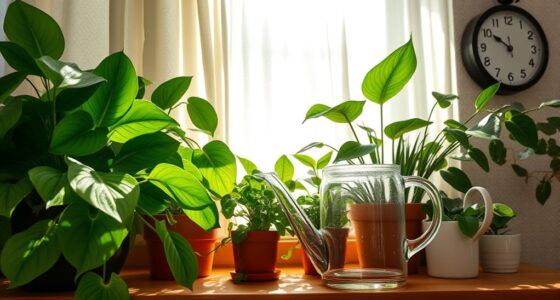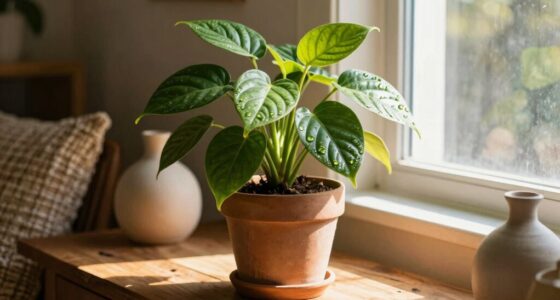
To rotate large houseplants without stressing them, move them gradually and carefully, supporting the root ball to avoid damage. Make small, steady adjustments during consistent natural light, avoiding direct sunlight to prevent leaf scorch. Watch for signs of stress like drooping or yellowing, and slow down if needed. Properly handling roots and maintaining healthy soil also helps plants recover quickly. Want to discover more ways to keep your plants happy and healthy through rotation?
Key Takeaways
- Rotate gradually with small adjustments weekly to prevent shock and allow adaptation.
- Perform rotations during stable, natural light periods, avoiding direct sunlight to prevent leaf scorch.
- Observe plant responses closely and slow down rotations if signs of stress, like drooping or yellowing, appear.
- Handle large plants carefully, supporting roots and avoiding excessive pulling or twisting during movement.
- Maintain healthy roots through proper watering, soil care, and repotting to enhance resilience during rotation.
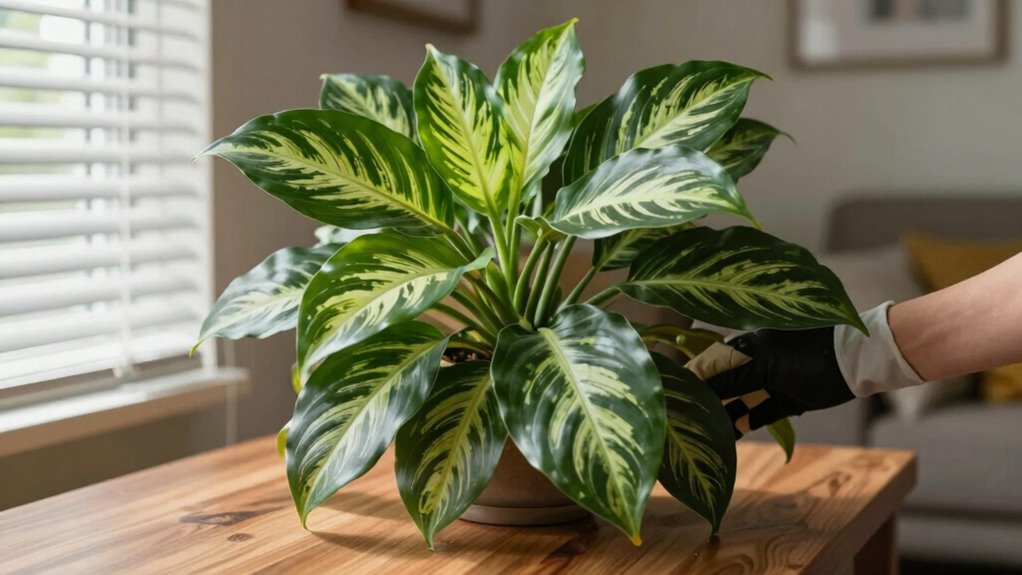
Rotating large houseplants can seem intimidating, but with the right approach, you can do it without causing stress to your plants. The key is understanding how to manage their environment, especially lighting adjustments and root health. When you turn your plant, you’re changing its exposure to light, which can impact its growth and overall health. To prevent stress, make small, gradual adjustments over time rather than sudden rotations. This allows your plant to adapt without shock. For example, if you notice one side is more shaded, slowly rotate the plant a little each week, giving it time to adjust its leaves and stems to the new light direction.
Lighting adjustments are essential because they influence how your plant photosynthesizes and grows. When you rotate a large plant, you might inadvertently alter the light distribution on its leaves. To minimize this, plan your rotations during a time when natural light is consistent, like during the day, and avoid rotating in direct sunlight that can cause sunburn or leaf scorch. Observe your plant’s response after each adjustment. If you see signs of stress, such as drooping or yellowing leaves, slow down the rotation process. Remember, a steady, gradual change is less disruptive than abrupt movements. This approach helps your plant maintain its energy balance and prevents unnecessary stress. Additionally, understanding root health management can help ensure your plant remains resilient during these adjustments. Being aware of soil conditions and how they influence root vitality can further support your efforts to keep your plants healthy during rotation.
Root health is another critical factor when rotating large houseplants. When you move a plant, especially a big one with an extensive root system, you might disturb the roots unknowingly. To keep root health intact, handle your plant carefully, supporting the root ball and avoiding excessive pulling or twisting. If your plant has been in the same pot for a long time, consider repotting it before or after rotation. This not only refreshes the soil but also ensures the roots are strong and healthy, reducing potential stress during subsequent movements. Additionally, check for signs of root rot or other problems when you repot, and address them promptly.
As an affiliate, we earn on qualifying purchases.
Frequently Asked Questions
Can Rotating Plants Improve Their Overall Health?
Yes, rotating plants can improve their overall health by promoting better plant stability and ensuring even light exposure. When you turn your large houseplants regularly, you help prevent them from leaning or becoming unstable. It also allows all sides to receive adequate light, encouraging balanced growth and stronger stems. Just do it gradually and carefully to avoid stressing the plant, and you’ll see healthier, more resilient plants over time.
How Often Should I Rotate My Large Houseplants?
Think of your plant as a dancer on stage—every move needs balance. You should rotate your large houseplants about once a month, giving them a gentle twist to guarantee plant stability and even light exposure. This frequency prevents them from becoming lopsided or overstressed. Keep an eye on their growth and adjust if they lean or stretch excessively toward the light. Regular, mindful turns help your plant stay healthy and vibrant.
Is There a Best Time of Day to Rotate Plants?
The best time of day to rotate your plants is during the morning, when lighting conditions are stable and consistent. This helps prevent shock and allows your plant to adjust gradually. Keep seasonal adjustments in mind—you might need to rotate more frequently during winter or summer to guarantee even lighting. By choosing a calm part of the day, you minimize stress and promote healthy growth for your large houseplants.
Does Rotating Affect Flowering or Fruit Production?
Rotating your large houseplants can impact flowering and fruit production if done improperly. When you rotate, you might temporarily disrupt their light exposure, which could reduce flowering impact and delay fruit production. To minimize this, rotate gradually and guarantee they get consistent, adequate light afterward. This way, you help maintain their flowering and fruiting cycles, preventing stress that could hinder their overall growth and productivity.
Can Rotating Plants Help Prevent Pests and Diseases?
Yes, rotating your plants can help prevent pests and diseases. By changing their position regularly, you reduce the risk of pests settling in one spot and limit the spread of diseases that thrive in stagnant areas. This practice promotes pest prevention and disease control, as it disrupts pests’ life cycles and keeps humidity and moisture levels more balanced. Keep rotating your large houseplants gently to maintain their health and importance.
As an affiliate, we earn on qualifying purchases.
Conclusion
Rotating your large houseplants doesn’t have to be stressful—for you or your plants. With gentle handling and gradual changes, you keep them healthy and vibrant. Did you know that plants can grow up to 12 inches in a year? Imagine a big leafy fern stretching and reaching toward the light, thriving because you took the time to rotate it carefully. Keep patience in mind, and your plants will flourish, brightening your space for years to come.
As an affiliate, we earn on qualifying purchases.
As an affiliate, we earn on qualifying purchases.