To safely move your indoor plant to a new pot, start by gently loosening the root ball and inspecting for pests. Choose a pot with drainage holes and add a layer of gravel if needed. Fill with fresh soil, plant at the same depth, and water thoroughly to settle the roots. Keep an eye on its health afterward, adjusting watering as needed. For detailed steps that guarantee success, continue exploring trusted tips and techniques.
Key Takeaways
- Choose a slightly larger, well-draining pot with drainage holes for safe transfer.
- Gently loosen and inspect roots, removing any damaged or diseased parts before repotting.
- Use fresh, quality potting mix to provide optimal nutrients and prevent pests.
- Water thoroughly after repotting, allowing soil to settle and excess air to escape.
- Monitor the plant closely post-repotting for signs of stress or pests and adjust care accordingly.
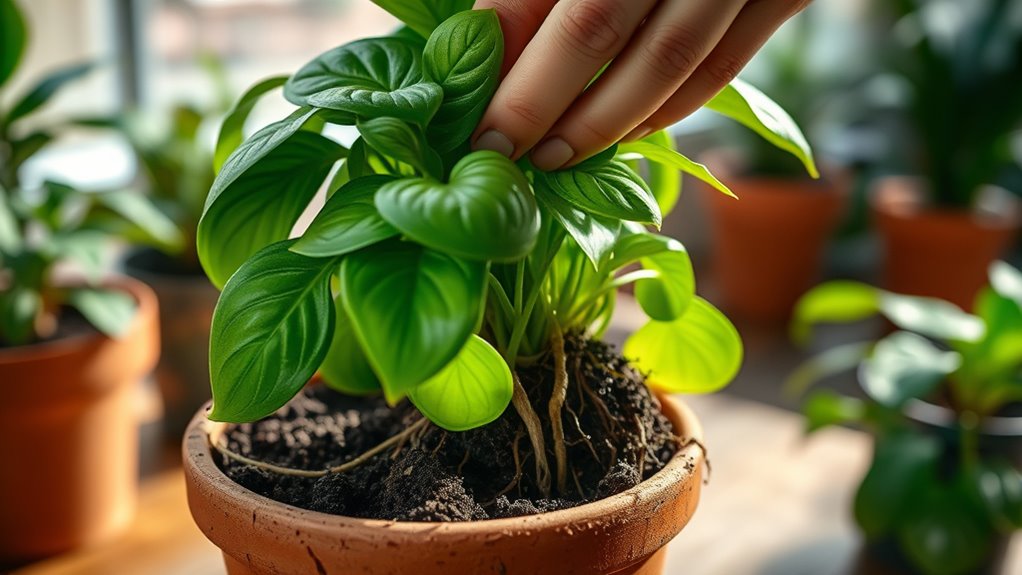
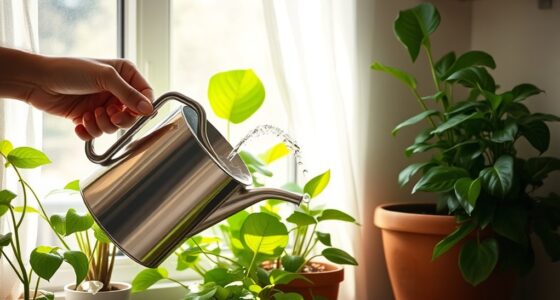
Repotting your indoor plants is a crucial step in maintaining their health and encouraging growth. When you decide it’s time to move your plant to a new container, you’re giving it a fresh start—more room for roots to spread, improved soil quality, and better overall health. But to make the transition smooth and successful, you need to consider a few key factors, especially your watering schedule and pest prevention. Proper watering is essential because overwatering or underwatering during and after repotting can stress your plant, making it vulnerable to pests and disease. Adjust your watering routine accordingly—give the plant a thorough soak after repotting, then allow the soil to dry out slightly before watering again, based on the plant’s specific needs. This helps prevent root rot and keeps pests at bay, since moist, neglected soil can attract unwanted visitors like fungus gnats or other pests.
Before you start the repotting process, inspect your plant carefully for signs of pests or disease. If you spot any, take action before moving it to a new pot. Removing pests now prevents infestations from spreading to the new soil and container. Using clean tools and a fresh potting mix also reduces the risk of introducing pests into a clean environment. When selecting a new pot, choose one with drainage holes to prevent water from sitting at the bottom, which can lead to root rot and create a perfect environment for pests to thrive. Fill the bottom with a layer of gravel or broken pottery for added drainage, then add fresh soil suitable for your plant’s species. Additionally, understanding plant health indicators can help you identify when your plant needs repotting or additional care.
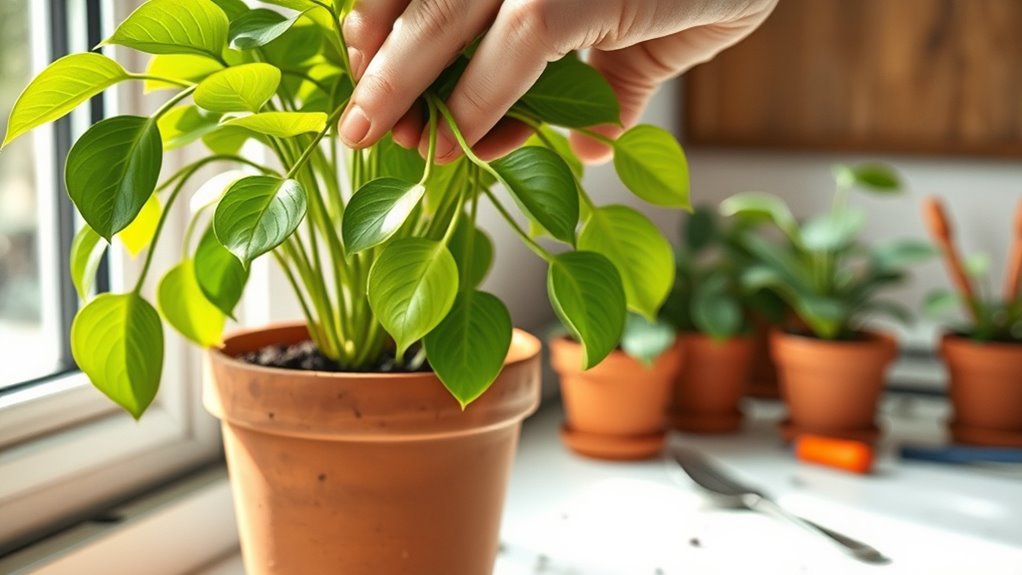
During the repotting process, gently loosen the root ball without damaging the roots, and place it into the new container at the same depth it was previously growing. Fill around the roots with fresh soil, firming it gently but not tightly. After repotting, water the plant thoroughly to settle the soil and eliminate air pockets, but don’t overdo it—excess water can lead to problems down the line. Keep a close eye on your plant’s response in the following days. Adjust your watering schedule if necessary, especially if you notice the soil drying out quickly or staying too damp. Regularly inspecting and maintaining an appropriate watering routine is one of the best ways to prevent pests, as healthy, well-drained soil discourages the growth of pests and pathogens. With these steps, your indoor plant will thrive in its new home, growing stronger and more resilient.
Frequently Asked Questions
How Often Should I Repot My Indoor Plants?
You should repot your indoor plants every 1-2 years, depending on their growth. Keep an eye on your watering schedule and soil nutrition; if your plant’s growth slows or the soil looks depleted, it’s time. Repotting refreshes soil nutrients and improves drainage, promoting healthy growth. Regularly check for root-bound plants and signs of stress, ensuring your indoor garden thrives with proper care and timely repotting.
What Signs Indicate My Plant Needs a Bigger Pot?
Imagine your plant’s roots are a tangled maze. If you notice it’s become root bound or overgrown roots are pushing against the pot, it’s time for a bigger home. Signs include slow growth, roots growing out of drainage holes, or the plant seeming stressed. When you see these clues, it’s a clear sign you should repot to give your plant room to thrive and grow healthily.
Can I Repot During the Plant’s Blooming Phase?
You can repot during the plant’s flowering season, but it’s best to avoid repotting during bloom if possible. Repotting during bloom can stress your plant and may cause it to drop flowers. If you must repot during bloom, do it carefully, using minimal disturbance and after watering thoroughly. Wait until the flowering season ends to reduce stress and make certain of healthy growth.
What Are the Best Tools for Repotting Indoor Plants?
Did you know that using the right tools can boost your repotting success rate by 80%? When repotting indoor plants, you should use pruning shears to trim roots and a small trowel for soil mix. These tools make the process cleaner and safer, preventing damage. Invest in sharp, clean pruning shears and a sturdy trowel to make sure your plants thrive in their new home with minimal stress.
How Do I Prevent Root Shock During Repotting?
To prevent root shock during repotting, you should minimize root disturbance and soil disruption. Carefully loosen the plant from its current pot, gently removing excess soil without damaging the roots. When placing it in the new container, make certain the roots are spread out naturally, and fill with fresh soil. Water thoroughly afterward to help settle the soil and reduce stress, giving your plant a smoother transition.
Conclusion
Now that you know how to repot your indoor plants safely, it’s easy to give them new life. With fresh soil and a comfortable new home, they’ll thrive and brighten your space. Remember, repotting is both a practical task and a chance to connect with your plants. So, don’t rush—enjoy the process. Because in nurturing your plants, you’re also nurturing your home and your well-being. Happy repotting!